


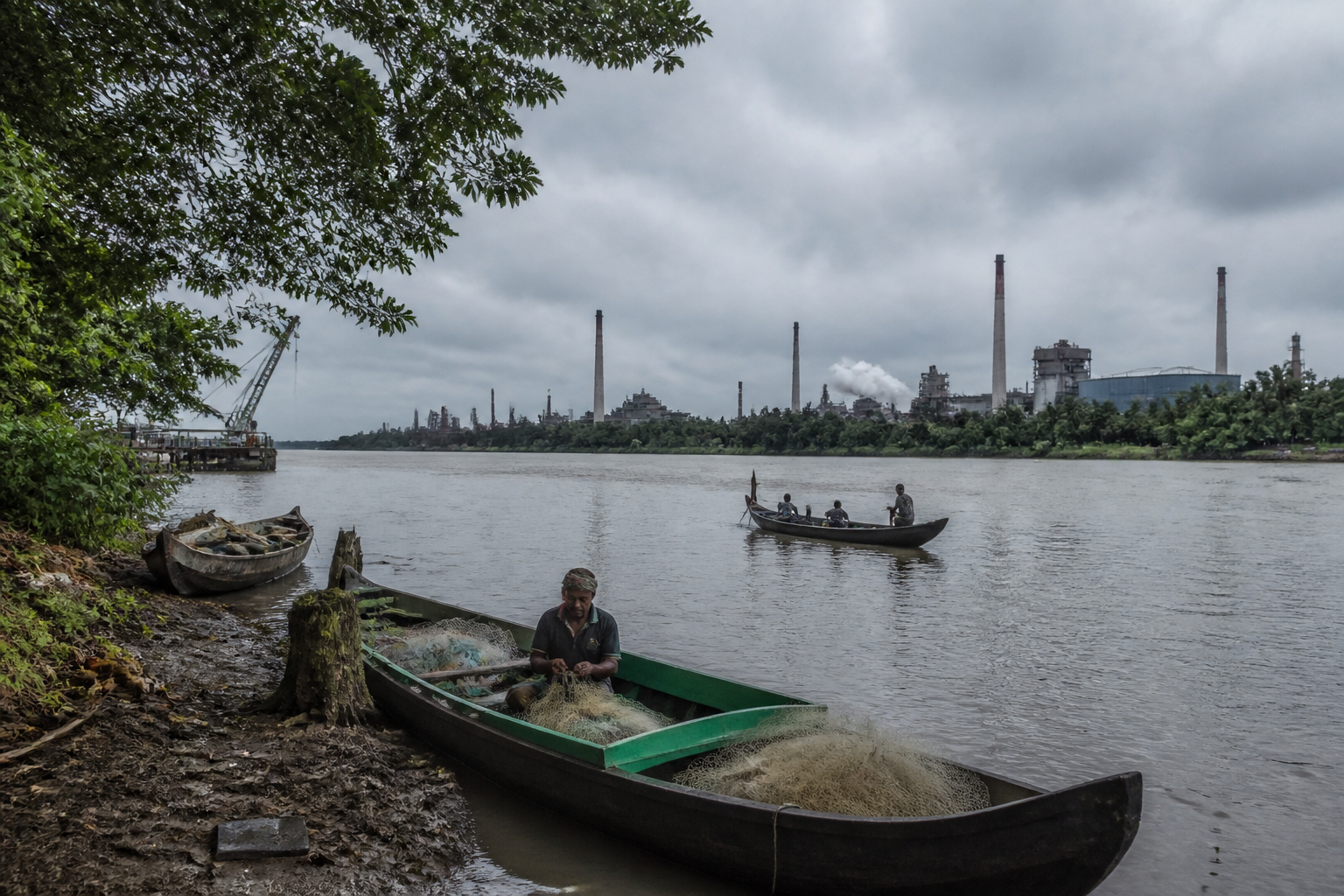
The Kerala government’s proposed Rs 13.55 crore compensation package for victims of the 2024 Periyar River fish kill has brought the long-running consequences of industrial pollution back into focus. The package, prepared by the Fisheries Department, is intended for fish farmers and fisherfolk whose livelihoods were affected when large quantities of fish died in the river nearly two years ago.
According to a report by Kerala Kaumudi – Kochi, the Fisheries Department has recommended Rs 7,03,66,280 for damage to fish farming and Rs 6,51,94,500 for fisherfolk who lost their livelihoods. The department has begun steps to seek the amount from the Chief Minister’s Distress Relief Fund. The report said the recommendations were made in a response from Smitha R. Nair, Additional Director at the Fisheries Department Directorate, to a representation submitted by social worker Sujith C. Sukumaran.
The proposed payment is significant not only because of its size, but also because of its timing. The fish kill occurred on 20 May 2024, yet the report states that affected farmers had not received any relief even after two years. This gap separates the date of environmental damage from the date of possible compensation and raises a central governance question: how quickly can institutions assess losses and support communities when pollution disrupts a river-based economy?
The Periyar is a major source of freshwater for Ernakulam district, according to the report. Its role extends beyond a watercourse carrying industrial and urban pressures. It also supports fishing and fish farming, which means a pollution event can affect both the ecological condition of the river and the incomes of people who depend on it. When fish die in large numbers, the immediate loss is visible. The longer-term effects, including disrupted livelihoods and unpaid loans, are less visible and can take substantially longer to address.
The 2024 incident followed the opening of the Pathalam regulator-cum-bridge after it had remained closed for several days. The report said chemical pollution entered the river after the structure was opened. The Pollution Control Board found that the fish deaths were caused by a reduction in dissolved oxygen in the water. The reported loss was estimated at Rs 50 crore, considerably higher than the compensation package now recommended.
That difference does not by itself establish the final value of compensation or determine liability. It does, however, show the scale of the assessment challenge. The estimated damage of Rs 50 crore includes the broader loss associated with the incident, while the proposed package identifies two specific categories of beneficiaries: fish farmers and fisherfolk. The source report does not provide the methodology used to calculate either the overall loss or the recommended compensation. It also does not state when the payment will be released or whether the full amount will be approved.
The administrative response described in the report is spread across several institutions. A committee involving the Fisheries, Health and Irrigation departments, along with the Pollution Control Board, has been formed to address pollution prevention. The district collector has directed the Pollution Control Board to take strict action against factories that discharge chemical waste. The Pollution Control Board and the Kerala University of Fisheries and Ocean Studies have also prepared an action plan and started implementing measures, the report said.
This institutional spread reflects the fact that river pollution is not limited to one department. Fisheries authorities deal with damage to aquatic livelihoods. The Pollution Control Board is responsible for pollution control and action against industrial discharges. Irrigation authorities operate or oversee water-control structures such as regulators. Health authorities become relevant when contaminated water creates risks for people. District administration is expected to coordinate action across these responsibilities.
The same division of responsibility can also make accountability difficult to follow. The report lists demands for action against institutions and officials allegedly responsible for the fish kill, but it does not say that such responsibility has been finally established. It reports that the district collector directed the Pollution Control Board to act against factories discharging chemical waste. The source does not identify the factories, disclose enforcement orders or state whether penalties or prosecutions have followed.
The Pathalam regulator-cum-bridge is central to the account because its operation was linked to the movement of polluted water. The report does not establish whether the release was an operational error, an unavoidable consequence of water management, or part of a wider failure to detect and control industrial discharge before the structure was opened. That unanswered question matters because a river-monitoring system is useful only when its information is connected to decisions about industrial permits, regulator operations, emergency warnings and public disclosure.
The government is considering an artificial intelligence-based real-time monitoring system for industrial areas along the Periyar, according to the Fisheries Department’s response. The department has started steps towards the proposal. The report does not specify the technology, the number or location of monitoring stations, the agencies that would operate the system, the data that would be made public or the budget allocated for it.
The proposal therefore remains an administrative step rather than an operational system. Real-time monitoring could provide earlier information about changes in water quality, but the source material does not establish how the proposed system would prevent pollution, identify a polluter or trigger emergency action. Those functions would depend on the monitoring network’s design, the authority responsible for responding and the enforcement powers available when an alert is generated.
The proposed compensation also highlights the economic vulnerability of river-dependent livelihoods. The Fisheries Department has separately identified losses to fish farming and losses suffered by fisherfolk. That distinction suggests that the incident affected more than one form of work connected to the river. Fish farmers may face damage to stock and production, while fisherfolk may lose access to income when fish populations decline or water quality becomes unsafe. The report also calls for loans of affected farmers to be written off, indicating that the financial impact may extend beyond the initial loss of fish.
The source does not state how many farmers or fisherfolk are eligible, how claims were verified, or whether the compensation will be paid directly to individuals or through another mechanism. These details will determine whether the package functions as broad relief or reaches the people who suffered the losses. Until the amount is formally sanctioned and disbursed, the proposed package remains a recommendation under process.
The chronology is important. The fish deaths occurred in May 2024. The compensation recommendation has been prepared in response to a representation made by a social worker, and the department has initiated steps to seek funds from the Chief Minister’s Distress Relief Fund. This sequence indicates that relief has followed continued administrative attention rather than an immediate compensation mechanism triggered at the time of the incident.
The report also records several demands that go beyond compensation: stronger action against polluting factories, action against institutions and officials responsible for the fish kill, loan waivers for affected farmers and an AI-based monitoring system for the Periyar. Together, these demands show that the dispute is not only about recovering money after an environmental event. It is also about whether the river’s operating and regulatory systems can identify risk before pollution becomes a livelihood disaster.
For Ernakulam, the wider issue is the governance of a river that serves multiple purposes at the same time. The Periyar supports freshwater availability, fisheries and fish farming while passing through an area with industrial activity. A response focused only on post-incident compensation would address part of the damage but would not, on the evidence available in the report, resolve the questions about discharge control, water-quality surveillance, regulator operations or public accountability.
The available facts confirm that the state has recommended Rs 13.55 crore in relief, that an earlier assessment put the losses at Rs 50 crore, that a multi-department committee and action plan have been initiated, and that an AI-based monitoring system is under consideration. They do not yet confirm the final sanction, payment date, beneficiary list, enforcement outcomes or the precise design of the proposed monitoring system. Those are the developments that will determine whether the government’s response moves from documented intent to effective river governance.

