


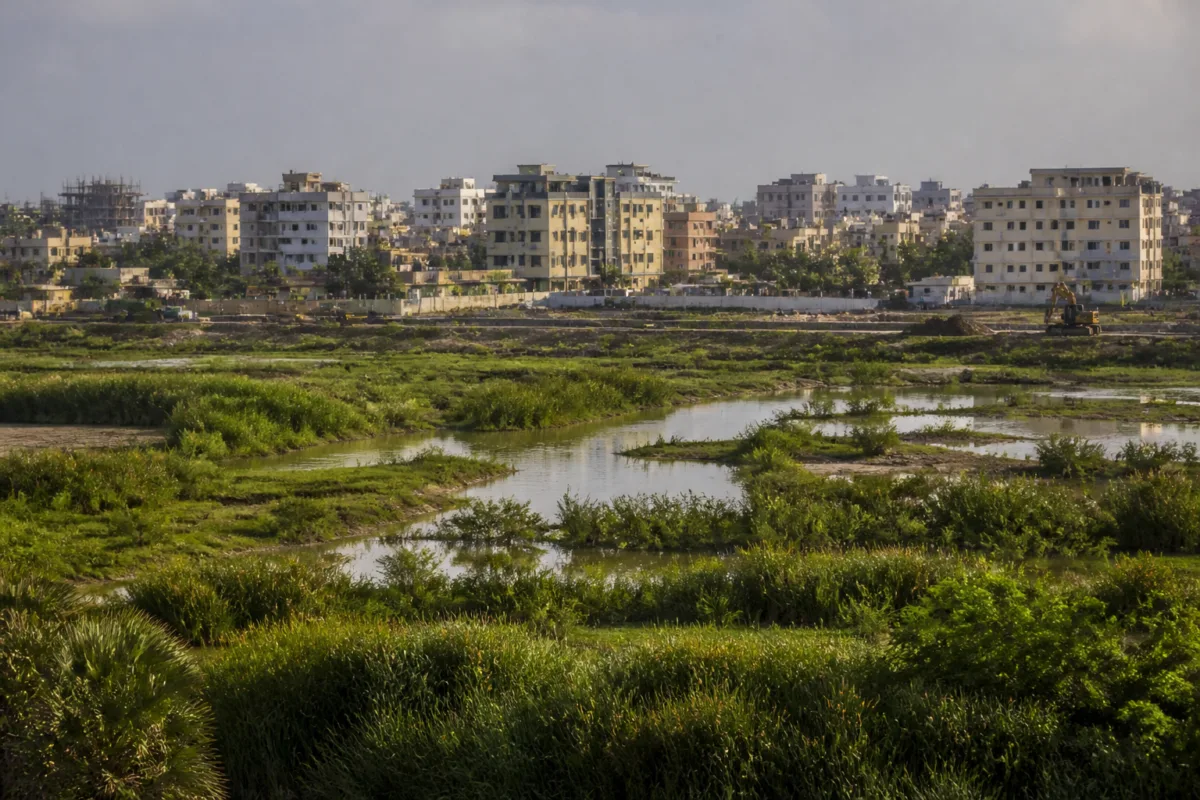
The Confederation of Real Estate Developers’ Associations of India (CREDAI) Chennai has decided to approach the Supreme Court against a National Green Tribunal (NGT) order imposing a one-kilometre construction restriction around Chennai’s Pallikaranai marshland, after the Madras High Court referred the matter to the apex court.
CREDAI said the High Court’s decision could further delay resolution for more than one lakh patta-holders. According to the association, some of the affected land titles date back to 1911.
The dispute concerns the legality of applying a uniform one-kilometre zone of influence around the marsh and restricting development within that area. CREDAI has alleged that the NGT exceeded its jurisdiction by imposing the restriction without following the procedures under the Wetlands Rules, 2017, and without scientific evidence. These are the association’s claims and would be considered by the court if the matter is taken up.
The developers’ body has also questioned the use of a draft report prepared before Pallikaranai was declared a Ramsar site. It said the report did not recommend a uniform one-kilometre buffer. CREDAI further alleged that affected landowners were not heard before the restriction was imposed and raised concerns relating to the constitutional right to property under Article 300A.
The Pallikaranai marsh is a significant wetland within Chennai’s expanding urban region, making the dispute consequential for both land regulation and flood-related environmental safeguards. The case places two regulatory concerns alongside each other: protecting the marsh’s hydrology and determining whether development controls around it should apply uniformly or follow site-specific evidence.
CREDAI said the Tamil Nadu State Wetland Authority conducted a fresh assessment after the High Court’s direction on September 7. The assessment considered hydrological connectivity, drainage pathways, land use and satellite wetlands. Its interim report identified areas that could affect the marsh’s hydrology and proposed safeguards, according to the association.
CREDAI maintains that the protected marshland itself has not been reduced and that the proposal concerns regulation of development in the surrounding zone. It has also questioned how the NGT could prescribe a one-kilometre zone of influence when the boundaries of the Pallikaranai Ramsar wetland have not been formally notified.
The association said the Pallikaranai matter is distinct from a pending Supreme Court case concerning the demarcation of wetland boundaries across the country. The proposed legal challenge will therefore centre on the basis for the Pallikaranai restriction, the procedure used to impose it and the role of scientific and hydrological evidence in defining the area where development should be regulated.

