


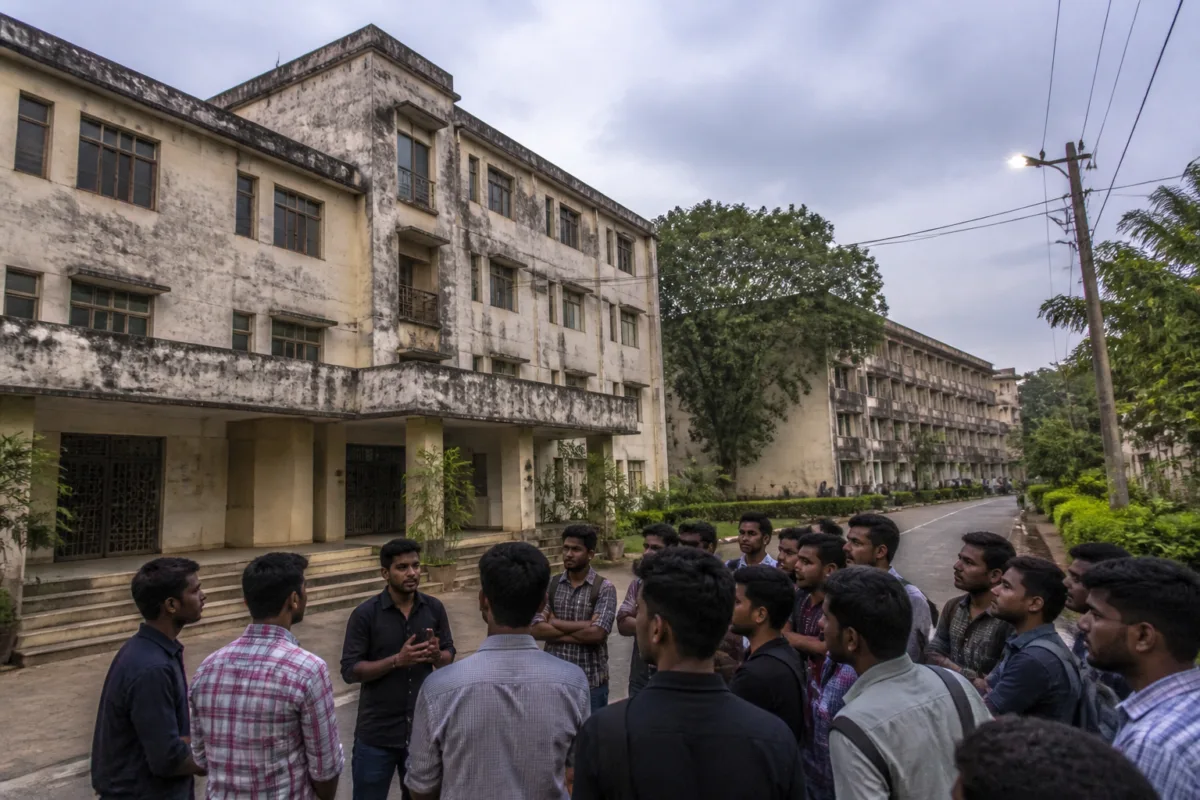
A protest over water and power shortages at Osmania University hostels in Hyderabad has escalated into a dispute over alleged forcible evictions, proposed demolition and the university’s claim that the buildings are being occupied by unauthorised outsiders.
A large number of students staged a silent protest on the university campus on Monday, demanding the restoration of water and electricity to the E-1, E-2 and D hostels. The protesters also urged the administration not to demolish the buildings. Protesters were detained and taken to Amberpet Police Station, according to the report.
BRSV general secretary Jangaiah alleged that students preparing for competitive examinations were being forcibly evicted from their respective hostels. He demanded that the university immediately restore essential services and withdraw its decision to demolish the buildings.
The protest also raised a wider concern about accommodation for unemployed youth. Jangaiah said unemployed youth were struggling because recruitment notifications for vacancies in various departments had not been issued despite the Congress government completing nearly three years in office. The supplied report does not provide details of any specific recruitment notification or confirm how many students were affected by the hostel action.
Osmania University Registrar Prof G Naresh Reddy said the E-1, E-2, D and B.Ed hostels opposite the Law College were more than 100 years old and in a dilapidated condition. He said no legitimate OU students were currently residing in these hostels and that police inspections had found hundreds of unauthorised outsiders occupying the premises.
According to the registrar, the occupants included cab drivers, food-delivery workers, city labourers, watchmen and street vendors. He said protests seeking accommodation for people unrelated to the university were unjustified and warned that unauthorised occupation of the closed hostels posed a serious campus-security concern.
The university’s account differs from the allegations made by the protesters. Reddy said no OU students had lived in the E-2 hostel for the past six years, while the D-Hostel had not been allotted to students for a decade. He added that residents of the E-1 and B.Ed hostels had been provided alternative accommodation a month earlier.
The registrar also linked the accommodation changes to the growing number of international students. He said Nizam College students who had previously stayed in the International Hostel were shifted to the C-Hostel. The report does not specify the number of international students, the condition assessment of each hostel building, or the proposed demolition schedule.
The dispute therefore involves two separate administrative questions: whether students were adequately provided alternative accommodation before the older buildings were closed, and how the university will secure and manage vacant or unauthorisedly occupied premises. The university’s next steps on the buildings, essential services and accommodation arrangements were not detailed in the report.

