


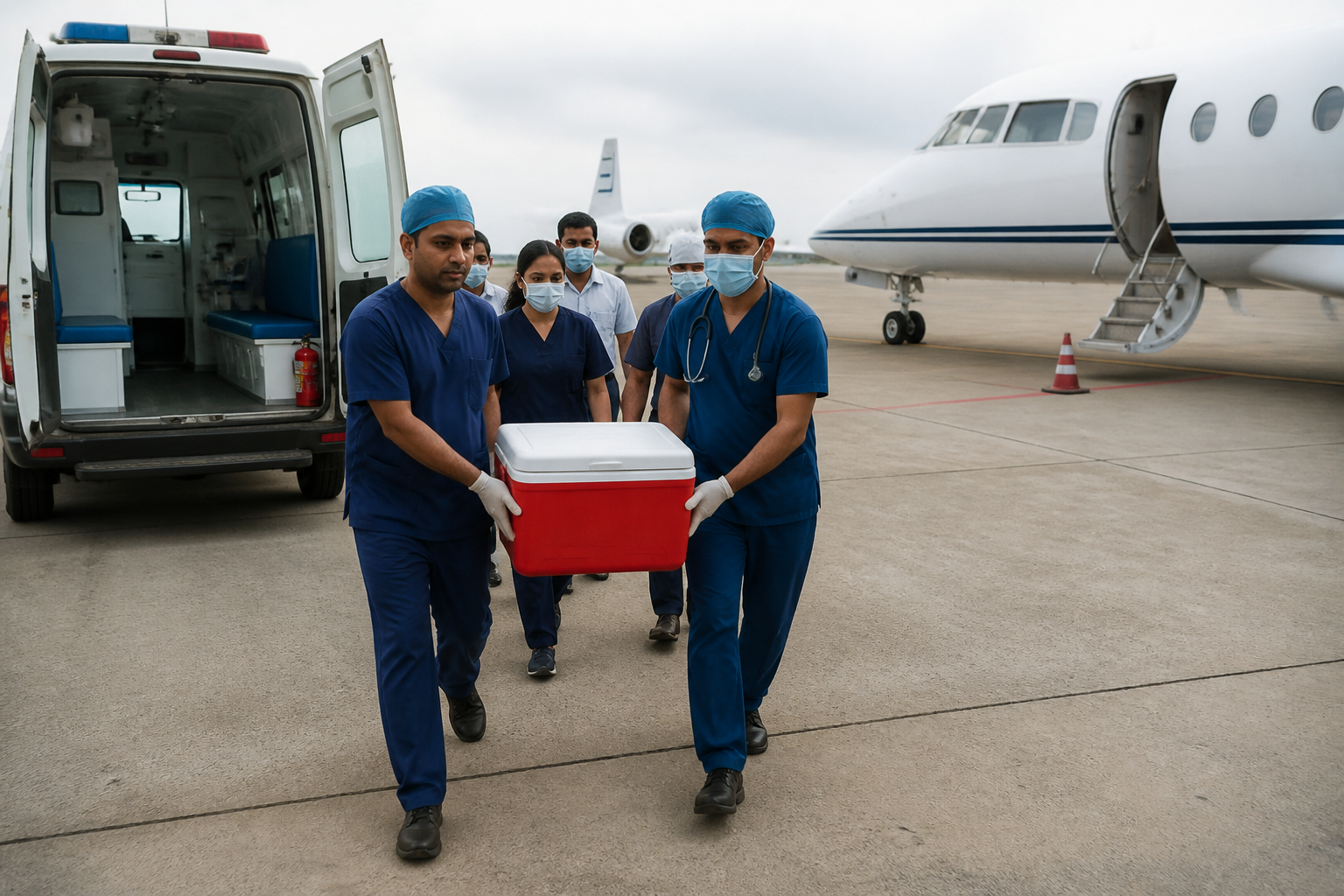
A nine-year-old boy from Solapur whose organs were donated after he was declared brain-dead helped save four patients, including a three-year-old Russian child in Chennai who received his heart, according to a report by Loksatta. The organ donation took place around World Heart Day on September 29, after the boy’s family agreed to donate his heart, liver and both kidneys following a fatal road accident.
The child, from a farming family, was seriously injured while crossing a road in front of his home. He was admitted to Chandan Neurosciences Hospital in Solapur, where treatment continued under the supervision of Dr Prasanna Kasegaonkar. Despite the medical team’s efforts, he was declared brain-dead during treatment.
His parents then consented to organ donation. The heart was allocated to a three-year-old Russian child undergoing treatment at MGM Hospital in Chennai. The liver was donated to a patient in Pune, while both kidneys were given to two other patients in Pune, the report said.
The heart was at risk of being unused because a suitable recipient with the same blood group was not available in Solapur. Aarti Gokhale, the transplant coordinator for the Pune division, subsequently issued an international alert about the availability of the organ. The heart was then matched with the child receiving treatment in Chennai.
The transfer required rapid coordination between the hospitals, transplant authorities, aviation services and local administration. The Chennai medical team travelled to Solapur by charter aircraft to collect the heart. Since a donated heart generally remains viable for transplantation for approximately four to six hours, authorities arranged a green corridor for its movement between Solapur and Chennai.
Dr Pallavi Mehta, head of the intensive care unit at Chandan Neurosciences, said the aircraft had to return to the runway after take-off because of adverse weather, causing the loss of valuable time. The medical teams nevertheless completed the required procedures quickly and transported the heart to Chennai, she said.
The case highlights the logistical limits that accompany organ transplantation in a geographically large and unevenly connected healthcare system. A donation may take place in one city, the recipient may be located hundreds of kilometres away, and the viability of an organ depends on medical matching, rapid retrieval, reliable transport and coordinated decision-making. In this instance, the availability of a suitable recipient outside Solapur prevented the donated heart from going unused.
Doctors Veeresh Naste, Santosh Gujare and Sharad Jadhav, transplant coordinator Dr Sandeep Patil and the hospital team also contributed to the process, according to the report. The transfer was completed through coordination between the Solapur hospital, the Chennai transplant team and the Pune division’s transplant coordination system.
