


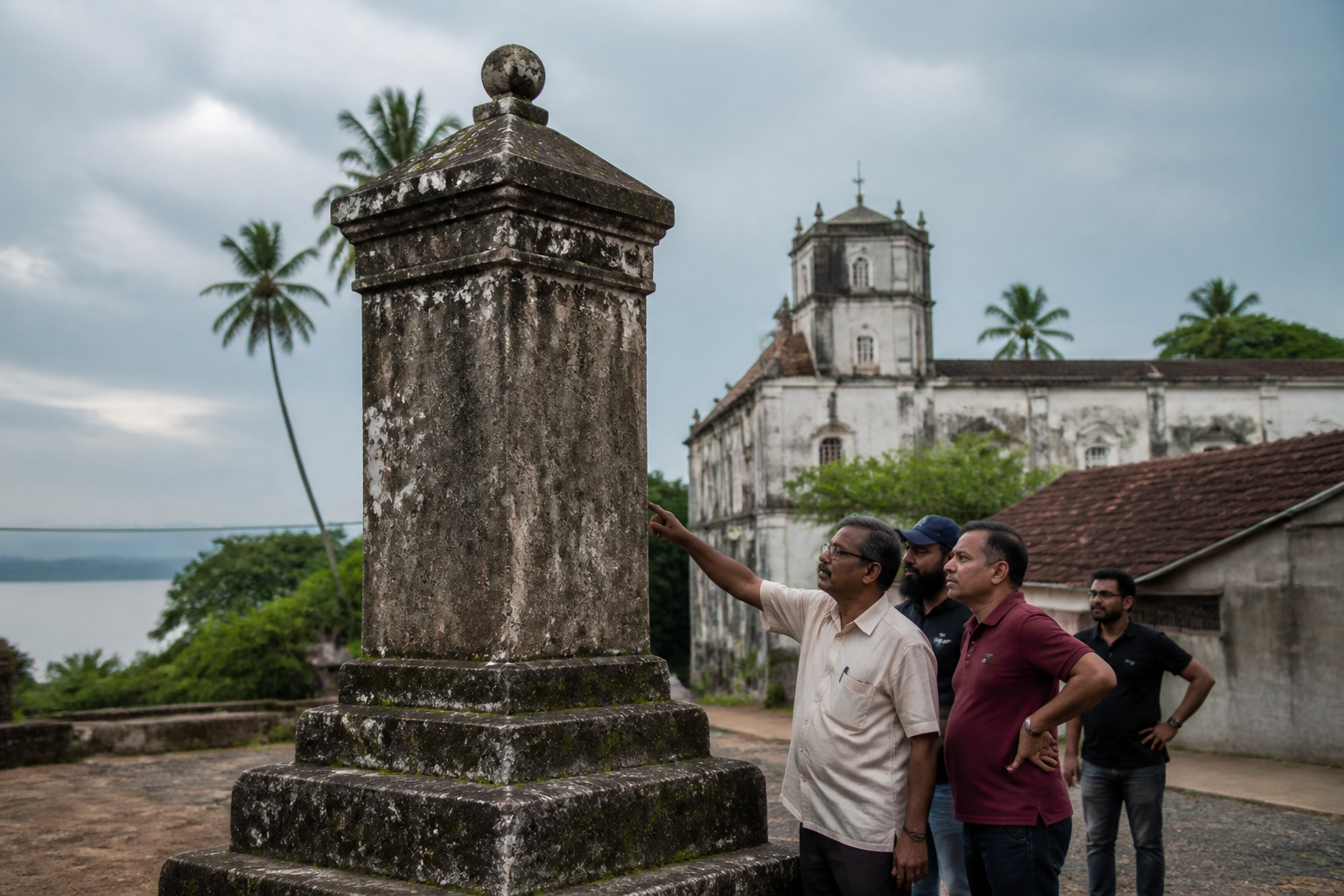
The Save Old Goa Action Committee has begun a signature campaign against the naming of a heritage pillar in Old Goa as ‘Haat Katro Khamb’ and is preparing a legal challenge to the government’s notification concerning the structure.
The campaign follows objections submitted by residents to the directorate of archaeology in April. The objections challenge the naming of the site and question the need to assign a new name to a historical structure that, according to the committee, already has established names in Portuguese, English and Konkani.
“Our lawyer is already preparing a case on behalf of the SOGAC, based on the objections already submitted. We believe a legal challenge is necessary following the notification concerning the name,” Save Old Goa Action Committee member Peter Viegas was quoted as saying.
The committee’s latest move follows a 15-day ultimatum issued to the government, according to an earlier Times of India report. SOGAC had asked the government either to support its claim that the pillar was a place where hands were cut or to rename it ‘Pelourinho Novo’, meaning ‘new pillory’.
SOGAC maintains that the structure is already known as ‘Pelourinho Novo’ in Portuguese, ‘New Pillory’ in English and ‘Nhovo Khambo’ in Konkani. The committee has also said that ‘Nhovo Khambo’ is written in Devanagari on one side of the pillar.
The disagreement therefore centres on more than the wording of a sign. The committee is challenging the process through which a heritage structure is identified and presented to the public, while also disputing the historical basis for the name ‘Haat Katro Khamb’. The objections submitted to the archaeology directorate and the proposed court case are now expected to place the naming decision under formal scrutiny.
Villagers have questioned why a new name should be assigned when multiple established names are already associated with the structure. Their objections also raise questions about how official heritage records, public signage and local historical memory should correspond when different names exist for the same site.
As part of the signature campaign and the proposed proceedings, SOGAC is expected to submit additional material, including photographs of the stone. The committee’s lawyer is preparing the case based on the objections already filed with the archaeology directorate.
The next step will be the submission of the proposed legal challenge and supporting material, while the government’s response to the committee’s demand and the archaeology directorate’s position remain central to the dispute.

