


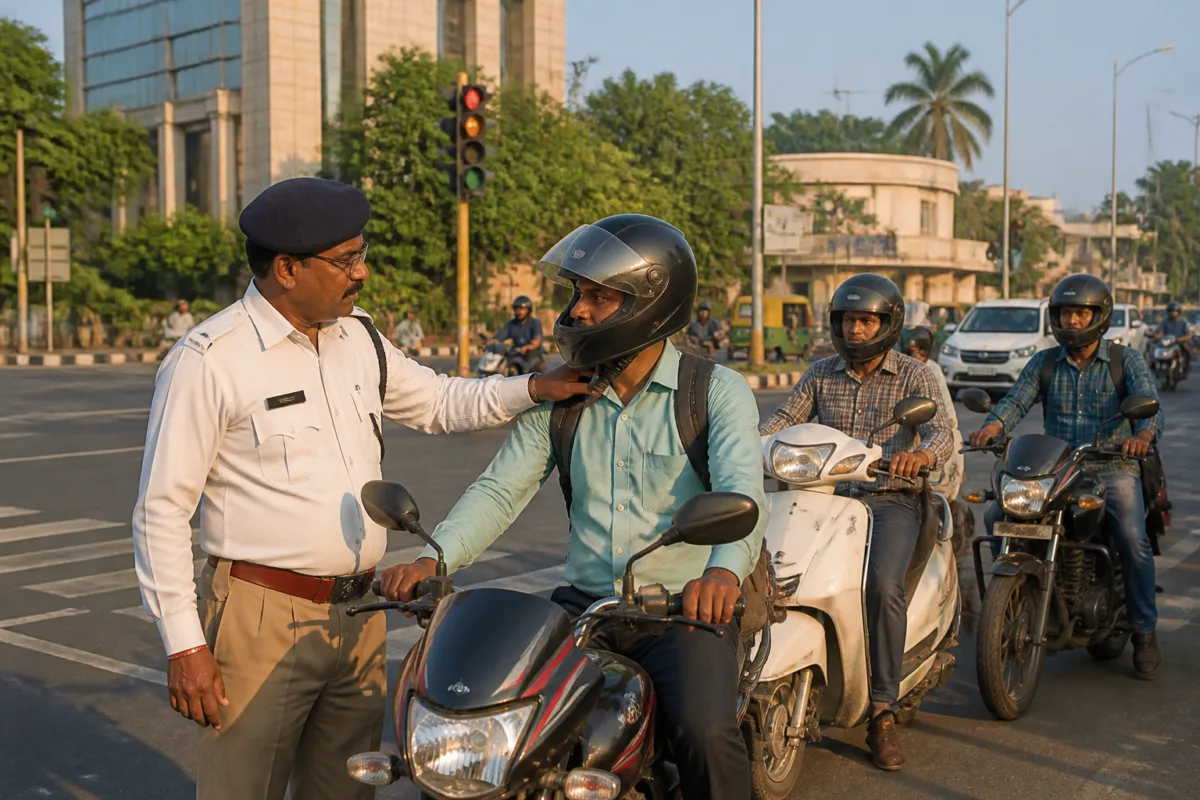
Odisha recorded 12,782 road accidents in 2025, with two-wheelers involved in nearly 45% of cases, while police data showed that 59% of riders involved in these crashes were not wearing helmets. At least 1,848 helmetless two-wheeler riders died during the year, prompting the police and regional transport offices to intensify enforcement and road-safety awareness programmes across the state.
According to an analysis of Odisha Police data, 5,664 of the reported road accidents involved two-wheelers. Of the riders involved in those crashes, 3,341, or around 59%, were found to be travelling without helmets. The figures place helmet compliance at the centre of the state’s road-safety response, particularly on busy urban roads, highways and accident-prone stretches.
The police analysis also highlighted the difference protective headgear can make during a crash. Of the 5,664 two-wheeler accidents recorded, 1,630 injured riders survived because they were wearing helmets at the time of the collision, a police officer said.
Police officials said the data pointed to continued disregard for basic safety requirements despite repeated awareness campaigns and penalties for violations. “The data leaves little room for doubt. Helmets save lives. A significant number of deaths could have been prevented had the victims worn proper protective gear,” a senior traffic officer said.
DGP (in-charge) Vinaytosh Mishra urged motorists to treat helmet use as a routine safety practice rather than an optional precaution. “People often skip helmets for short trips, assuming nothing will happen. Wearing a helmet should become a habit, not a choice,” Mishra said.
The police and RTOs have planned special enforcement drives targeting helmetless riding across Odisha. Checks are being intensified at major intersections, highways and stretches identified as accident-prone. The enforcement will be accompanied by awareness programmes in schools, colleges and workplaces to encourage compliance with traffic rules.
The planned drives will extend the road-safety response beyond issuing penalties, with officials saying the objective is to reduce deaths and injuries. Road-safety campaigner Subrat Nanda said head injuries remained a leading cause of death among two-wheeler crash victims and that certified helmets could substantially reduce the risk of fatal head injuries. “Enforcement is important, but behavioural change is equally crucial,” he said.
SP (Puri) Prateek Singh said every rider who used a helmet improved their chances of reaching home safely, and that road safety also depended on individual responsibility. The police and transport authorities are expected to continue checks and awareness activities at intersections, highways, schools, colleges and workplaces across the state.

