


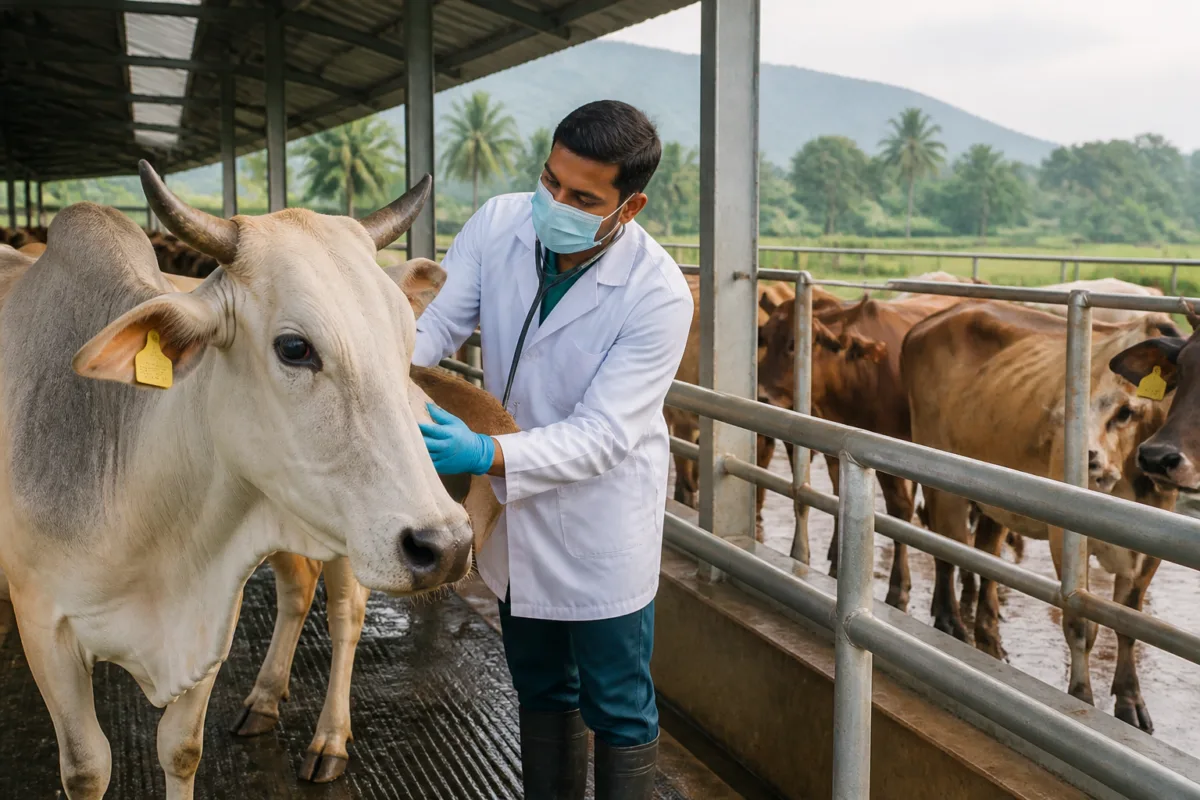
The Odisha cabinet has approved the Odisha Bovine Breeding (Regulation) Bill, 2026, proposing a regulatory authority, mandatory registrations and a digital registry to oversee cattle and buffalo breeding services across the state. The bill is likely to be introduced in the Odisha Assembly during its forthcoming session beginning November 18.
The cabinet meeting was chaired by Chief Minister Mohan Charan Majhi. If the Assembly passes the legislation, it will be implemented in phases after notification, according to the details reported by the Times of India.
The proposed Odisha Bovine Breeding Regulatory Authority will be responsible for registration, certification, quality monitoring and enforcement. Chief Secretary Anu Garg said the legislation seeks to establish a framework for scientific bovine breeding and ensure the quality of breeding services available in the state.
Registration would become mandatory for semen stations and banks, artificial insemination centres, technicians and establishments using assisted reproductive technologies. Artificial insemination services would be permitted only through registered technicians or veterinary practitioners under the proposed framework.
The bill also provides for quality and traceability standards covering semen, embryos and other breeding materials. The proposed authority would have powers relating to inspection, quality testing, corrective measures and penalties. The stated objective is to protect farmers from substandard breeding material and unauthorised services.
A State Digital Livestock Breeding Registry is also proposed. It would record animal identification, pedigree and parentage, while allowing the authorities to monitor breeding outcomes. This would create a formal information system for tracking breeding interventions and the results associated with them.
The legislation proposes an Odisha Bovine Genetic Improvement Fund to support genetic improvement, conservation of indigenous breeds, modern breeding technologies, capacity building and research. The bill also seeks to regulate the use of sex-sorted semen and advanced reproductive technologies, including in vitro fertilisation and embryo transfer.
The government has linked the proposed law to higher cattle and buffalo productivity, conservation of indigenous breeds, increased farmer incomes and growth in milk production. It also expects strengthened breeding services to support livestock-based livelihoods and contribute to the state’s milk production targets under Viksit Odisha.
The proposal places breeding services within a more formal administrative system, combining licensing, quality control, digital records and enforcement. Its next immediate milestone is consideration by the Assembly during the session scheduled to begin on November 18. Further implementation details would follow only after enactment and notification of the law.

