


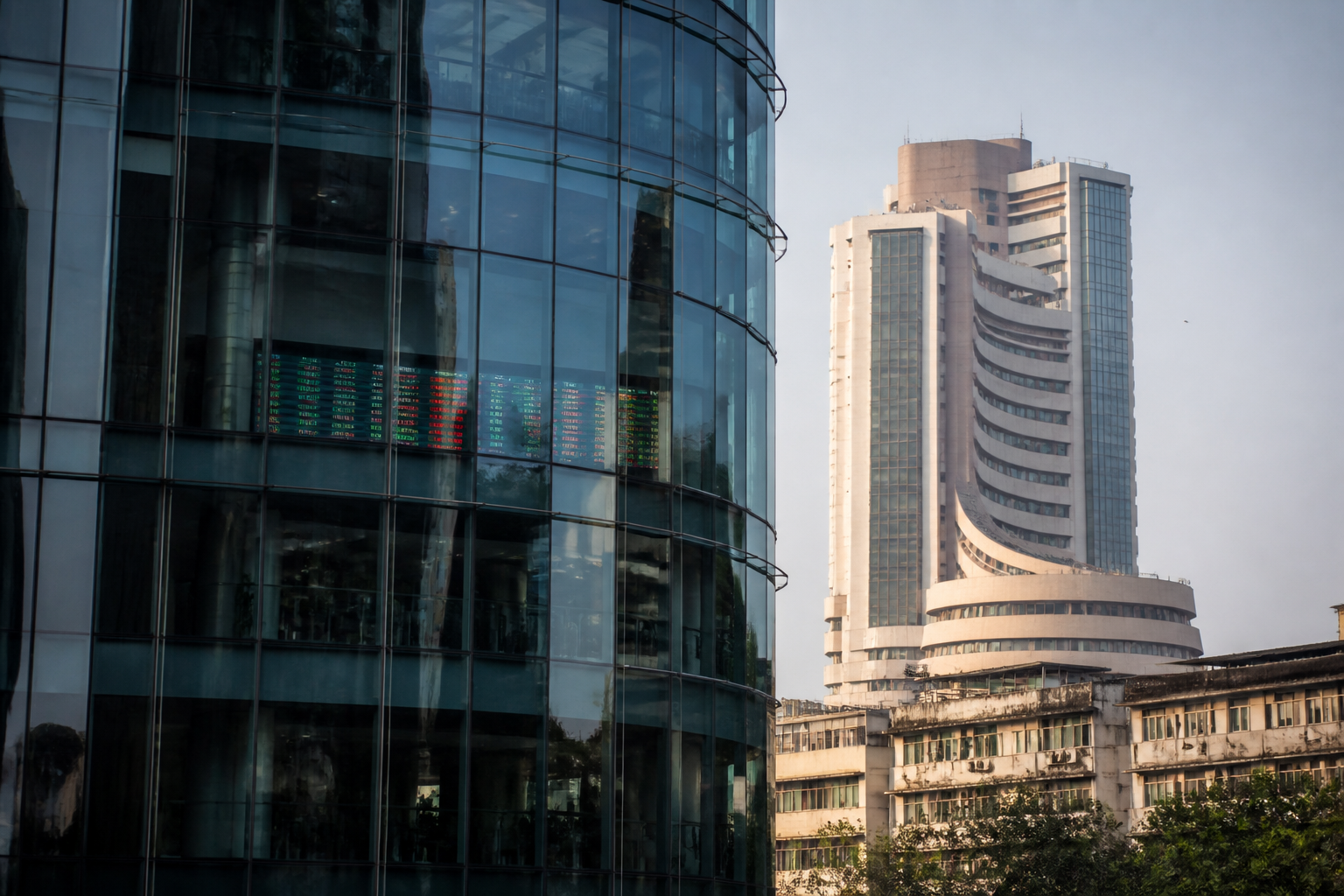
The National Stock Exchange’s proposed initial public offering has moved closer to the market after the Securities and Exchange Board of India gave its final observations on the exchange’s draft papers. The milestone revives a listing plan that has been delayed for nearly a decade and places one of India’s most important financial institutions at the centre of a major test of market governance, ownership and public accountability.
NSE received Sebi’s observations on September 4, according to an update with the regulator. The exchange had filed its draft red herring prospectus on June 17. Receiving Sebi’s observations allows a company to proceed with the next steps towards a public issue, subject to applicable requirements. It does not, by itself, set the final issue size, valuation or launch date.
That distinction is important because the numbers associated with the proposed NSE IPO are large but not yet final. According to PTI, the issue could be worth around Rs 30,000 crore. If completed at that level, it would rank among the largest public offerings in India and could exceed Hyundai Motor India’s Rs 27,870-crore IPO launched in October 2024.
The proposed issue is structured entirely as an offer for sale. Existing shareholders would sell 14.89 crore shares, representing nearly 6% of NSE’s stake, while the exchange itself would not receive proceeds from the transaction. This means the IPO would primarily change the ownership profile and public market visibility of the exchange rather than provide it with fresh capital for expansion.
Among the identified selling shareholders, State Bank of India would offload up to 2.48 crore shares and MS Strategic (Mauritius) Limited would sell 1.60 crore shares, according to the report. Other existing shareholders would account for the remaining shares in the offer. The final allocation and terms will depend on the issue documents and applicable regulatory requirements.
The proposed transaction also brings the value of financial-market infrastructure into public view. People familiar with the matter told PTI that the issue size could imply a market capitalisation of more than Rs 5 lakh crore. Reuters has reported that NSE’s valuation in the unlisted market is estimated at about $55 billion, a figure that could place it among India’s 10 most valuable companies by market capitalisation if reflected in a public listing.
Those estimates should not be treated as established market value. The eventual valuation will depend on the price band, investor demand, the number of shares offered and market conditions when the issue is launched. The supplied information does not establish a timetable for the public issue or a final pricing range.
The long delay behind the listing is central to understanding its significance. NSE first filed draft IPO papers in 2016, but its listing ambitions were held up by regulatory scrutiny and legacy legal issues. The exchange faced investigations linked to its co-location and dark-fibre facilities, along with other regulatory matters. Reuters reported that NSE’s settlement of past lapses with Sebi removed a major obstacle to the IPO.
The history demonstrates that listing a market operator is not equivalent to listing an ordinary commercial company. NSE is itself part of the infrastructure through which investors trade securities and derivatives. Its systems, rules, benchmarks and operating arrangements influence how market participants access and use India’s capital markets. As a result, questions about governance and regulatory compliance have implications beyond the exchange’s shareholders.
NSE dominates India’s equity derivatives market and is described in the supplied report as the world’s most active derivatives exchange by contracts traded. It also operates the benchmark Nifty 50 index. These functions make the exchange a significant institutional layer in the country’s financial economy, even though its operations are not physical infrastructure such as roads, railways or utilities.
For Urban Acres readers, the relevant issue is how such institutions support the wider urban economy. Large cities concentrate financial firms, technology companies, professional services, regulators and investors. The operation of a major exchange affects the market environment in which businesses raise capital, financial workers operate and households participate in investment. The IPO therefore links corporate ownership with the governance of a system used by a broad range of economic participants.
The offer-for-sale structure also limits what can be inferred about future investment by NSE itself. Since the exchange will not receive proceeds from the share sale, the transaction is not designed to fund a new technology platform, trading facility or expansion programme. Its immediate function is to allow existing shareholders to sell part of their holdings and to bring the exchange’s equity into the public market.
Public listing could nevertheless alter the level of information available about the institution. A listed company must operate within disclosure, reporting and shareholder-accountability requirements applicable to public issuers. The precise obligations and governance arrangements will be set out through the final offer documents and the listing process. The supplied material does not specify those terms, so the effect of the listing on NSE’s governance cannot yet be assessed in detail.
The comparison with BSE provides a limited market reference. BSE went public in 2017, and its shares have since surged 28-fold, according to the supplied report. That performance may shape investor expectations around NSE, but it does not establish that the two exchanges will experience similar valuations or returns. Their ownership structures, business performance, market conditions and listing circumstances may differ.
The valuation estimates attached to NSE’s proposed IPO also show why the issue is likely to attract attention from institutional and retail investors. A market capitalisation above Rs 5 lakh crore would make the exchange one of India’s largest listed companies by value. But the available material does not provide the financial metrics needed to assess that valuation, including earnings, revenue growth, profitability, operating costs or the composition of its business.
That absence matters because the exchange’s importance to the financial system and the price investors are willing to pay for its shares are separate questions. NSE’s dominant position in equity derivatives and its ownership of the Nifty 50 brand may support investor interest, but regulatory history, market structure and future competition remain relevant to how the company is assessed. The supplied report does not provide enough evidence to draw conclusions on those issues.
Sebi’s observations therefore represent a procedural and regulatory milestone, not the completion of the IPO. NSE must still meet the applicable requirements for launching the public issue, and the final offer documents will determine the number of shares, pricing process, timetable and disclosures available to investors. Until those details are published, the Rs 30,000-crore estimate and the possible valuation above Rs 5 lakh crore remain indicative.
The broader urban question is how India’s rapidly expanding economic centres are supported not only by transport, housing and digital networks but also by institutions that organise capital and economic exchange. A stock exchange is an invisible form of infrastructure: its systems are not experienced as a physical public asset, yet its rules and reliability shape the functioning of companies, investors and financial markets.
The NSE IPO brings that infrastructure into a more visible ownership framework. It could become one of India’s largest public issues, but its importance will ultimately depend on more than the size of the transaction. The next material developments will be the final offer documents, the issue timetable, the proposed price band and the disclosures that explain how the exchange’s regulatory history and business position are presented to public investors.
