


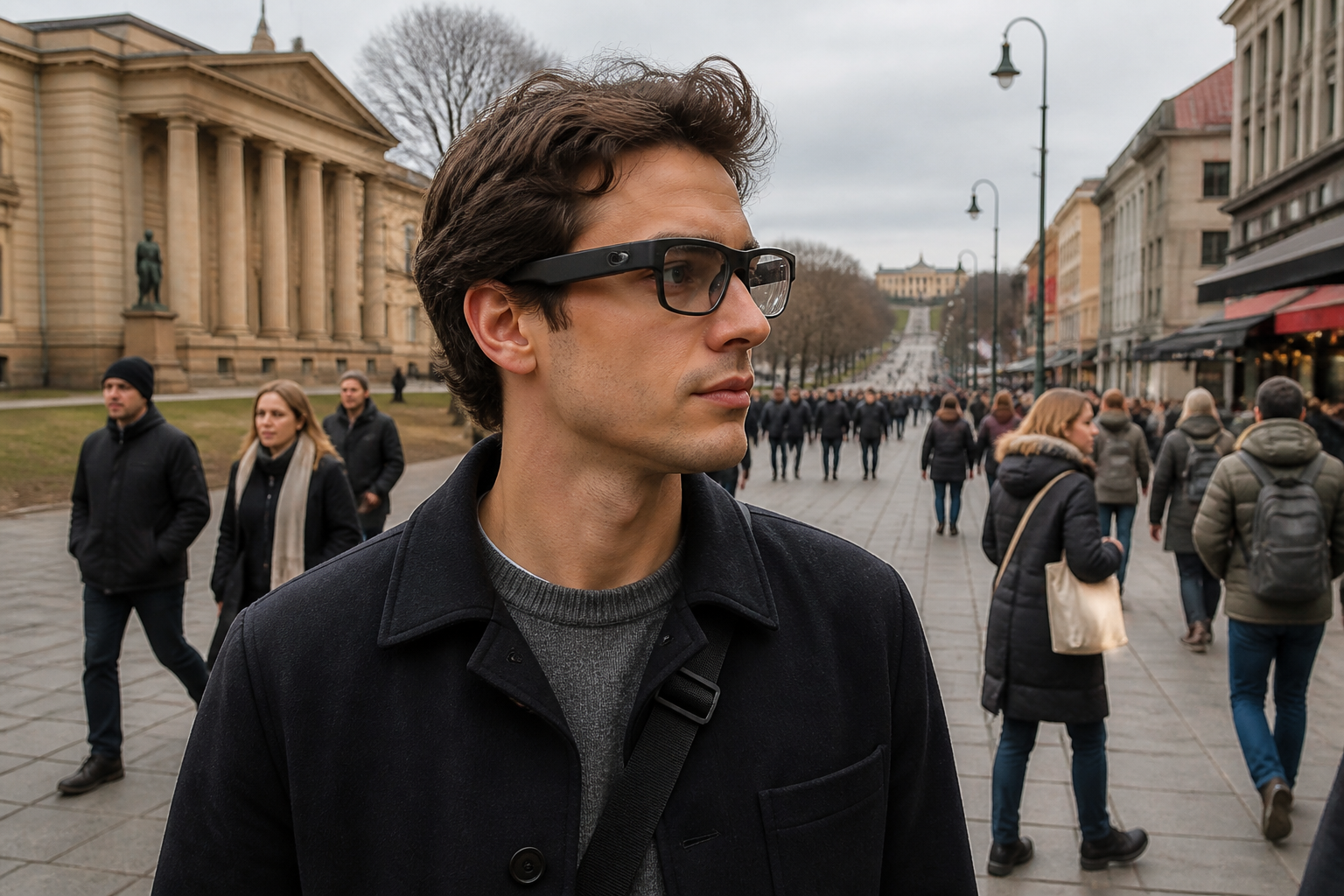
Norway plans to propose a temporary ban on the use of AI glasses in selected public places, citing concerns that people could be photographed, filmed or audio-recorded without their knowledge. The proposed restriction could cover parks, beaches, museums, shopping centres and public events, as well as schools, playgrounds and youth clubs.
The Norwegian government announced the plan on Monday in a statement, saying it would not amount to a total ban on the technology. Private use would remain allowed where other people are not at risk of being recorded without consent, the government said.
Digitalisation and Public Governance Minister Torgeir Micaelsen said he was concerned that powerful new technology was being introduced in settings where people might be photographed, filmed or audio-recorded without knowing it. His comments place the proposal within a wider debate over how public spaces can protect personal privacy as cameras and recording devices become easier to conceal and use.
The proposed restrictions could also apply to locations where people have a heightened expectation of privacy, including doctors’ offices, swimming pools and gyms with changing rooms. The government said it would examine the specific technologies covered before finalising the legislation.
That review could determine whether the temporary ban applies only to glasses equipped with cameras and audio recording, or also to glasses that combine cameras with artificial intelligence functions. Officials will also consider whether the rules should extend to other body-worn devices that include cameras, audio recording or AI capabilities.
The proposal highlights the difficulty of regulating technology through the places where it is used. Parks, museums, shopping centres and public events are designed for public access, but they also bring together people who may not know when they are being recorded. Schools, playgrounds, medical facilities and changing rooms present a more sensitive setting because children, patients and users may have limited ability to avoid exposure.
The Norwegian government described the measure as temporary and said it would submit a bill to parliament as soon as possible. It also plans to establish an expert group to advise on permanent national regulation of body-worn technology.
The government’s next steps will determine the scope of the proposed ban, the technologies covered and the conditions under which private use remains permissible. Until the bill is presented and considered by parliament, the restrictions remain a government proposal rather than an enacted nationwide ban.
