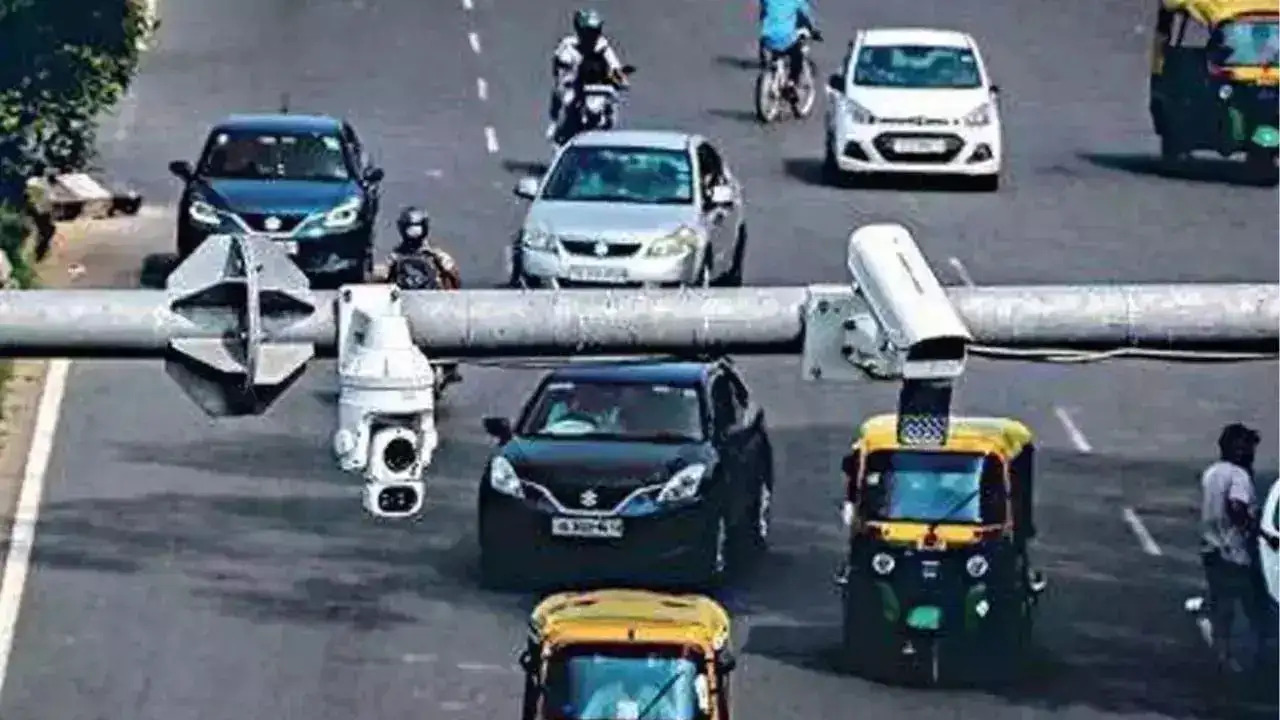
New Delhis Safe City Drive Falters as CCTVs Stop Working
New Delhi’s ambitious ‘Safe City’ initiative, designed to bolster urban security, particularly for women, faces a significant operational challenge: thousands of its installed CCTV cameras are currently non-functional. While these surveillance tools have historically proven invaluable in resolving complex criminal investigations, their widespread disrepair, largely attributed to a lack of proper training for personnel, directly impacts the project’s efficacy and represents a substantial financial loss to the public exchequer. This operational lapse in a flagship safety programme underscores a critical juncture for the capital’s security infrastructure, demanding immediate attention to ensure a truly safe and equitable urban environment for all citizens.
The ‘Safe City’ project, launched in 2018 by a central ministry under the Nirbhaya Fund, was conceptualised to plug critical gaps in urban safety systems, with a particular focus on enhancing the security of women. The initiative’s vision encompassed the identification of crime hotspots, deployment of advanced technology, and community capacity building through awareness programmes. The technological cornerstone included the installation of CCTV cameras, many equipped with artificial intelligence (AI), alongside real-time offender tracking and rapid-response systems for sensitive cases. These measures were intended to create well-lit public spaces and dedicated support services, forming a comprehensive safety net.
Despite this ambitious framework, a recent Right to Information (RTI) disclosure has brought to light the disconcerting reality of Delhi’s surveillance landscape. Out of 19,431 CCTV cameras currently installed across the national capital, approximately 10,000 were part of the ‘Safe City’ project. However, a significant number of these, especially those under the flagship project, are reported to be non-operational. This leaves large swathes of the city vulnerable and places an additional burden on an already stretched policing system, highlighting a critical disconnect between strategic intent and ground-level execution.
The RTI data further reveals a varied operational status across different districts. While some areas like Outer District report all 539 cameras as functional, and New Delhi District shows a high operational rate with 2,802 out of 2,872 cameras working, other districts present a stark contrast. Notably, Shahdara District, with 1,558 installed cameras in 2025, shockingly had only 32 functional during that period. The South District, with 1,829 cameras, relies on concerned firms for repairs, suggesting a reactive rather than proactive maintenance approach. This inconsistency underscores a fragmented approach to surveillance infrastructure management across the city.
A key impediment to the full operationalisation of the ‘Safe City’ cameras has been identified as a critical deficit in training for police personnel. A senior police official, speaking anonymously, conceded that many cameras under the ‘Safe City’ project remain unused because officers lack the necessary training to operate them effectively. This highlights a systemic issue where significant investments in technology are undermined by an insufficient focus on human capital development, thereby limiting the potential of these crucial security assets and leading to inefficient resource utilisation.
Paradoxically, even with these infrastructural lapses, Delhi Police have reported a decline in major crimes during the first quarter of 2025. Comparative analysis of crime statistics from January 1 to March 31 over the past three years indicates a reduction in serious offences such as robbery, snatching, and crimes against women. Reported rape cases, for instance, fell by 12.3% from 2023 to 2025, and molestation cases saw a 32.36% decline in the same period. Police attribute these positive trends to intensified patrolling, enhanced night surveillance, and a stricter law and order environment, suggesting that traditional policing methods continue to yield results.
Despite the reported malfunctions, existing CCTV infrastructure has demonstrably played a pivotal role in cracking numerous criminal cases. Recent successes include the arrest of a serial burglar after analysing over 50 camera feeds, the apprehension of another woman burglar identified through more than 250 camera recordings, and the tracing of a vehicle involved in a body dumping case via 150 CCTV feeds. Even internal investigations, such as the arrest of a police officer for theft, have relied heavily on CCTV evidence. These instances powerfully illustrate the indispensable potential of surveillance systems when they are fully operational and properly utilised.
The disparity between the reported decline in crime and the non-functional status of a substantial portion of Delhi’s surveillance network presents a complex challenge. While police efforts in traditional patrolling and law enforcement are commendable, the underutilisation of advanced technological tools, especially those funded under a critical initiative for women’s safety, signifies a need for urgent redressal. To truly achieve the vision of a gender-neutral, equitable, and sustainable ‘Safe City,’ addressing the training and maintenance gaps in the CCTV infrastructure is paramount, ensuring that every investment translates into tangible security benefits for the populace and that public funds are optimally deployed.