


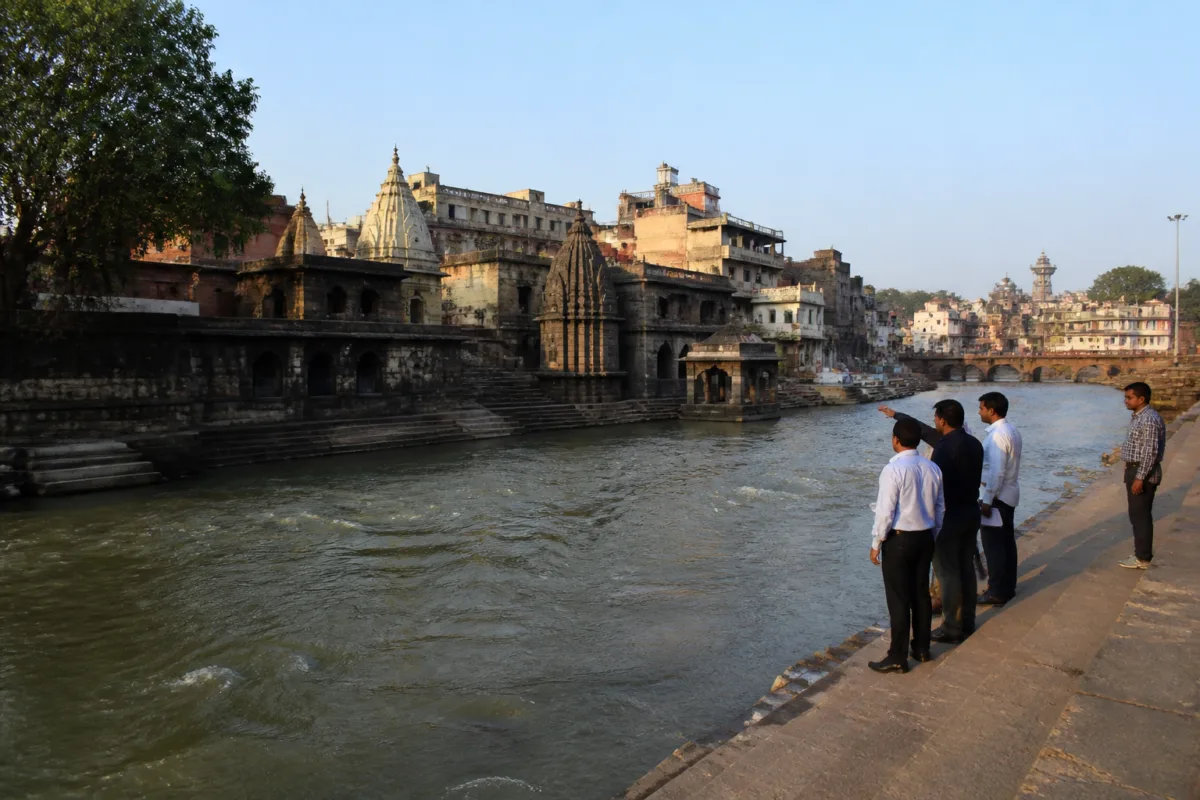
Nashik is considering an upstream water-storage plan to maintain a year-round flow in the Godavari, particularly around the Ramkund area, as the city works to address pollution before the Kumbh Mela.
Water Resources Minister and Nashik guardian minister Girish Mahajan has instructed the irrigation department and district administration to conduct a technical study on whether water can be stored upstream and released into the river in stages throughout the year, according to a report by Loksatta.
The proposal follows a similar plan being undertaken to maintain flow in the Godavari at Trimbakeshwar. The study is expected to examine whether a controlled release can provide water in the river channel around Ramkund during periods when natural flow is inadequate. The report does not provide details of the proposed storage capacity, release schedule, cost or implementation agency.
The issue was discussed after a District Planning Committee meeting held at the district collector’s office on Friday. At a subsequent press conference, Mahajan reviewed the status of measures being undertaken to make the Godavari pollution-free before the Kumbh Mela.
The proposed flow-management plan is being considered alongside measures to reduce the entry of untreated sewage into the river. In a petition concerning Godavari pollution, the state government has acknowledged that sewage from seven drains in Nashik is currently entering the river, the report said. The government has also stated that these drains will be diverted to nearby sewage-treatment plants.
The Nashik Municipal Corporation has undertaken a sewage and river-cleaning plan valued at Rs 2,200 crore, according to the report. A network of sewage pipelines is being developed, while sewage-treatment-plant works in the city are expected to be completed within the next four to five months. The stated objective is to treat all sewage before it is discharged into the river channel.
Trimbakeshwar is also expected to treat water before releasing it into the Godavari. Together, the measures link river-flow management with pollution control: stored water could support a more continuous flow, but the quality of that flow will depend on the completion and operation of diversion networks and treatment facilities.
For Ramkund and other riverfront areas, the immediate significance is that the proposed storage plan is not yet an approved operating system. It remains subject to technical assessment, while the sewage-diversion and treatment projects are at different stages of execution. The effectiveness of the wider river-restoration effort will therefore depend on whether the planned infrastructure is completed and whether sewage is consistently intercepted and treated before reaching the Godavari.

