


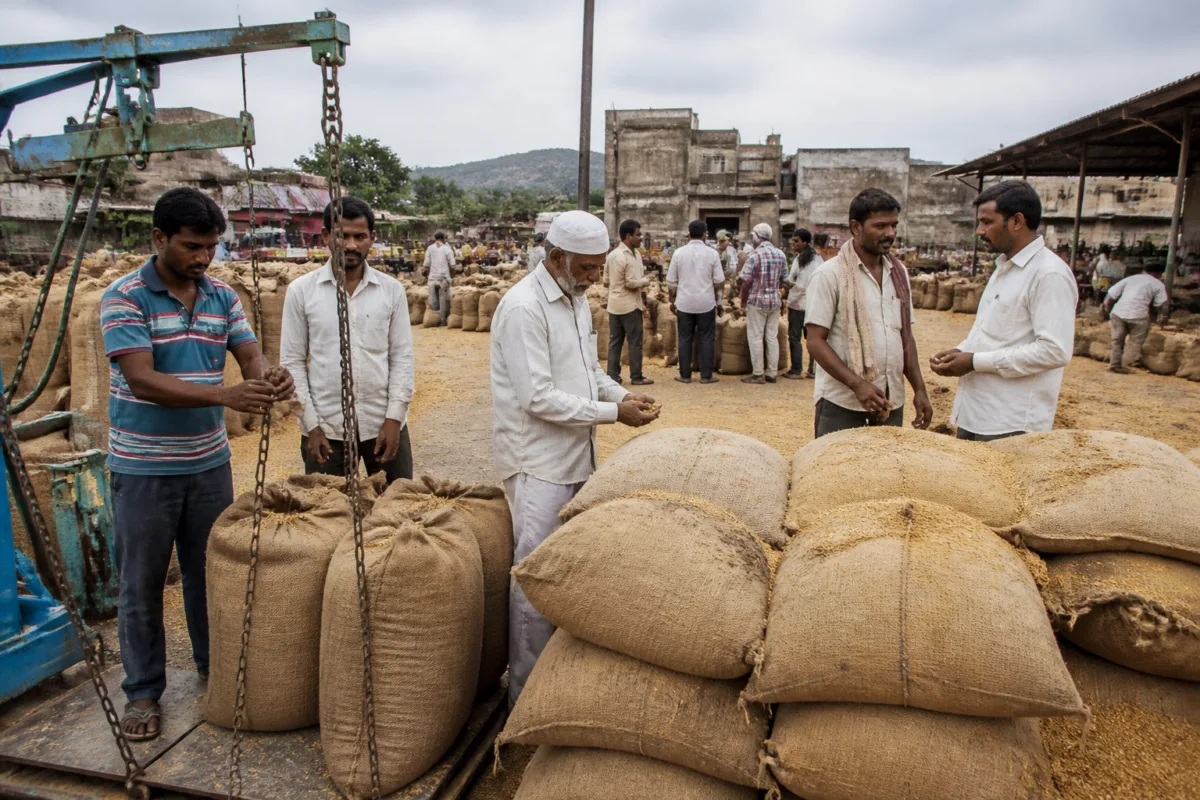
Nashik rice prices have risen sharply after low rainfall damaged paddy cultivation in Igatpuri, with farmers currently receiving up to Rs 5,000 per quintal during the 2026 kharif season, according to a report by Loksatta – Nashik. The Ghoti Agricultural Produce Market Committee will hold a farmer-trader coordination meeting on November 20 to discuss prices and the difficulties faced by growers.
Farmers in Igatpuri, a major paddy-growing region in Nashik district, are receiving between Rs 3,500 and Rs 4,000 for an 80-kilogramme sack. This works out to approximately Rs 4,600 to Rs 5,000 per quintal. The report said the earlier price for paddy was generally between Rs 2,500 and Rs 2,800 per quintal.
The increase has come as low rainfall reduced the expected output from the taluka. The report described the situation as part of wider drought conditions affecting the state and said the damage to paddy cultivation could place further pressure on rice supplies and prices in the period ahead.
The price movement has created conflicting pressures across the supply chain. Higher rates may improve returns for farmers who have managed to harvest a crop, while lower production and increased procurement costs could affect traders and consumers. The available report does not provide district-level production figures, retail rice prices or an estimate of the total area affected by crop damage.
The Ghoti market committee has said farmers should receive better compensation for the labour invested over the year. Its proposed meeting is intended to bring paddy growers and purchasing traders together and to seek a mutually acceptable approach to procurement during the difficult season.
The meeting will also provide a forum for farmers to present their demands and operational problems. The market committee has appealed to paddy producers across Igatpuri taluka to attend in large numbers. The report attributes the appeal to the committee’s chairperson, vice-chairperson and board of directors.
For urban consumers, the development is relevant because a reduction in production at a major regional paddy-growing centre can feed into procurement and food prices, although the supplied report does not establish how much retail prices have changed or whether further increases are certain. The immediate next step is the farmer-trader coordination meeting scheduled at Ghoti on November 20.

