


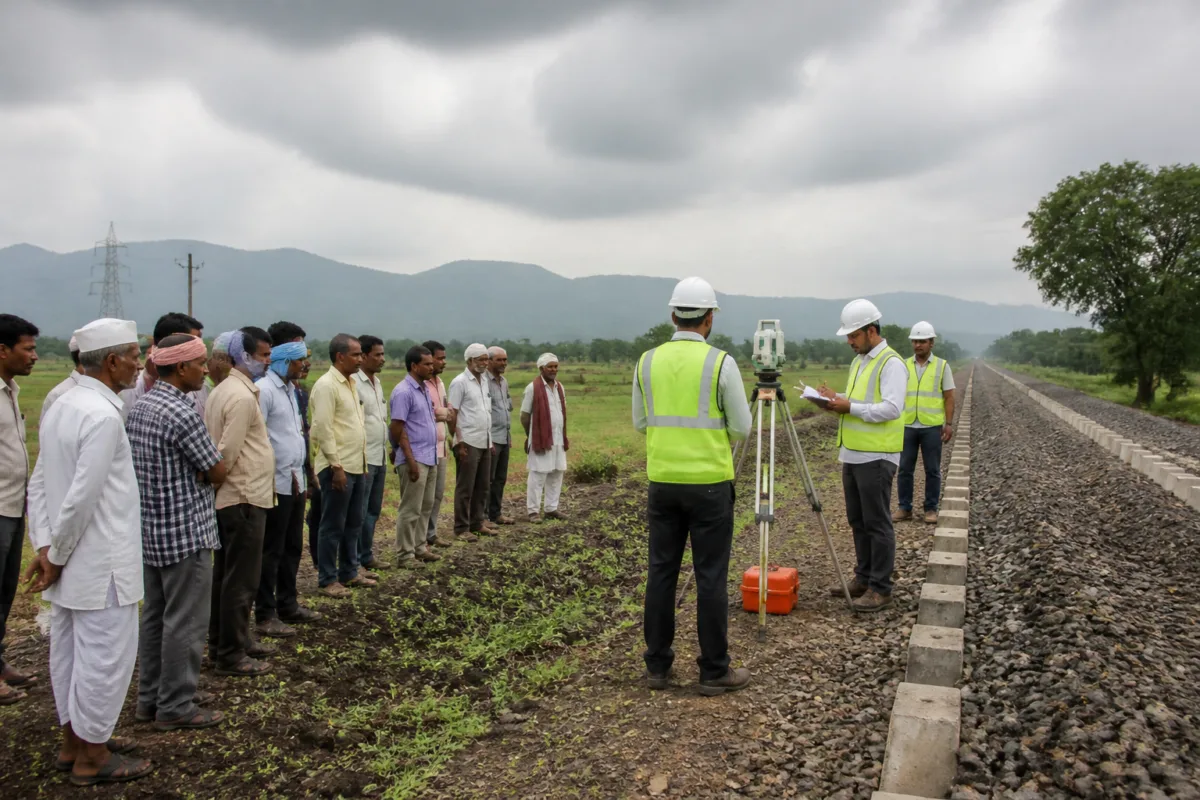
The committee examining the proposed Nashik-Pune railway project has crossed its 60-day deadline without completing its study, while a demand for a public hearing involving affected citizens and farmers remains unresolved, according to a report by Loksatta – Nashik.
The committee was formed to conduct a detailed assessment of the long-discussed railway project. Although its prescribed 60-day period has ended, MLA Satyajeet Tambe has indicated that he is willing to allow more time if the committee’s work continues in a serious and technically sound manner. He has, however, maintained that the public must be heard before the process moves ahead.
Two meetings of the committee have been held so far, with discussions reportedly taking place at intervals of approximately eight to 15 days. The committee is also considering seeking technical advice from established institutions, including the Indian Institute of Science in Bengaluru, to support a detailed examination of the project.
The committee is chaired by Dr Anil Kakodkar. A meeting under his chairmanship was held on 4 November, and another meeting was planned within eight days, the report said. The committee’s study is expected to determine the direction of the project, which has remained under discussion amid demands for improved rail connectivity between Nashik and Pune.
The deadline extension has to be viewed against two demands raised during an earlier agitation related to the project. The first was that the committee should not be given an extension beyond 60 days. The second was that a public hearing should be organised so that citizens connected with the project, including farmers, could present their views.
While Tambe has adopted a positive position on allowing the committee additional time for its technical work, he has said that there has been no concrete progress on the public hearing demand. He has called for the divisional commissioners of Pune and Nashik, who are members of the Kakodkar committee, to engage directly with railway officials and reach people to hear their concerns.
The issue places two parts of the project process in focus: the technical assessment needed to establish its feasibility and the institutional process for recording the views of people who may be affected by the railway alignment or related decisions. The Loksatta report did not specify a final date for the committee’s conclusions or announce a confirmed schedule for the public hearing. The next committee meeting and any decision on public consultation remain the immediate milestones.

