


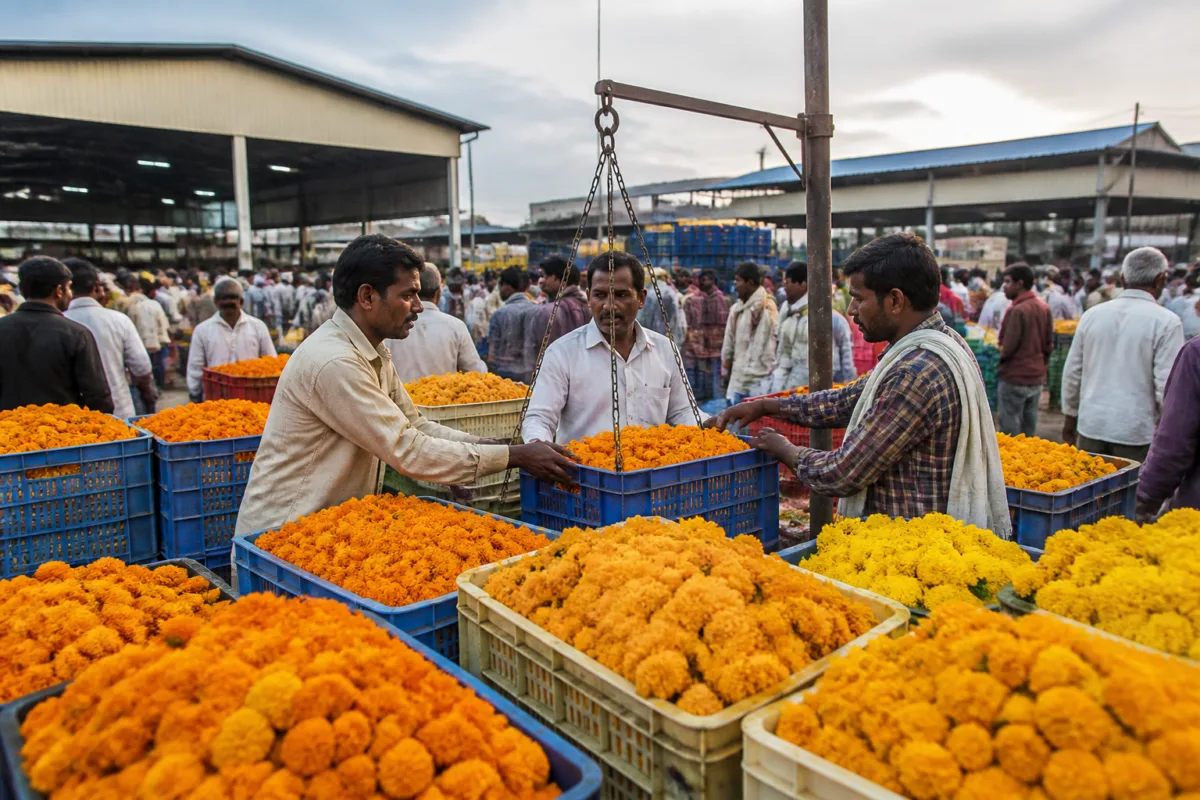
Nashik marigold prices nearly doubled in the wholesale market within 24 hours ahead of Dasara, rising to Rs 200-225 for a 4kg crate as festive demand increased and drought conditions reduced supplies.
Prices had stood at Rs 100-125 per crate on Sunday but climbed sharply on Monday, a day before the festival, according to traders and growers quoted by the Times of India. The sudden rise reflects the seasonal concentration of demand around Dasara, when marigolds are widely purchased for decorating vehicles and homes, preparing garlands and carrying out religious rituals.
Dasara is also a key earning period for farmers who cultivate marigolds specifically for the Dasara and Diwali markets. However, growers in Nashik district said inadequate rainfall and an extended dry spell had affected cultivation and reduced the availability of flowers in the wholesale market.
Marigold cultivation in the district is concentrated in Chandwad, Sinnar, Dindori and Nashik talukas. Farmers said several growers reduced the area under cultivation this season because of concerns over water availability and insufficient rainfall. The lower acreage has coincided with a sharp increase in demand just before the festival, putting pressure on wholesale supplies.
Ajay Malode, a marigold grower from Sinnar taluka, said wholesale prices had risen from around Rs 100 per crate on Sunday to Rs 200-225 on Monday as demand picked up ahead of Dasara. He said prices could increase further on Tuesday because of limited flower availability in the market.
The price increase, however, has not fully offset the impact of lower yields for growers. Sunil Pendhari, a marigold farmer from Chandwad taluka, said the crop yield had declined by nearly 40-50% this year because of inadequate rainfall and the prolonged dry spell. He added that despite the pre-festival price rise, rates remained below those recorded during the corresponding festive period last year.
The movement in Nashik’s marigold market shows how a short, predictable seasonal demand spike can collide with weather-related production constraints. For consumers and traders, the immediate effect is higher wholesale pricing before Dasara. For farmers, the higher rates are being weighed against lower output and the cost of cultivating a crop dependent on reliable water availability.
The festival demand and restricted supply are expected to remain the main factors shaping prices in the market through Dasara, while growers and traders continue to track the availability of flowers arriving from the district’s main cultivation areas.

