


Maharashtra Deputy Chief Minister Eknath Shinde has directed banks and microfinance institutions to avoid coercive loan recovery from drought-hit farmers, while asking Nashik’s administration to plan drinking water, fodder and relief measures through August 2027.
Shinde issued the instructions during a review meeting at Niyojan Bhawan on the Nashik district collectorate premises. The meeting focused on implementing relief measures, managing water scarcity and ensuring that eligible farmers receive assistance without administrative delays.
The directive applies to nationalised banks, cooperative banks and microfinance institutions. Shinde asked local authorities, including divisional commissioner Praveen Gedam and Nashik collector Ayush Prasad, to sensitise financial institutions about the government’s instructions and ensure that loan recovery does not add pressure on distressed farming households.
He also directed officials to complete crop damage assessments, application verifications and the distribution of financial assistance transparently and without delay. These processes determine how quickly farmers affected by drought and crop losses can access government support.
“Crop damage panchanamas, application verifications, and financial assistance distribution must be completed transparently and without delay,” Shinde said at the meeting. “As far as loan recovery is concerned, no coercive measures should be implemented.”
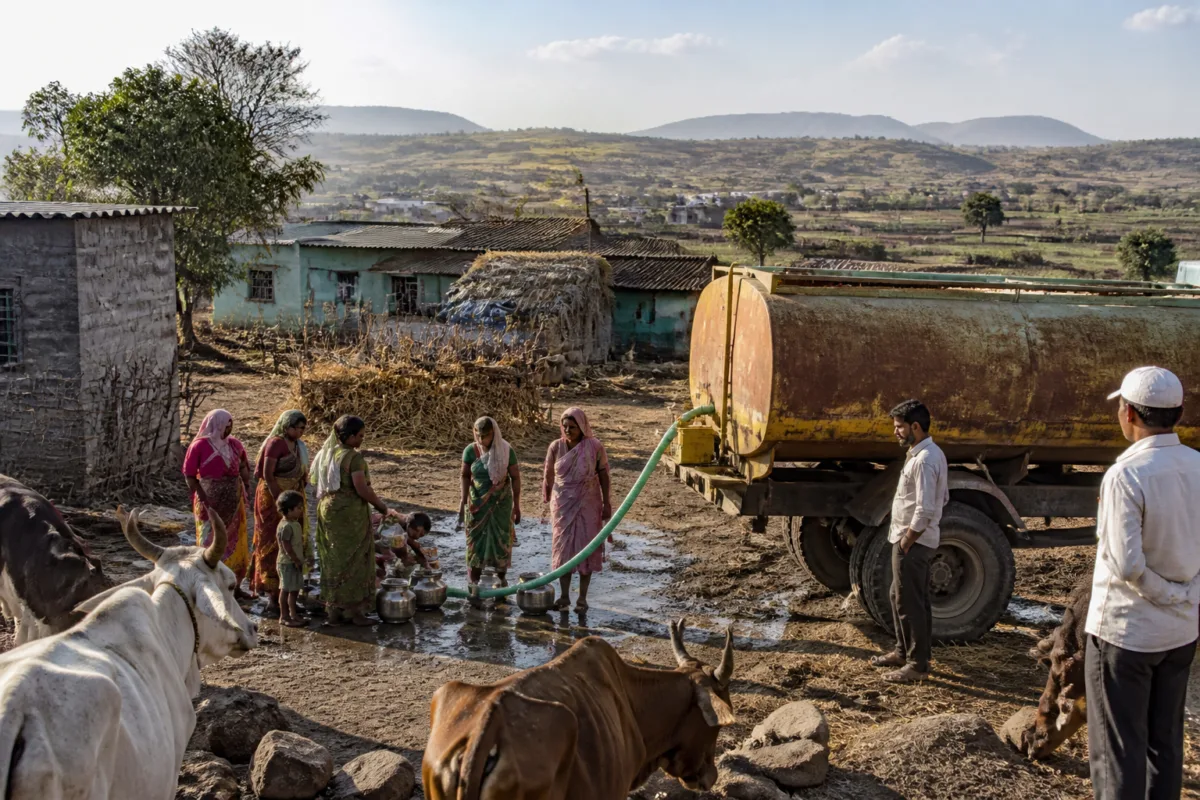
The administration was also asked to prepare for continuing water scarcity. Shinde called for detailed planning to maintain drinking-water availability, tanker supplies and cattle fodder through August 2027. The plan is expected to involve employment guarantee works, dedicated water conservation initiatives and steps to increase water storage capacity.
The instructions place responsibility across several departments rather than treating drought relief as a single agriculture or revenue matter. Shinde asked the revenue, agriculture, water resources, water conservation, animal husbandry and rural development departments to coordinate the use of state resources.
For rural settlements and agricultural communities, the water component has implications beyond crop production. Drinking-water arrangements, tanker deployment and cattle fodder supply require district-level planning, funding and coordination between local authorities and line departments. The direction to prepare through August 2027 indicates that the administration is planning for an extended period of stress rather than a short-term emergency response.
Shinde also said that employment guarantee works and water conservation projects should be used to support affected communities while improving local water-storage capacity. The meeting did not specify project-wise funding, tanker numbers, storage targets or the timeline for completing individual works.
The deputy chief minister further stressed the need for psychological support for distressed farmers and asked authorities to implement educational concessions for students in drought-affected areas. He said farmers should approach government departments for assistance and assured them that the government stood with them during the crisis.
The review meeting was attended by water resources and guardian minister Girish Mahajan, school education minister Dadaji Bhuse, food and drug administration minister Narhari Zirwal, Nashik mayor Himgauri Adke Aaher, MPs Rajabhau Waje and Bhaskar Bhagre, legislators Gokul Gite, Kishor Darade and Seema Hire, and senior officials. The administration’s next task is to translate the directions into coordinated district-level relief, water-supply and conservation measures.

