


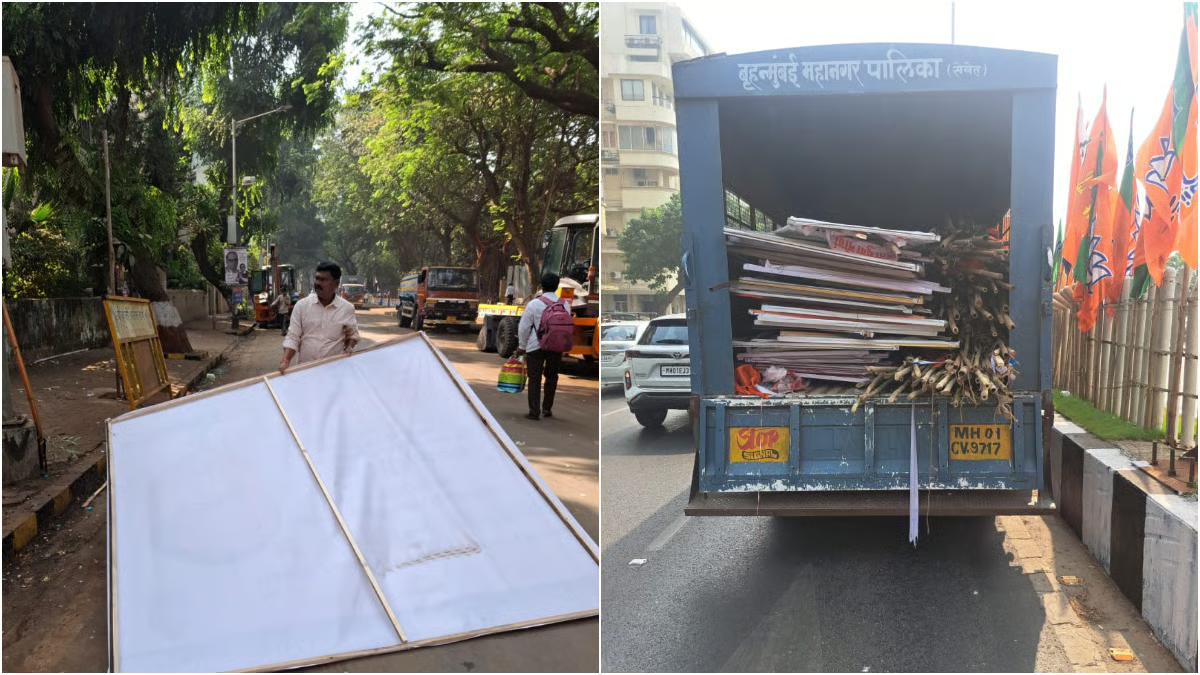
Nagpur is facing growing pressure on its road infrastructure as public spaces are increasingly occupied by temporary structures, processions, and unauthorised hoardings, disrupting mobility and raising questions around urban governance. The situation has triggered scrutiny of civic enforcement mechanisms, particularly as traffic congestion and pedestrian safety concerns intensify across key parts of the city. Recent assessments indicate that several arterial and neighbourhood roads have been partially blocked due to event-related installations and encroachments, affecting daily commute times and emergency access routes.
The issue highlights a recurring challenge in Indian cities, where competing demands on public spaces often outpace regulatory oversight. At the centre of the debate is the role of the Nagpur Municipal Corporation, which is responsible for managing urban infrastructure and enforcing regulations on road usage. Civic officials are under increasing pressure to balance cultural practices and public events with the need to maintain functional and accessible transport networks. Urban planners note that while community events and religious gatherings are integral to city life, the absence of clearly designated spaces often leads to spillover onto roads. This not only disrupts vehicular movement but also compromises pedestrian safety, particularly in densely populated areas where footpaths are already limited or encroached upon. Illegal hoardings have emerged as another major concern. Beyond obstructing visibility and contributing to visual clutter, such structures can pose safety risks, especially during adverse weather conditions. Experts argue that stricter monitoring and digital permitting systems could help address the issue, ensuring accountability and compliance. The broader implication of the ongoing disruptions lies in how cities allocate and manage public space. As Nagpur expands, the demand for multi-functional urban areas—capable of accommodating social, cultural, and mobility needs—is increasing. However, without integrated planning, this often results in ad hoc usage patterns that undermine infrastructure efficiency. Transport specialists emphasise the need for a more structured approach, including the creation of designated event zones, improved traffic diversion planning, and stronger enforcement of zoning regulations. Incorporating temporary-use guidelines within urban planning frameworks could allow cities to accommodate cultural activities without compromising mobility. There are also environmental and economic dimensions to consider. Prolonged traffic congestion contributes to higher fuel consumption and emissions, while delays impact productivity and logistics efficiency. Addressing these issues is essential not only for improving quality of life but also for advancing climate-resilient urban development. Citizen feedback has increasingly pointed to the need for transparency and consistency in enforcement. Uneven application of rules can erode public trust and encourage further violations. Experts suggest that leveraging technology—such as real-time monitoring and public reporting platforms—could enhance accountability.
As Nagpur navigates these challenges, the focus is likely to shift towards rethinking how public spaces are governed in growing cities. Ensuring that roads remain accessible while accommodating cultural and civic activities will require a careful balance—one that prioritises safety, inclusivity, and long-term urban resilience.
ALSO READ – Nagpur IT Expansion Signals Economic Shift
Nagpur Streets Choked By Hoardings And Processions
