


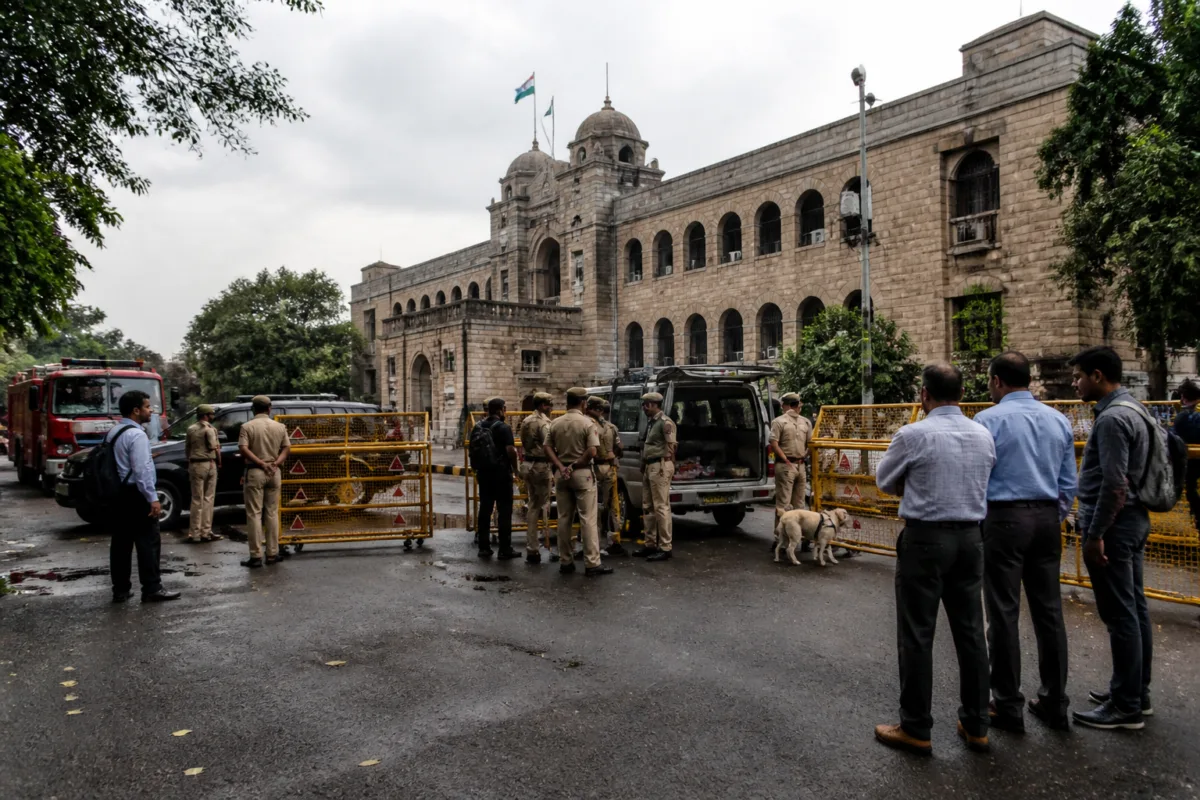
A bomb threat email sent to the Nagpur Municipal Corporation was found to be a hoax after bomb-disposal and anti-sabotage teams searched the civic headquarters and found no explosives, but the incident has triggered a dispute over whether police were informed immediately or nearly 24 hours later.
The email, received by the NMC on Thursday at 1.27 pm, warned of an explosion at the municipal corporation and the mayor’s office at around 3.11 pm the same day. Senior NMC officials said the police were informed, while police officers claimed that the alert reached them almost 24 hours later.
By the time the police were alerted, the blast time mentioned in the email had already passed, according to an officer cited in the report. The police then deployed Bomb Detection and Disposal Squads, anti-sabotage teams and sniffer dogs to conduct a detailed search of the NMC office. No explosive device was found.
The police said the email followed the pattern of similar threats sent to government offices, courts and educational institutions in Maharashtra. Nagpur Municipal Corporation had received a comparable threat email in mid-2026, while several other locations in the state reportedly received similar messages on the same day.
The email used phrases including “BOMB Blast @ Nagpur Municipal Corporation 3:11PM” and “Mumbai BoleGa Kh* Zindabad”. It also referred to possible explosions in a car outside a film star’s bungalow and at Chhatrapati Shivaji Maharaj Airport. Other threats mentioned November 27 at Mahalaxmi Stadium and December 31, along with references to the 1984 violence and a group calling itself the “KHALISTAN National ARMY”.
Police officials said the wording and format resembled earlier threat emails. Security agencies followed standard operating procedures by carrying out anti-sabotage checks after receiving the information, even though the specified time of the alleged blast had passed.
Chief Minister Devendra Fadnavis said in a press meet in Nagpur last week that such emails are often sent through masked internet protocol addresses and may originate from foreign locations, making it difficult for local agencies to identify and apprehend the senders. He said several countries were working on a joint policy framework to address hoax bomb threats.
The episode places attention on two separate operational questions for civic institutions: how quickly threat information moves from municipal offices to police agencies, and how authorities trace repeated digital threats that target public buildings. The NMC and police have not publicly resolved the reported discrepancy over the timing of the alert in the information available.

