


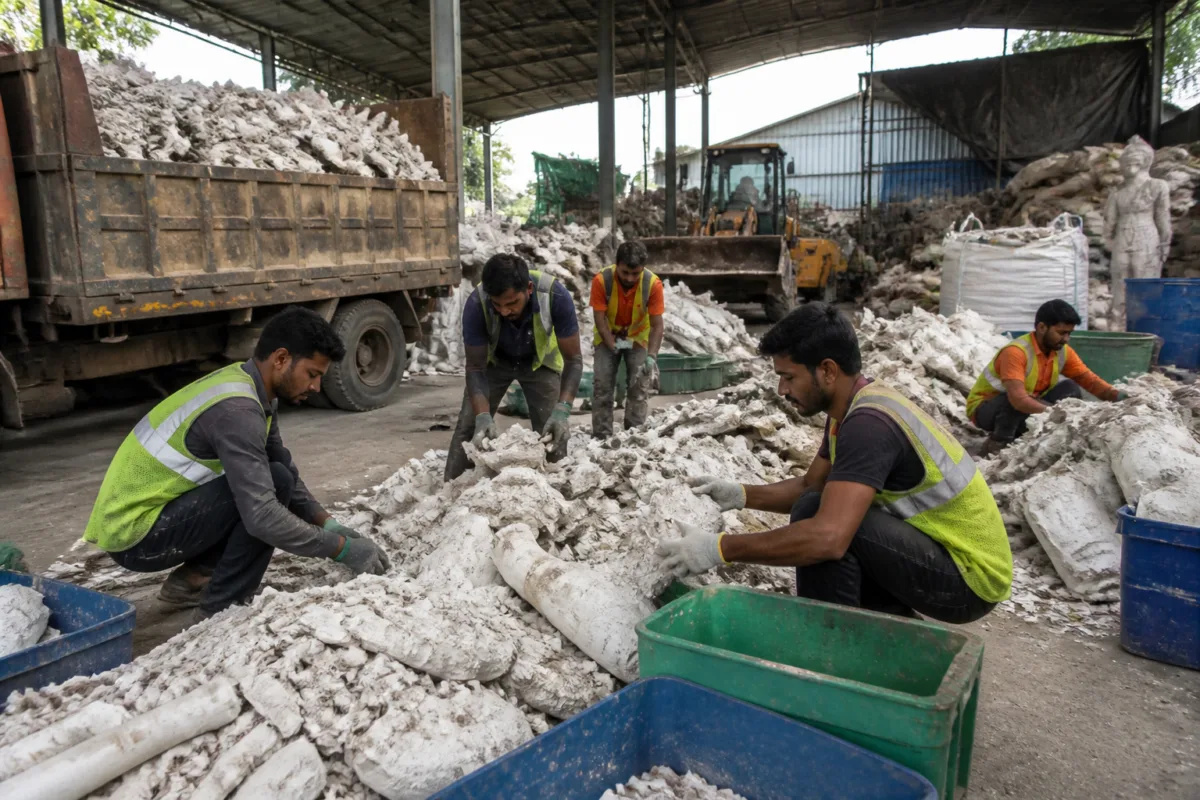
Mumbai’s management of Plaster of Paris (PoP) waste from Ganeshotsav and Navratri has left the Brihanmumbai Municipal Corporation with nearly 6,000 metric tonnes in storage and an expenditure figure that requires clarification.
According to a report by Mid-Day, the civic body collected 3,229 metric tonnes of PoP this year, while another 2,800 metric tonnes collected last year remain at the BMC’s storage facility in Mulund. The combined stock is therefore nearly 6,000 metric tonnes, the report said.
The report states that collection and transportation from various municipal wards involved 807 vehicles and cost approximately Rs 1.23 crore. It also cites an estimated Rs 90 lakh cost for recycling the stored quantity, along with Rs 21 lakh for a temporary storage shed, Rs 19 lakh for machinery and Rs 8 lakh for unloading, handling, segregation and storage labour.
However, the expenditure total is not consistent within the report. Its headline and summary refer to nearly Rs 2.61 crore, while the body text renders the figure as nearly Rs 261 crore. The itemised amounts cited in the report also do not reconcile with either total. The overall expenditure and recycling estimate could not be treated as confirmed without a BMC document or clarification.
The accumulated stock at Mulund highlights the continuing logistical burden of festival-related PoP waste after collection. Storage, segregation, transport and recycling require dedicated municipal space, equipment, labour and vehicle capacity, in addition to arrangements for the current season’s waste.
The BMC has also been promoting alternatives to PoP and conventional festival materials. During this year’s Ganesh Chaturthi, it mandated that idols below six feet be immersed only in artificial ponds. It distributed nearly 800 tonnes of shaadu clay and 25,000 litres of eco-friendly paint as part of efforts to encourage more environmentally responsible celebrations.
The reported figures indicate the scale of the waste-management challenge, but the BMC’s verified expenditure, the status of the stored PoP and the recycling process remain to be established through official records.

