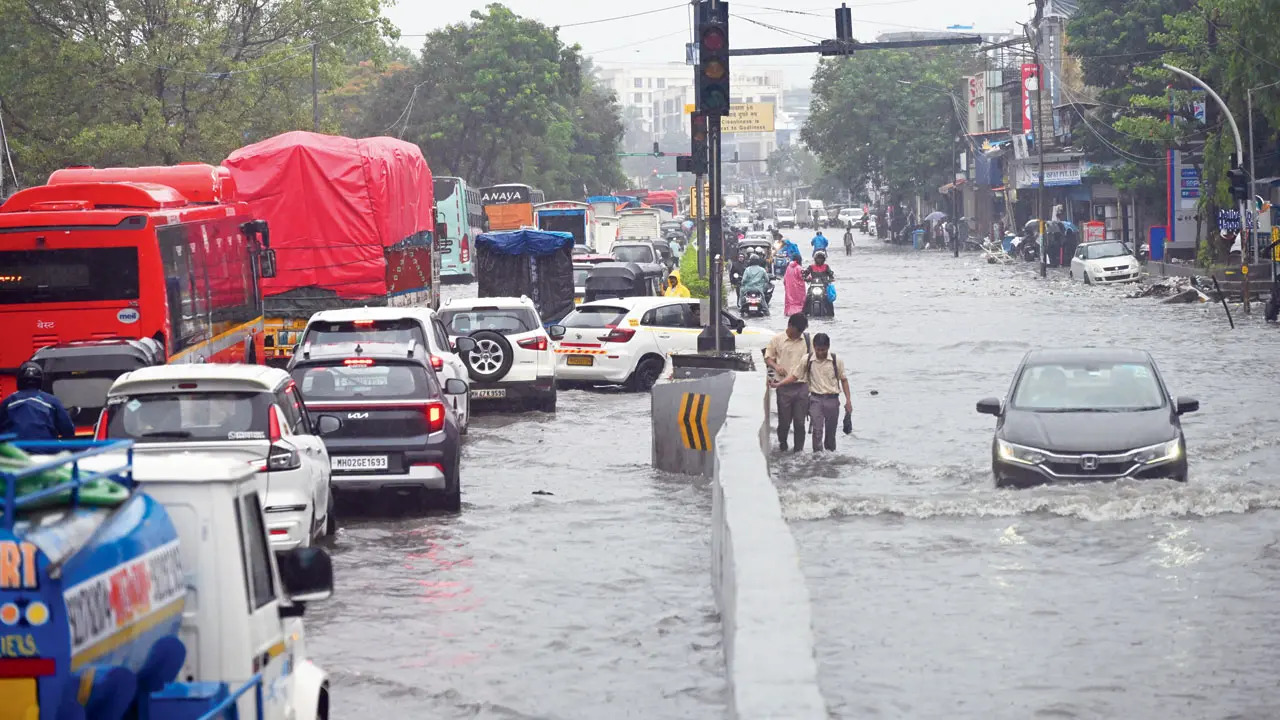
Mumbai is likely to remain under cloudy skies with intermittent light to moderate rain on Tuesday, keeping the city’s roads, drainage network and public transport systems under continued monsoon pressure. Rainfall recorded over the previous 24 hours remained modest across the city and suburbs, but the uneven nature of monsoon showers continues to test how effectively Mumbai’s urban infrastructure can absorb sudden changes in rainfall. The Mumbai weather outlook points to another wet day rather than an extreme rainfall episode. Forecast information indicates cloudy conditions with the possibility of light rain and isolated thunderstorms. Temperatures are expected to remain around the low 30s Celsius, with high humidity adding to the discomfort for commuters and outdoor workers.
Rainfall measurements for the 24-hour period ending at 8am on August 25 were relatively limited. The city recorded 2.10 mm, while the eastern and western suburbs received 2.61 mm and 2.90 mm respectively. The figures suggest that the immediate rainfall load was manageable, although short and concentrated spells can still create localised waterlogging where drainage capacity is constrained. That distinction is important for Mumbai’s urban planning. Total daily rainfall alone does not determine disruption. The timing, intensity and location of showers can influence traffic movement, road conditions and the performance of storm-water infrastructure. Low-lying areas and locations where drains are obstructed or undersized can experience problems even when the citywide rainfall average appears moderate.
The latest Mumbai weather conditions also come as the city moves through the latter part of the monsoon season. For civic agencies, the focus is therefore not only on responding to individual showers but also on maintaining drainage channels, road surfaces and pumping systems through the remaining wet weeks. Urban planners note that repeated monsoon stress can expose weaknesses that remain less visible during dry periods. Damaged roads, poor drainage and inadequate maintenance can increase travel times and raise costs for households, businesses and public agencies. Better storm-water management, permeable surfaces and routine maintenance can reduce these pressures while improving the city’s longer-term climate resilience.
The broader concern is that Mumbai’s infrastructure must be designed for increasingly variable rainfall patterns rather than average conditions alone. For residents, the immediate priority remains predictable mobility and safer streets. For the civic administration, the next test will be whether routine maintenance and rapid response can prevent moderate rainfall from becoming a wider urban disruption.