


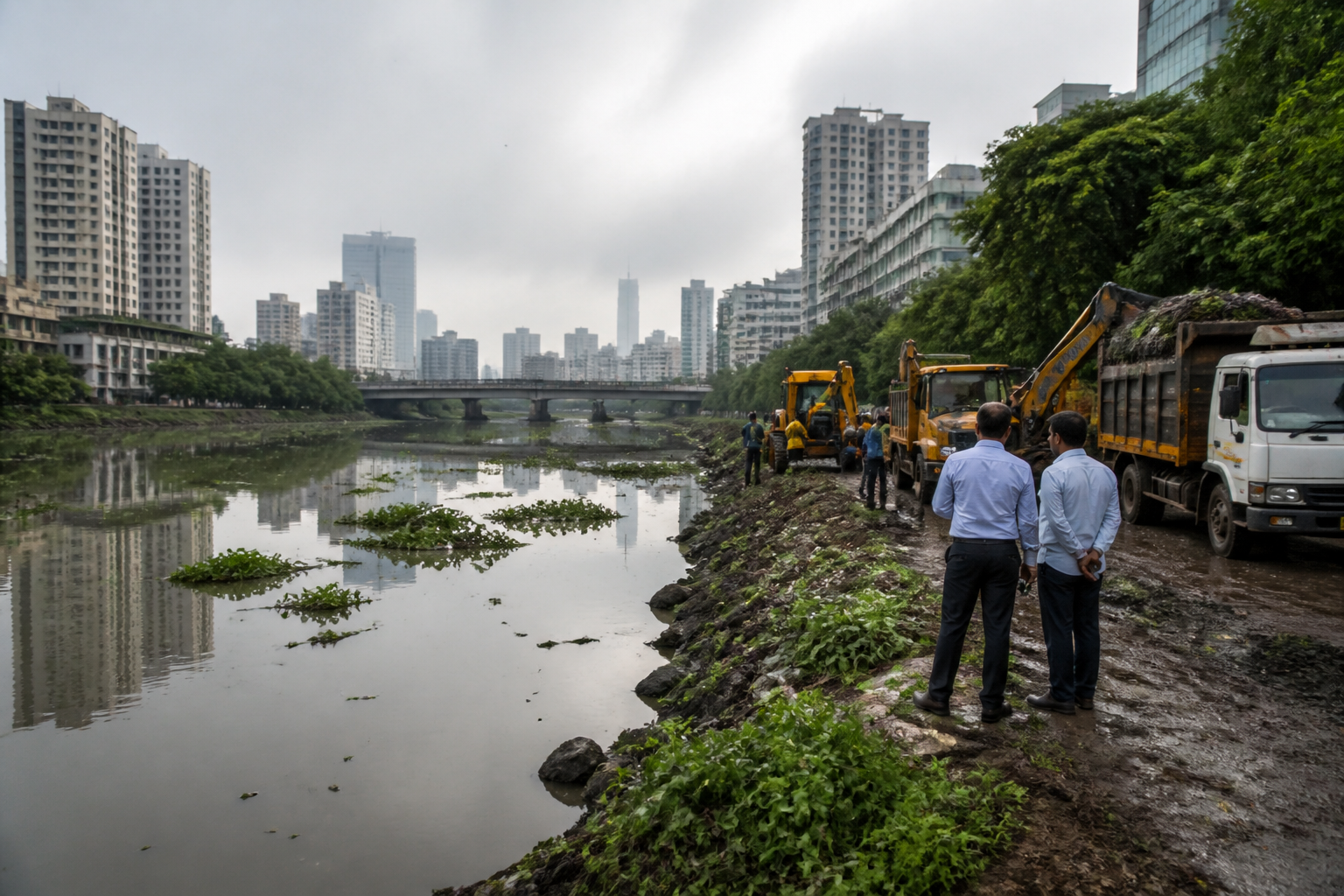
Mumbai’s waste management and river-rejuvenation efforts received a review at the Brihanmumbai Municipal Corporation headquarters on Monday, with Maharashtra Environment and Climate Change Minister Pankaja Munde examining construction debris tracking, sewage treatment infrastructure and the phased work on the Mithi River.
The meeting was attended by Mumbai Mayor Ritu Tawde, Deputy Mayor Sanjay Ghadi, Municipal Commissioner Ashwini Bhide and officials from the Maharashtra Pollution Control Board and the civic body. Munde expressed satisfaction with the BMC’s ongoing measures to improve solid waste management, expand sewage treatment capacity and rejuvenate the Mithi River.
A key initiative discussed was the Mumbai Debris Control and Tracking System, or MDCTS, which has been launched to monitor the management, transportation, processing and disposal of construction and demolition waste generated across the city. According to the civic body, 255 establishments have registered on the platform so far.
The system is intended to improve oversight of construction debris and help prevent improper dumping. Its scope covers the movement of debris from its point of generation through transportation and processing to final disposal, placing greater emphasis on tracking a waste stream that can contribute to roadside accumulation, blocked drains and pressure on public spaces when it is not managed properly.
The BMC also told the meeting that efforts were under way to eliminate 231 garbage-vulnerable points across Mumbai. These locations have been identified as areas where waste is repeatedly dumped or accumulates. The civic body is also developing projects to generate energy from waste as part of its wider solid waste management programme.
Sewage treatment capacity was another focus of the review. The BMC informed officials that seven sewage treatment plants are expected to become operational in Mumbai by around 2028. The projects are being developed as part of the civic administration’s efforts to strengthen sewage treatment infrastructure and improve the management of wastewater.
Munde described the sewage treatment plants as effective measures for improving sewage management and said the civic administration was taking steps to address Mumbai’s waste-related challenges. She also stressed that waste segregation needed to improve and urged citizens to separate waste before handing it over for collection.
The minister said public participation would remain important to the city’s cleanliness efforts, linking household-level segregation with the effectiveness of municipal waste management. The meeting therefore covered both civic infrastructure and citizen compliance, rather than treating waste disposal solely as a collection issue.
The Mithi River rejuvenation programme was also reviewed. Munde said the BMC’s work was being carried out in phases and expressed satisfaction with the progress described at the meeting. She added that the state government was establishing a mechanism to support the rejuvenation of rivers across Maharashtra.
The review brought together measures covering solid waste, construction and demolition debris, sewage treatment and river restoration. The next stated milestones are the continued registration and monitoring of establishments through the MDCTS, the planned removal of the 231 garbage-vulnerable points, the phased Mithi River work and the expected commissioning of seven sewage treatment plants by around 2028.

