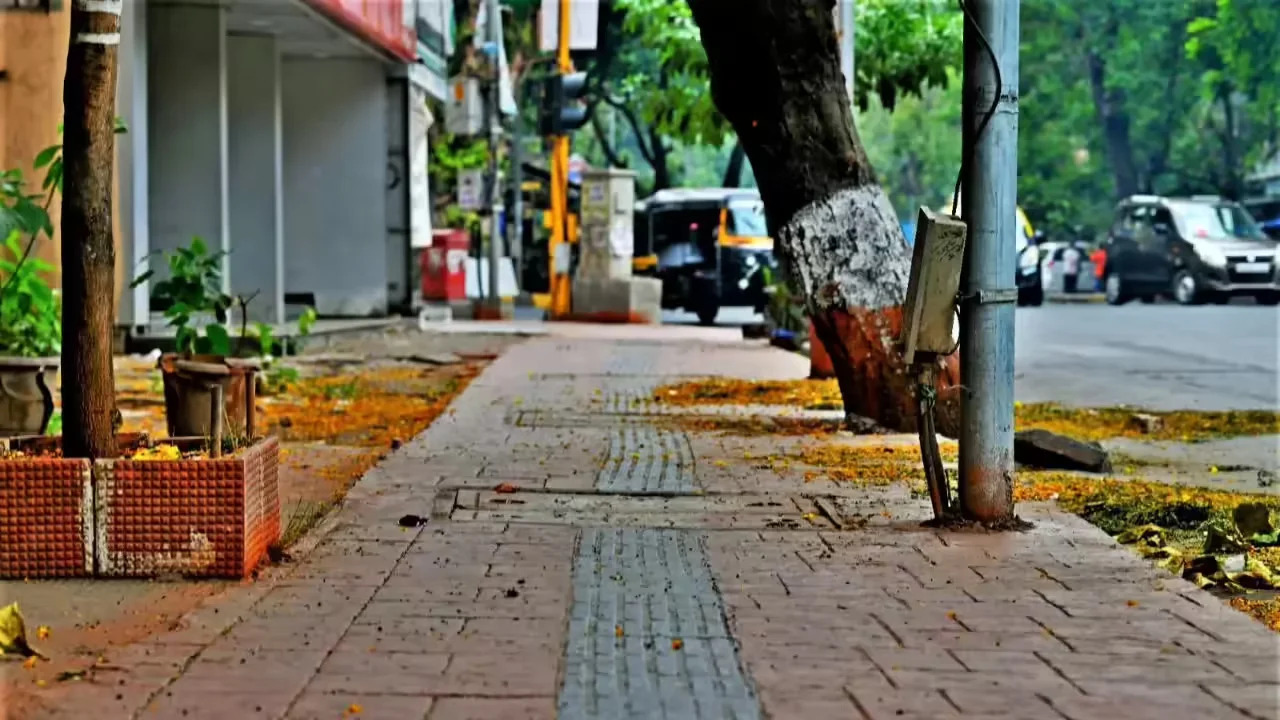
Mumbai has intensified efforts to reclaim footpaths and public walkways through a citywide enforcement programme aimed at improving pedestrian mobility. Recent operations in Dadar, Santacruz and Mulund have removed unauthorised structures, temporary installations and hawker-related obstructions, reflecting a broader shift towards people-centred street management in one of India’s most densely populated urban regions. The latest actions, carried out under the civic body’s Pedestrian First campaign, focused on locations where encroachments had narrowed or blocked footpaths, forcing people onto busy roads. In Dadar East and Santacruz East, municipal teams dismantled unauthorised shops, temporary sheds, platforms and roadside structures, while action was also taken against hawkers operating in areas designated for pedestrian movement. Around 500 metres of footpath space was restored in Santacruz, improving continuity along key stretches used by commuters.
Earlier this week, similar operations in Mulund covered multiple roads in both eastern and western parts of the suburb. Civic officials removed temporary monsoon shelters, informal structures and other obstacles that had reduced available walking space. Materials stored on pavements and carriageways were also cleared. The significance of the Pedestrian First campaign extends beyond routine anti-encroachment measures. Mumbai’s footpaths are an essential component of the city’s transport system, supporting millions of daily journeys that begin or end on foot. Urban mobility experts have increasingly argued that investment in walkability can reduce dependence on private vehicles, improve public health and make transit systems more accessible. The initiative also follows judicial directions emphasising that public walkways should remain free from obstruction. For civic planners, maintaining clear pavements is linked to wider goals including road safety, inclusive mobility and better access for senior citizens, children and persons with disabilities. Continuous and obstruction-free footpaths are increasingly recognised as critical infrastructure in compact, high-density cities.
However, the issue remains complex. Informal commerce and street vending provide livelihoods for thousands of households, making enforcement measures sensitive from a social and economic perspective. Urban experts suggest that long-term solutions require designated vending zones, improved street design and clear regulatory frameworks that balance economic activity with safe movement. The civic administration has also warned against fresh encroachments and appealed to businesses and residents not to place goods, construction materials or temporary structures on public pathways. Sustained monitoring, rather than one-time drives, will determine whether reclaimed spaces remain accessible.
The Pedestrian First campaign signals a growing recognition that streets are not only transport corridors but shared public assets. As Mumbai invests in metro lines, road projects and urban renewal, ensuring safe and uninterrupted walking routes could become equally important in shaping a more liveable and resilient city.