


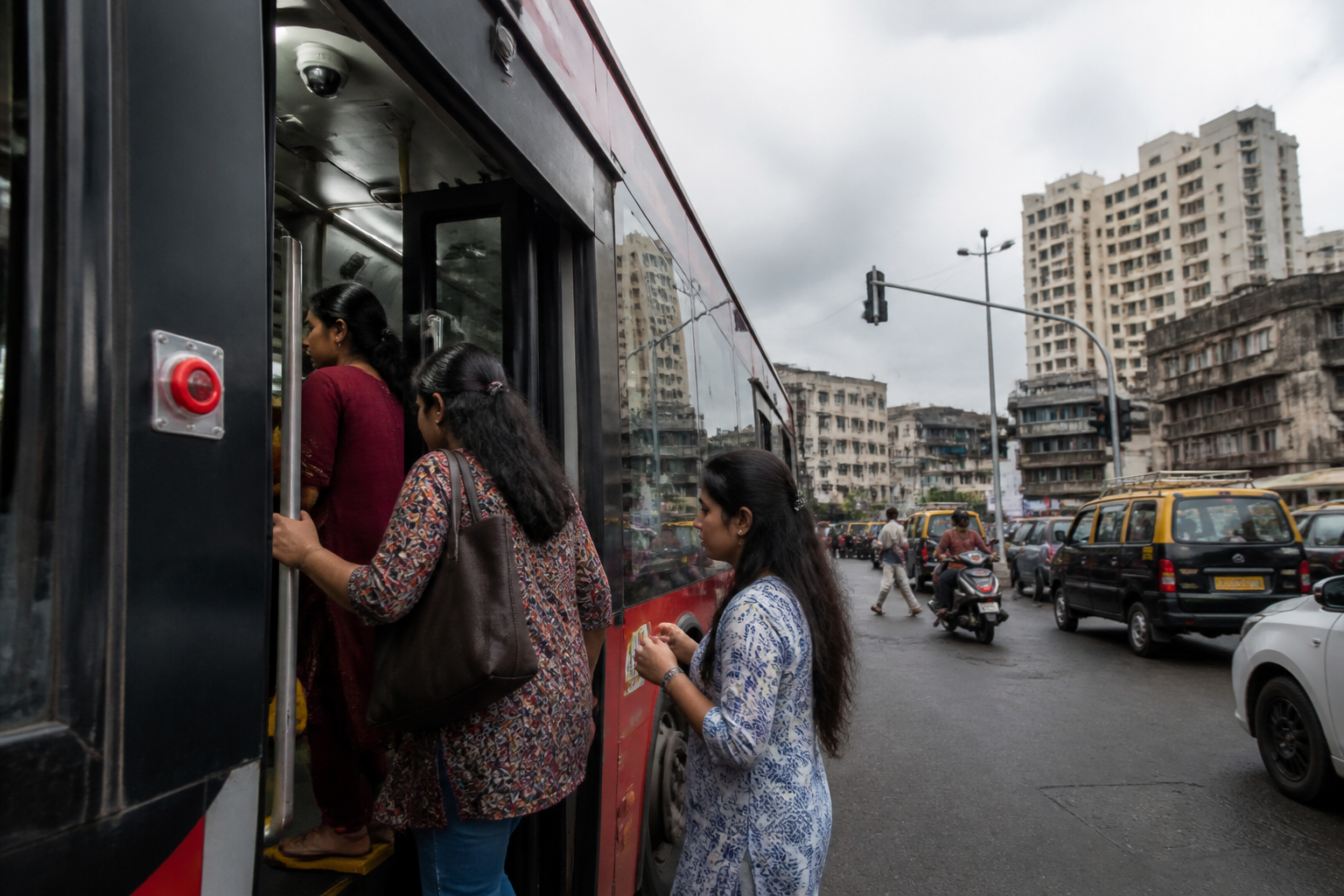
The Bombay High Court has issued notice to the Maharashtra government and the state transport commissioner after a petition alleged that public vehicles were being registered without verifying the installation and functioning of mandatory vehicle location tracking devices and panic buttons. The safeguards are intended to strengthen passenger safety, particularly for women using public transport.
The petition was filed by Om Auto Tech and Om Automobiles, described as authorised vehicle location tracking device providers. A division bench of Justices Ajay Gadkari and Kamal Khata took up the matter and directed the state government and transport commissioner to respond to the issues raised.
Under AIS-140 standards, public service vehicles are required to have a vehicle location tracking device, or VLTD, and a panic button. The systems are designed to provide information about a vehicle’s location and enable an emergency alert to be raised from inside the vehicle. The petition alleges that regional transport offices in Maharashtra were issuing vehicle registrations and certificates without first confirming whether these systems had actually been installed.
According to the petition, some registration records may contain altered or inconsistent VLTD information. The petitioners have alleged that the details may be changed so that the IMEI number associated with one device is linked to another vehicle. An IMEI number is a unique identifier used to identify the tracking device.
The petition further claims that vehicles were being approved without checking whether the device was physically fitted or whether it was operational. If established, such a process would raise questions about whether the registration system is verifying the safety equipment it is intended to record. The allegations, however, remain subject to the response of the state government and transport authorities.
The case places the administrative process for registering public vehicles at the centre of the safety debate. A requirement recorded in policy or registration data does not by itself establish that the equipment is present, correctly linked to the vehicle or transmitting usable information. The petition’s claims therefore concern both the physical inspection of equipment and the integrity of the digital records associated with it.
For passengers, the issue is not limited to the presence of a device inside a vehicle. A tracking system must be correctly connected to the vehicle, while a panic button must be available and functional when an emergency occurs. The allegations before the court question whether these checks are being carried out before registration certificates are issued.
The High Court has not ruled on the allegations. Its notice requires the state government and the transport commissioner to place their position before the court. The next stage of the matter will depend on the authorities’ response and the court’s consideration of the material submitted by the parties.
