


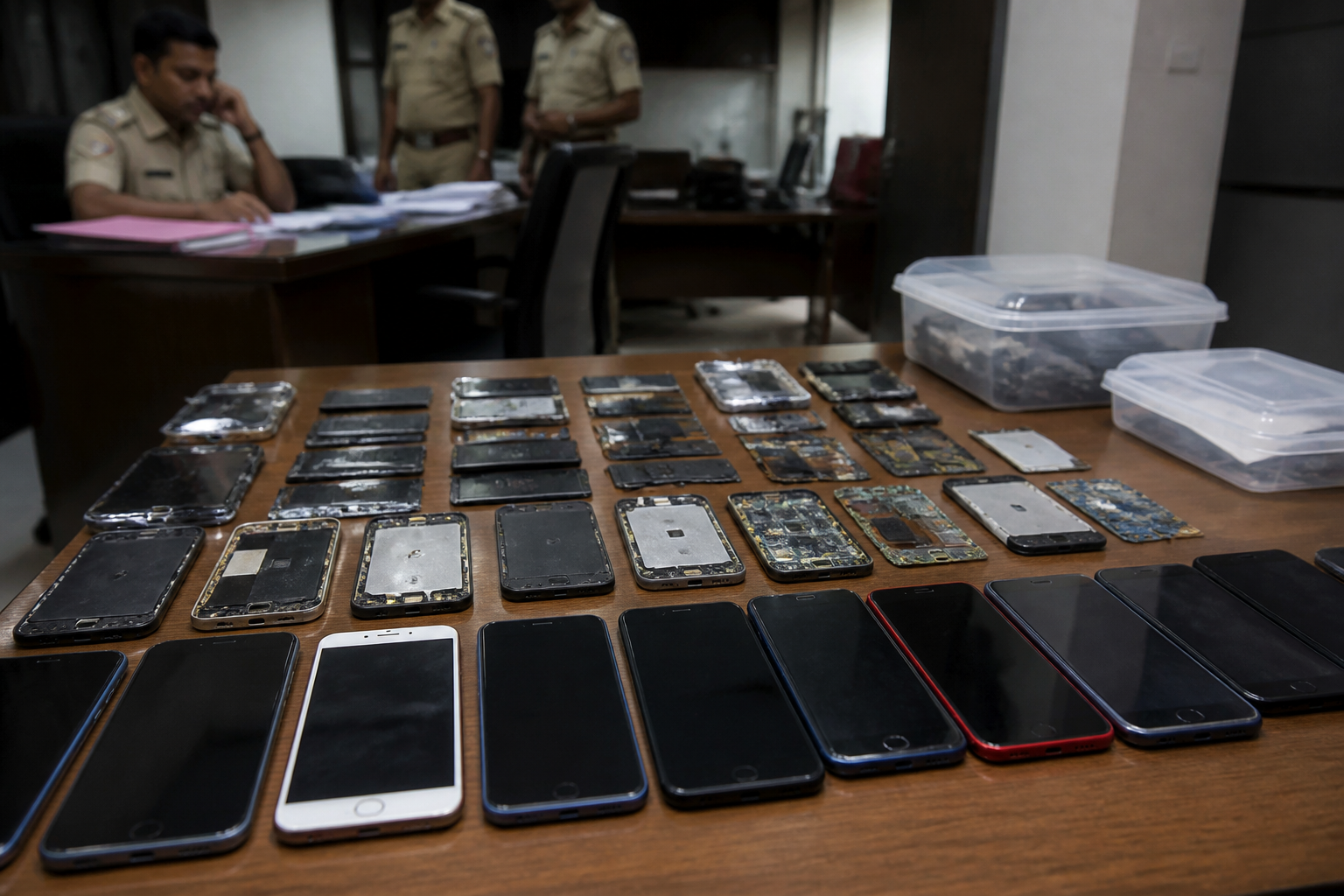
Mumbai police have arrested four people and recovered 64 stolen iPhones valued at Rs 44.78 lakh after uncovering an alleged racket that dismantled handsets and sold them through the spare-parts market, Mid-Day reported on September 8.
The investigation was initiated after an iPhone theft case was registered at the MRA Marg police station in May. During surveillance, investigators traced a SIM card that had been used in the stolen handset. The trail led police to a suspect, from whom they recovered 21 stolen iPhones and 12 SIM cards, according to the report.
Further investigation allegedly revealed an interstate network involved in sourcing stolen iPhones from different parts of India. Police said the devices were handled differently depending on whether their security locks could be removed.
According to an investigating officer quoted by Mid-Day, phones whose security locks could be removed were prepared for resale by removing the original Apple IDs. Devices that could not be unlocked were dismantled instead. Their components were then sold across India or sent to foreign markets, police said.
The recovered devices were allegedly broken down into parts including displays, batteries, motherboards, logic boards and chassis. These components were sold separately in the spare-parts market, allowing the network to derive value from handsets that could not be resold as complete phones.
Police said iPhones were targeted because of their relatively high resale value and continuing demand for used Apple devices. The company’s security system can make it difficult to resell a stolen handset when its account lock remains active. However, individual parts such as screens, batteries and motherboards can still have resale value, creating a separate market for locked devices.
The case also highlights the role of SIM cards and device usage records in the investigation. Police used the SIM card associated with one stolen phone to trace the alleged network, leading to the recovery of additional devices and subscriber cards.
The report did not specify the identities of the four arrested people, the exact locations where the remaining devices or components were sourced, or the charges filed against them. Police investigations into the alleged interstate network and the movement of parts are continuing.
