


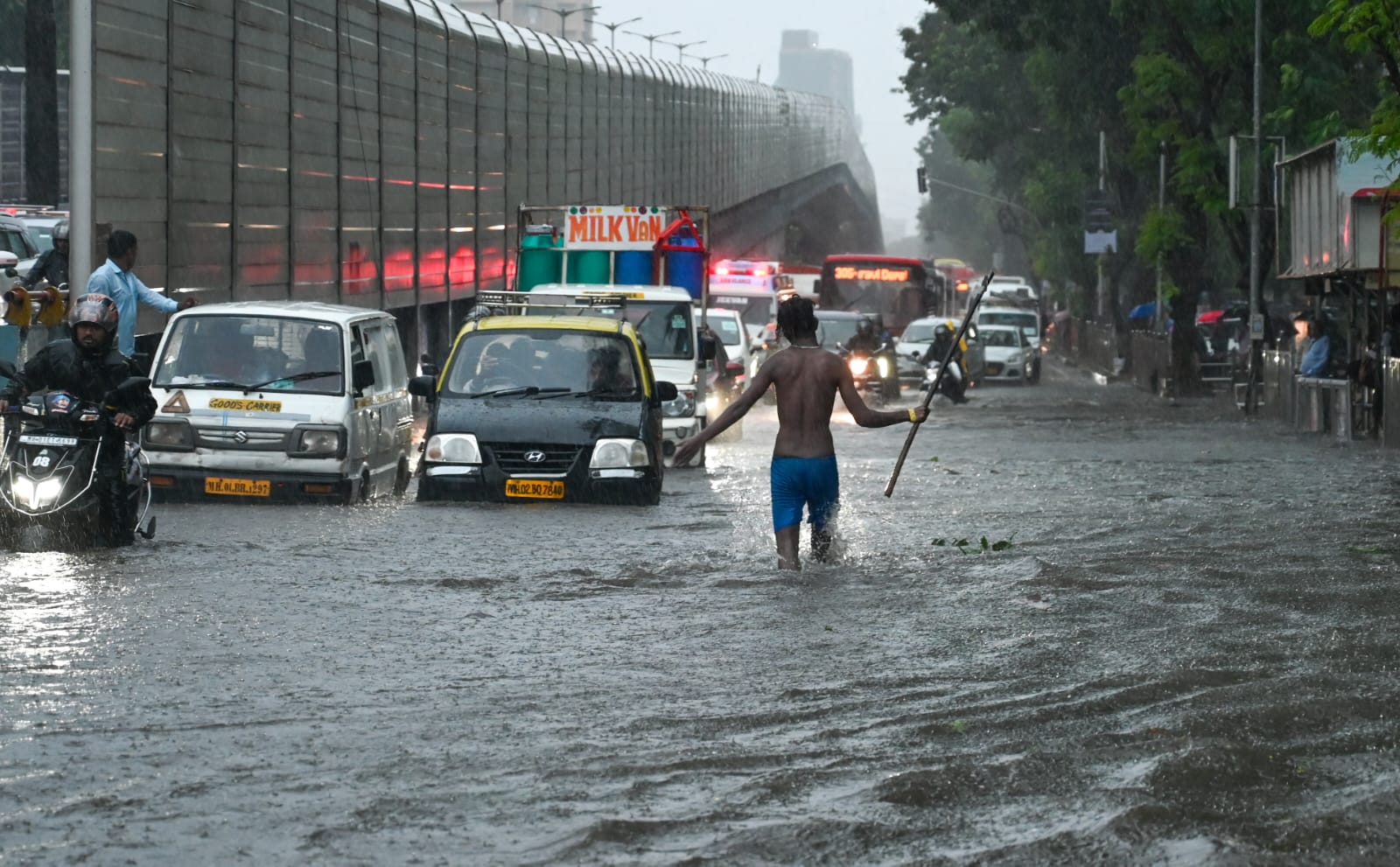
Mumbai was jolted into a chaotic monsoon rhythm on Monday morning as intense early showers lashed several parts of the city, resulting in significant waterlogging in areas such as Fort, Bandra, Matunga, and Haji Ali. The Indian Meteorological Department (IMD) issued a high rain alert, placing Mumbai under an orange warning, anticipating more heavy rain spells throughout the day and the coming week.
Between 2 am and 5 am, the city recorded a sharp spike in rainfall, with Fort witnessing the highest downpour at 74 mm. This was followed by Bandra at 62 mm, Malabar Hill at 60 mm, and Lower Parel at 58 mm. Matunga and Haji Ali, which recorded 56 mm and 57 mm respectively, also faced severe localised flooding, impacting both residential neighbourhoods and arterial roads. While these high-intensity showers disrupted daily life across South Mumbai and the Western suburbs, what stood out was the breadth of therainfall’s reach. Areas traditionally considered less vulnerable to intense flooding—such as Andheri, Borivali, and Mumbai Central—also received steady rain between 28 mm and 33 mm. Worli, Bandra-Kurla Complex (BKC), Versova, and Dindoshi too reported noticeable rainfall, causing transport slowdowns and civic strain.
Although Thane remained relatively dry in the same time frame, the weather bureau has indicated that the region may soon experience comparable conditions as the monsoon system strengthens over coastal Maharashtra. The IMD’s orange alert warns of potential localised flooding, traffic disruptions, and the need for high civic readiness. Officials confirmed that rainfall is expected to remain intense across the city for the next 24 to 48 hours, with Tuesday also forecast to witness heavy showers. While intermittent rain is expected from 18 June onwards, residents have been urged to remain alert as short bursts of rain may still lead to flooding due to waterlogged roads and high tide effects.
Civic authorities have deployed additional disaster response teams and activated flood-control protocols across vulnerable wards. Pumping stations in areas such as Haji Ali, Worli, and Lower Parel have been working round-the-clock to drain accumulated rainwater. Officials have reported multiple instances of clogged drains, and field workers have been sent to key choke points to manually clear debris that could worsen backflow conditions. In Matunga and Bandra, several arterial roads and residential pockets faced ankle to knee-deep water levels, delaying public transport and school operations. Local train services saw minor disruptions, and BEST buses in some flooded areas were diverted to alternate routes.
Experts in urban climate resilience highlighted that Mumbai’s drainage and water-retention systems, though improved marginally over the past few years, are still not equipped to handle sudden, high-intensity rainfall events. A senior hydrology expert remarked that “climate unpredictability and concretised urban surfaces have created a city that doesn’t breathe during rain—stormwater has nowhere to go.” They advocated for decentralised water harvesting systems, permeable roads, and green infrastructure to reduce run-off pressure during monsoon peaks. In a briefing, civic officials acknowledged that while pre-monsoon desilting had been completed on schedule, unexpected rainfall intensity coupled with high tide cycles can temporarily overwhelm the system. The high tide on Monday coincided with the early morning showers, leading to water stagnation in low-lying pockets such as Fort, Lower Parel, and Matunga.
IMD’s seven-day forecast suggests that after Tuesday’s heavy spell, rainfall will become more intermittent. However, the civic body has cautioned that preparedness must remain high, especially in historically flood-prone zones. Alerts are being sent via social media and local civic dashboards, and residents in high-risk areas have been advised to avoid unnecessary travel and prepare for temporary utility disruptions. The weather impact also reignited conversations about Mumbai’s climate resilience and its ability to adapt to more frequent extreme weather events. Environmentalists reiterated the importance of integrating sustainability into the city’s urban planning—from restricting construction on wetlands to reviving traditional water channels and promoting low-impact development.
Public health officials have issued preliminary advisories against wading through waterlogged areas due to the risk of waterborne infections. Special attention is being given to the sanitation of flooded areas, especially near hospitals, schools, and marketplaces in affected localities. As Mumbai grapples with another year of heavy monsoon disruption, the spotlight is once again on its ageing infrastructure and the urgent need to align civic operations with climate-aware city planning. With more rains expected and emergency services stretched thin, the coming days will test the city’s preparedness and the resilience of its 20-million-strong population.
While Mumbai residents are no strangers to monsoon chaos, the hope remains that lessons from repeated urban flooding will eventually lead to proactive infrastructure reforms and climate-sensitive policy interventions—before the next cloudburst brings the city to a standstill once again.
Also Read : Delhi Trains Rerouted for New Delhi Station Upgrade
