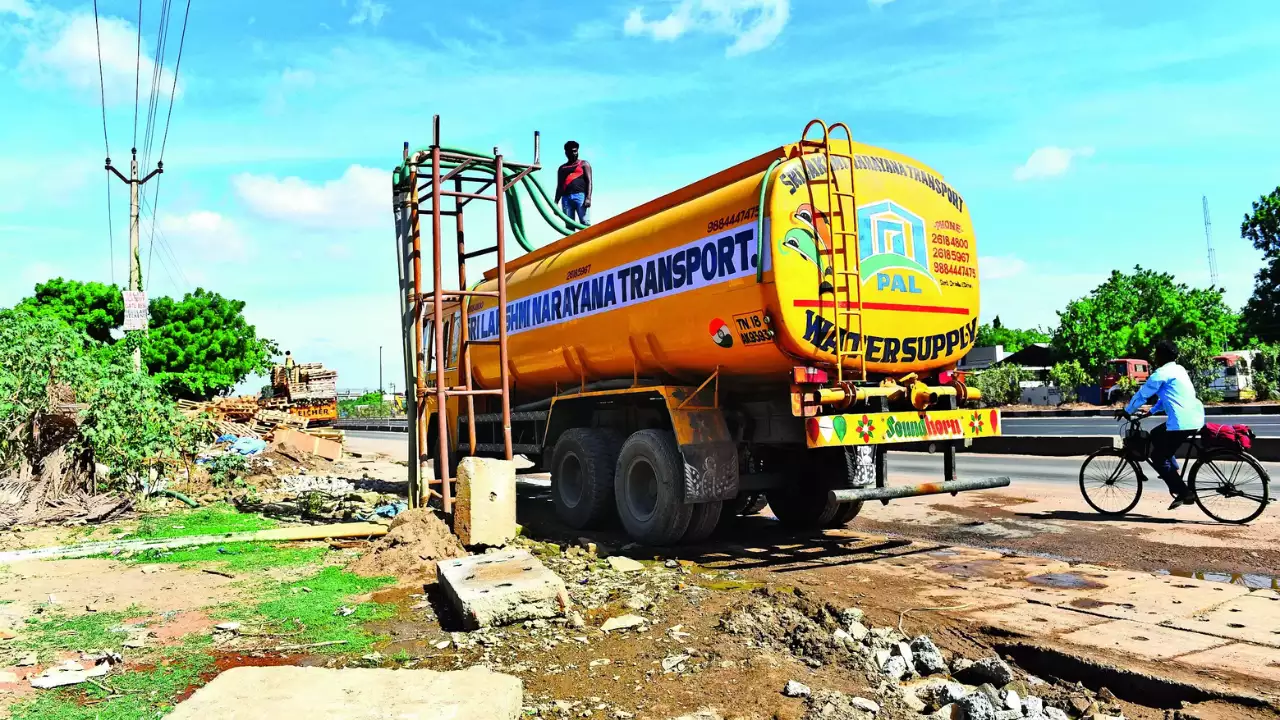
Mumbai is on the brink of a water crisis as the Mumbai Water Tankers Association (MWTA), representing around 2,000 water tankers, announced plans to suspend services from April 10.
This development threatens to disrupt water supply for infrastructure projects, residential societies, and slum clusters across the city, raising alarm over the city’s preparedness to handle such a crisis. The standoff stems from a series of notices issued by the Brihanmumbai Municipal Corporation (BMC) to borewell and ring well owners, demanding compliance with the Central Ground Water Authority (CGWA) guidelines issued in 2020. The directives require well owners to secure a No Objection Certificate (NOC) and a license from the CGWA, along with implementing digital water flow meters and maintaining a buffer area of 200 sq m around each well. MWTA officials argue that these requirements are impractical in Mumbai’s dense urban landscape. “The city lacks the space to maintain a 200 sq m area around wells, making the guidelines unfeasible,” stated a spokesperson for the association. They have expressed readiness to apply for the necessary permits but insist that the guidelines do not account for Mumbai’s unique infrastructural constraints.
The situation has been exacerbated by communication challenges. The CGWA’s offices are located only in Nagpur and Pune, leaving urban well owners and tanker operators without direct channels to address their grievances. “There is no official point of contact, making it difficult for us to resolve issues promptly,” the spokesperson added. The BMC, however, maintains that the guidelines have been in place since 2021, with several meetings held to facilitate compliance. “We provided ample time and opportunities for stakeholders to address these issues, but there has been little progress,” stated a senior BMC official. Currently, there are no self-imposed limits on the amount of groundwater extracted by tankers, with operators drawing as much water as needed based on availability. Under CGWA guidelines, the extraction is capped at five to 15 tankers per day, with each tanker holding around 10,000 litres of water. This unrestricted extraction has raised environmental concerns, including the risk of saline water ingress due to overextraction, which can compromise groundwater quality.
The BMC’s push for digital meters is aimed at curbing unregulated groundwater use and generating revenue from extraction charges. Historically, the BMC’s permissions to borewell owners included clauses prohibiting commercial use, yet enforcement has been lax, allowing unchecked operations. Mumbai’s water demands are substantial, with a daily requirement of 4,200 million litres (MLD) of potable water. The BMC supplies 3,850 MLD, while the remaining 385 MLD is sourced from tankers, which are indispensable for sectors like road concretisation, metro projects, public space maintenance, and emergency services. The suspension of tanker services could disrupt these critical operations, leading to widespread inconvenience. Urban water management experts argue that this crisis underscores the need for a more integrated and sustainable approach to water governance. “Relying heavily on tankers is not a long-term solution. Mumbai needs to invest in groundwater recharge, rainwater harvesting, and efficient water distribution systems,” said an environmental consultant.
The potential shutdown of tanker services also raises concerns about the equity of water access. Slum clusters and underprivileged communities, which often rely on tanker water for daily needs, could face severe hardships. This situation highlights the broader issue of water inequality in urban centres, where wealthier areas typically have better access to municipal supplies, while marginalized communities depend on erratic tanker services. As the April 10 deadline approaches, the city’s residents, civil society groups, and stakeholders are calling for urgent dialogue to prevent a full-scale water crisis. Some propose that the BMC and CGWA collaborate to devise flexible guidelines that account for Mumbai’s unique urban challenges while ensuring sustainable groundwater management.
The unfolding crisis in Mumbai serves as a stark reminder of the growing pressures on urban water resources in India’s megacities. It underscores the urgent need for comprehensive water management policies that balance environmental sustainability with the realities of rapid urbanisation.
Mumbai Faces Water Shortage After Tanker Strike