


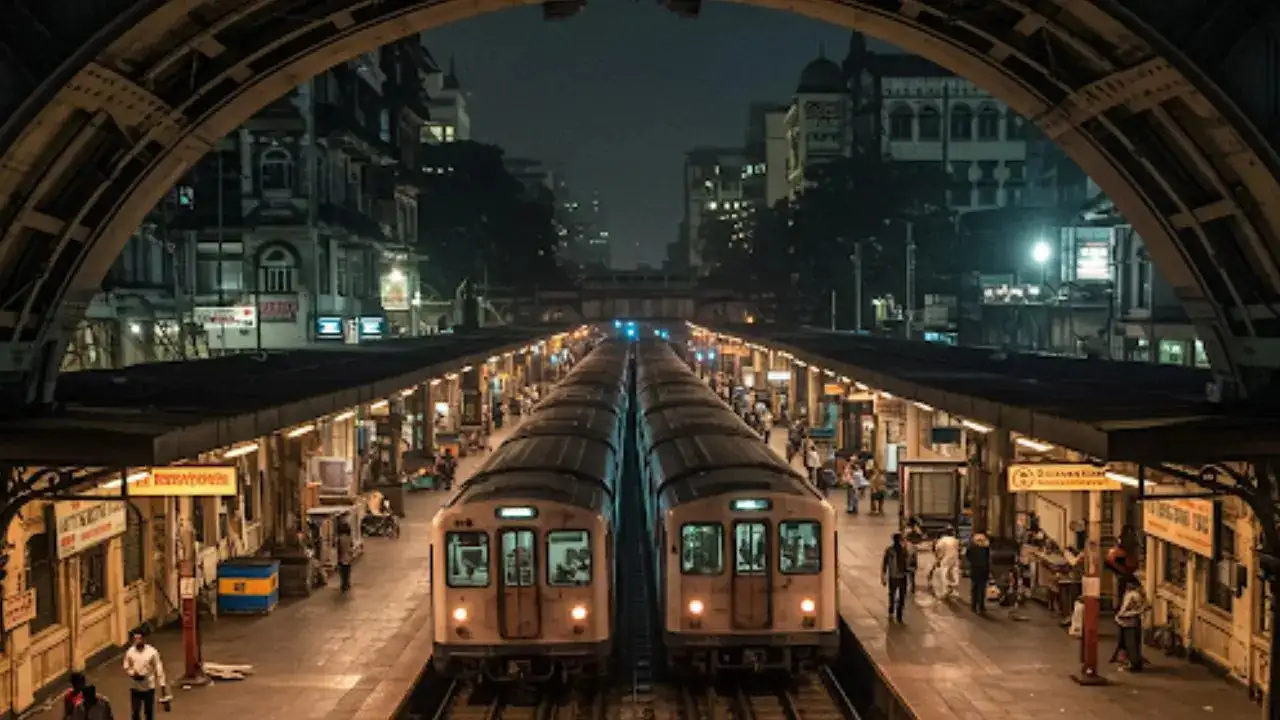
Mumbai, India’s financial capital long synonymous with a congested and overburdened suburban railway system, may soon witness a transformative shift in urban mobility.
In an ambitious bid to address land acquisition challenges and enhance commuter experience, railway authorities are exploring the feasibility of constructing the city’s first-ever underground suburban rail corridor between Parel and Chhatrapati Shivaji Maharaj Terminus (CSMT). This 7.4-kilometre stretch could form a key segment of the proposed fifth and sixth railway lines under Central Railway’s (CR) expansion plan. If implemented, the underground section would not only offer a novel model for rail infrastructure in dense urban environments but also echo a growing preference for sustainable and space-efficient transit solutions across Indian metros.
The proposed line, part of Phase 2 of CR’s larger Kurla–Parel–CSMT suburban railway expansion project, could redefine conventional project execution strategies. Phase 1 of the initiative, which spans 10.1 kilometres between Kurla and Parel, is already underway using overland construction methods. However, Phase 2 demands a more nuanced approach given the dense built-up nature of South Mumbai and the social cost of displacing Project Affected Persons (PAPs) for surface-level infrastructure. Officials familiar with the development stated that tunnelling was being considered as a viable alternative to mitigate land-related hurdles, following the precedent set by Mumbai Metro Line 3. The underground metro line has demonstrated that it is possible to carve a transport corridor beneath the city with minimal disturbance to the surface ecosystem, although at a higher capital cost.
Railway officials have indicated that the tunnel, if approved, would be aligned at a depth of 20 to 25 metres below existing tracks and roadways. The underground design is intended to bypass buildings, utilities, and roads that traditionally obstruct rail expansion. This subterranean route would parallel the existing overland tracks while offering more operational capacity to the city’s suburban rail system, which caters to over 7 million passengers daily. The Mumbai Rail Vikas Corporation (MRVC), the joint venture implementing the project, has already conducted preliminary discussions with Central Railway to chart the technical and operational framework for the proposed underground line. A final decision will hinge on the findings of detailed feasibility and geotechnical studies, for which consultants are yet to be appointed.
A senior railway official confirmed that the preparation of terms of reference for the study is underway. One of the key considerations will be the identification of access points for tunnel boring machines (TBMs) at both ends of the proposed corridor — Parel and CSMT. Potential exit or entry portals within the CSMT campus or near P D’Mello Road are being assessed, though these options must be harmonised with the alignments of other underground projects such as Metro Line 3 and the future Metro 11 corridor from Wadala to CSMT. The integration challenge is a critical one. The planned corridor must navigate beneath one of the city’s most complex transport nodes without disrupting existing services. Experts caution that the presence of multiple layers of transport infrastructure in the CSMT area — including suburban lines, long-distance platforms, and two metro lines — necessitates a careful technical design to avoid clashes in alignments and ensure safety.
The projected cost of building the entire corridor — both Phase 1 and the proposed underground Phase 2 — stands at an estimated ₹3,000 crore, nearly three times the original sanctioned budget of ₹890.89 crore when the project was approved in 2008. The cost escalation reflects both inflation and the premium associated with tunnelling technology. Nevertheless, officials argue that underground construction may ultimately prove more efficient in urban contexts, where above-ground alignments entail costly resettlement and political pushback. The shift towards underground rail development signals a larger transformation in how India’s urban transport agencies are approaching infrastructural growth. With urban sprawl showing no signs of abating, horizontal expansion via land acquisition has become increasingly impractical. Tunnelling offers a cleaner alternative — albeit a costlier one — that aligns with the principles of sustainable urbanism by preserving built environments, minimising disruption, and potentially reducing carbon footprints over the long term.
Transport and urban planning experts have supported the initiative, highlighting the urgent need for infrastructure that meets Mumbai’s growing commuter demands without compromising ecological or social equity. The possibility of integrating the corridor with multimodal nodes such as metro lines, suburban trains, and future water transport hubs could offer holistic mobility solutions, moving the city towards a more balanced and inclusive public transport model. However, the proposal remains at a nascent stage. Critical questions regarding technical feasibility, environmental impact, financing, and inter-agency coordination are yet to be addressed. Officials from the implementing agencies stress that stakeholder consultation and rigorous technical analysis will guide the project’s next phase.
Whether or not Mumbai’s first underground suburban railway line becomes a reality, the idea has already sparked wider discourse on the future of urban mobility in India’s megacities. At a time when cities are grappling with the dual challenges of climate resilience and infrastructural adequacy, such forward-looking proposals offer a glimpse into how transport systems can evolve to be more equitable, efficient, and environmentally conscious. The road—or tunnel—ahead may be long and uncertain, but it represents a necessary shift in mindset: that sustainable urban development can no longer be deferred and must be built into the very foundations, and sub-foundations, of our cities.
Also Read : Kolkata Metro Green Line nears full rollout Howrah and Salt Lake link soon
