


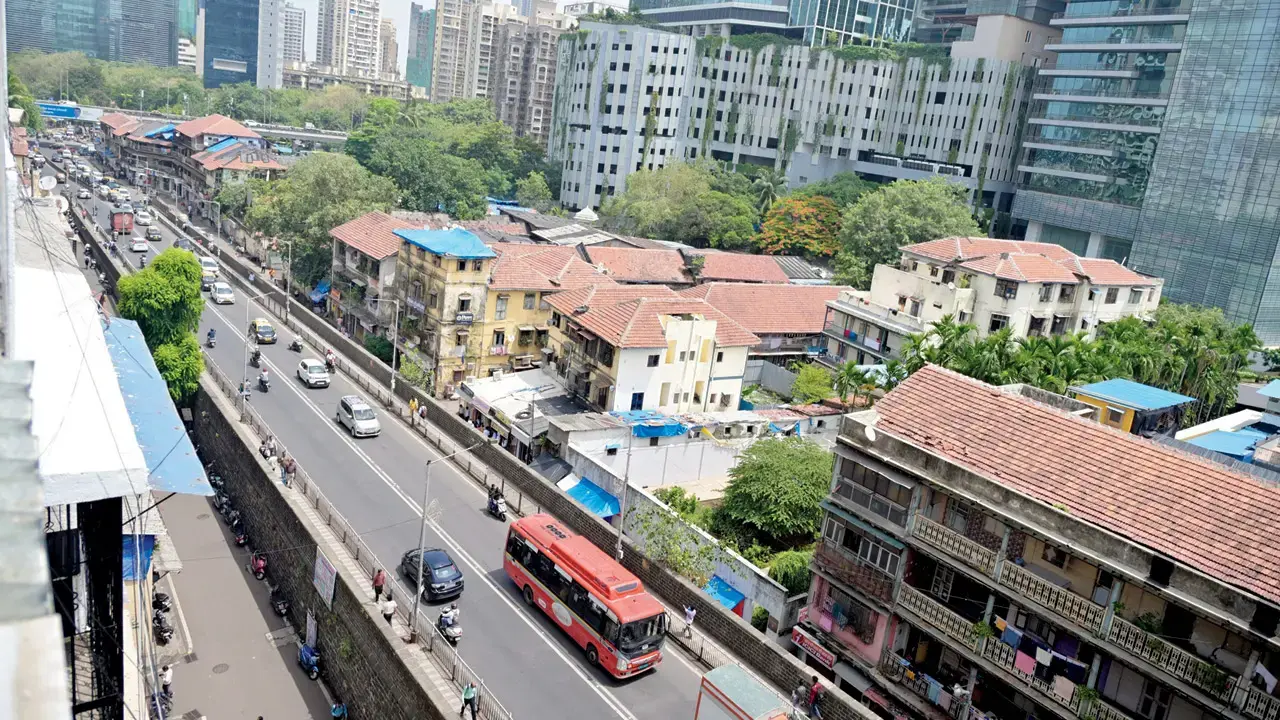
Mumbai’s Elphinstone overbridge, one of the city’s oldest connectors linking Prabhadevi and Parel, has been closed to vehicular movement from today as redevelopment works begin. The ageing British-era structure will be dismantled and replaced with a modern double-decker bridge integrated with the Sewri-Worli elevated connector, in what officials describe as a transformative step for central Mumbai’s mobility network.
The decision, notified earlier this year, follows extensive coordination between the Mumbai Metropolitan Region Development Authority, the traffic police, and the Maharashtra Rail Infrastructure Development Corporation. Traffic officials confirmed that the closure had been planned well in advance, and detailed diversion routes will be rolled out to manage the anticipated commuter disruption. The bridge, which passes over the bustling suburban railway lines at Parel and Prabhadevi, holds strategic importance for daily commuters. Between five to seven lakh passengers use these two stations each day, making the surrounding road infrastructure a vital artery for office-goers and residents. The overbridge also serves major residential areas, schools, and hospitals, including some of the city’s largest public health facilities.
Authorities noted that the upcoming double-decker structure is designed to accommodate future mobility needs and will be integrated seamlessly with the Sewri-Worli elevated corridor, a project aimed at easing congestion across south-central Mumbai. By combining modern design with improved capacity, officials expect the replacement to not only improve travel times but also reduce traffic bottlenecks that currently choke the area during peak hours. The Elphinstone Bridge joins a growing list of colonial-era structures in Mumbai that have been taken out of service for safety and modernisation reasons. In recent years, the Sion, Carnac, Bellasis, and Reay Road bridges were similarly shut down and rebuilt. Experts argue that while these closures initially create inconvenience, they are critical for ensuring public safety and building sustainable infrastructure for a city under constant population and vehicular pressure.
Urban planners emphasise that the project also presents an opportunity to integrate greener, climate-conscious materials and design principles. With Mumbai aiming to reduce its carbon footprint, the redevelopment of heritage-era bridges offers a chance to rethink urban mobility through an eco-friendly and resilient lens. For now, commuters will face detours and delays as demolition work commences, but the long-term goal, officials maintain, is a safer, more efficient, and future-ready link that reflects Mumbai’s push towards sustainable urban growth.
Also Read: Navi Mumbai Metro Line One Crosses One Crore Ridership In Two Years
