


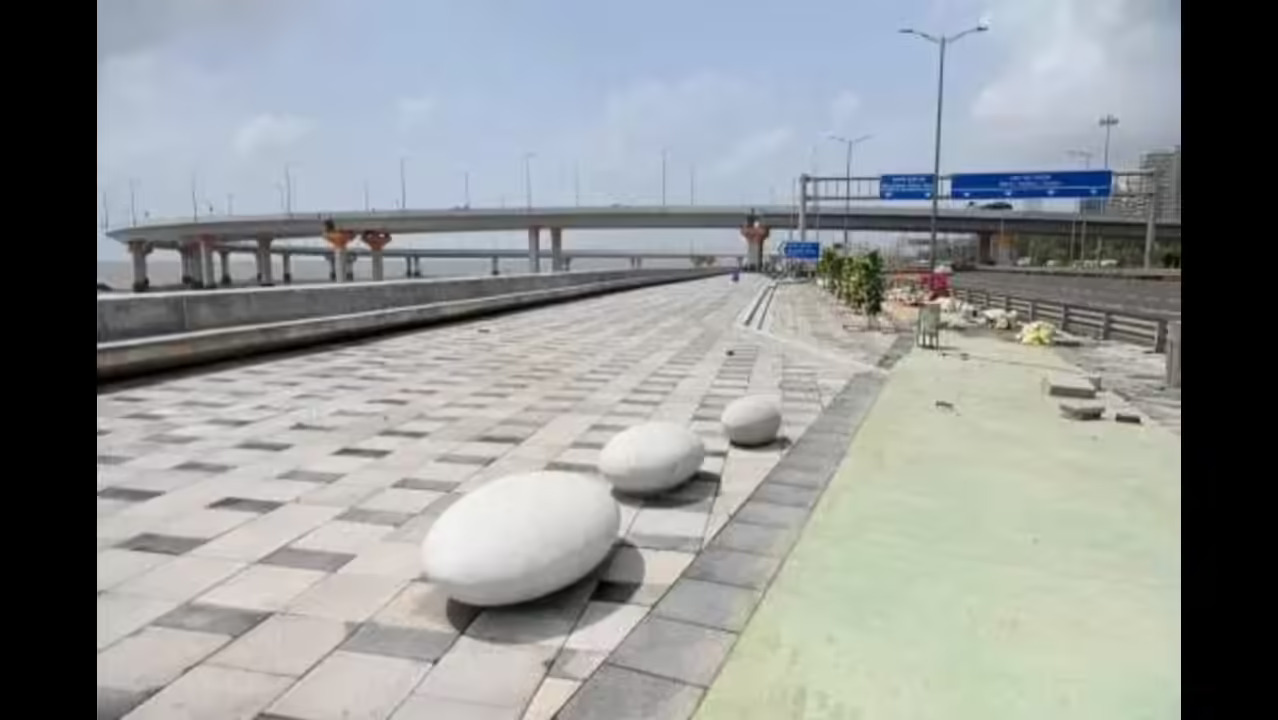
The Brihanmumbai Municipal Corporation (BMC) has initiated work to set up bio-toilets along the newly opened Coastal Road promenade, aiming to improve public sanitation and sustainability along one of Mumbai’s most frequented recreational spaces. Six units are planned, with the first under construction at Worli Sea Face, followed by additional facilities at Haji Ali, Worli near Bindu Madhav Thackeray Chowk, and Mahalaxmi. Two more locations are yet to be finalised.
Officials confirmed that the bio-toilets are being designed with septic tank-based bio-systems, a practical solution in the absence of a sewer network along the promenade. The units will also be positioned near the Public Underpass (PUP), ensuring easy access for pedestrians moving from the arterial roads to the promenade. According to a BMC official, construction at Worli is already underway and is expected to open within a week. The remaining sites will be finalised in consultation with the Solid Waste Management Department. The initiative to introduce bio-toilets was first proposed in June as the coastal road development neared completion. Subsequent communications in July highlighted the need for the facilities to be aesthetically aligned with the promenade’s design. The BMC’s focus on sustainable sanitation aligns with broader efforts to make urban spaces cleaner, gender-neutral, and environmentally responsible.
Local residents have welcomed the development but have expressed concerns about other essential infrastructure on the promenade. Footfall has steadily increased, and many visitors arrive in groups, often bringing food, creating challenges for waste management. Residents have urged the civic body to install additional dustbins to prevent littering and potential rodent infestations. “People are coming with food and celebrating in groups, but there are not enough garbage bins. Without them, sanitation could become a serious concern,” said a local resident. The Coastal Road promenade, which features a dedicated cycling track, is emerging as a key urban recreational corridor. The introduction of bio-toilets is expected to enhance the convenience and comfort of visitors while supporting the city’s zero-net-carbon and eco-friendly urban agenda. Civic officials highlighted that the bio-toilets’ sustainable design ensures minimal environmental impact, in line with the city’s commitment to green infrastructure and equitable public spaces.
With the bio-toilets nearing completion, the BMC is likely to monitor public usage closely, assessing the need for further expansion. The project also serves as a pilot for future sustainable sanitation facilities across the city’s recreational and waterfront zones, aiming to balance growing urban mobility with environmental and social considerations. As Mumbai continues to develop its waterfront and promenade areas, integrating functional and sustainable public amenities such as bio-toilets will be essential to enhance urban livability, maintain cleanliness, and provide gender-sensitive infrastructure.
Also Read : Navi Mumbai Airport Ready For Launch Yet Infrastructure Around Remains Incomplete
