


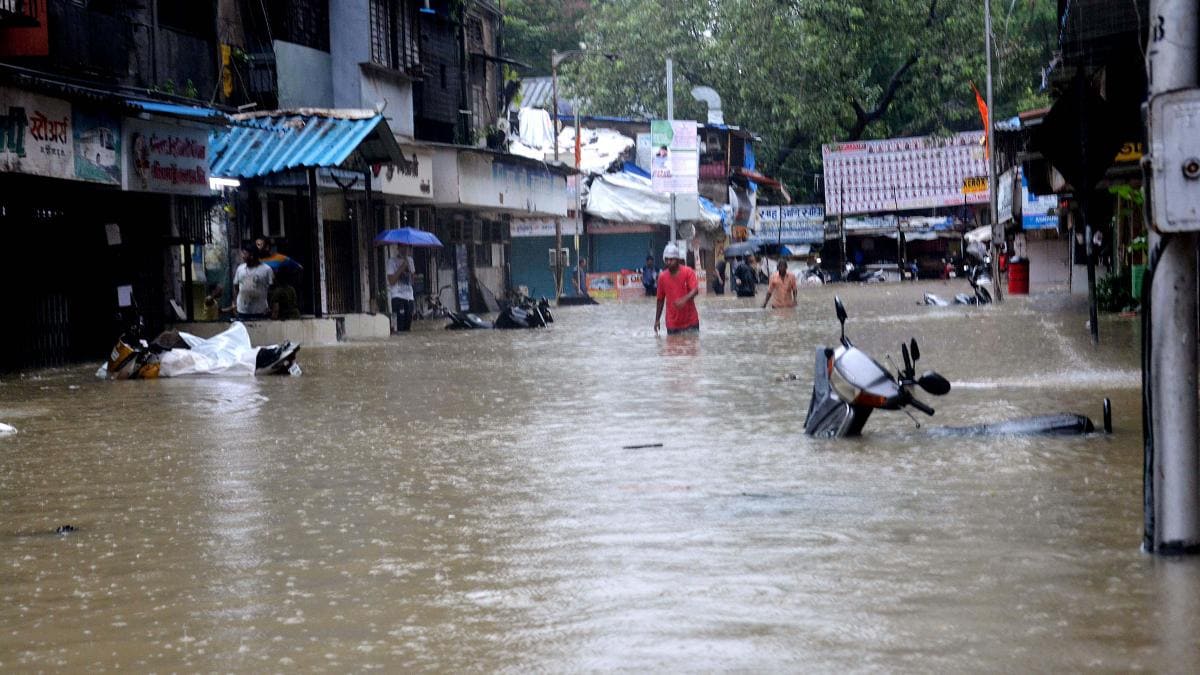
Mumbai has been brought to a standstill by an extraordinary spell of unseasonal heavy rainfall, exposing critical vulnerabilities in its urban infrastructure and waste management systems.
A viral video depicting heaps of garbage floating through waterlogged streets in areas like Saki Naka has vividly underscored the severity of the challenge, disrupting traffic and daily life across the metropolis. This unexpected deluge, far exceeding historical averages, serves as a stark reminder of the urgent need for enhanced urban resilience and sustainable planning in the face of escalating climate volatility, impacting the very fabric of eco-friendly and equitable urban living for all citizens. The sheer volume of precipitation has transformed key arteries into impassable waterways. The Andheri subway, a vital underpass for daily commuters, was completely submerged on Thursday, necessitating the deployment of Brihanmumbai Municipal Corporation (BMC) teams with drainage equipment to pump out the accumulated water. Simultaneously, a car rammed into a divider on the Western Express Highway, reportedly due to drastically reduced visibility caused by the downpour, though thankfully, no injuries were reported in this incident. Such widespread disruption highlights the immediate and tangible impact of extreme weather events on urban mobility and safety.
The impact of the heavy rainfall has extended beyond mere inconvenience. In the early hours of Thursday, a security wall belonging to a private firm collapsed in the Wagle Estate area of Thane, a direct consequence of the incessant rain. While two cars and an auto-rickshaw sustained damage, the timely intervention of authorities ensured no injuries occurred, as confirmed by Yasin Tadvi, head of the municipal corporation’s disaster management cell. Separately, a tree-felling incident near Jalvayu Complex on Thursday led to significant disruption, including a widespread power outage in the area, necessitating traffic diversions and alternative routes for commuters. These incidents collectively underscore the infrastructural strain placed on a mega-city by such meteorological anomalies. One particularly alarming incident saw five individuals, including a two-year-old girl, trapped in an elevator on the third floor of a 38-storey building at Vaikunth Piramal complex in Thane around midnight on Wednesday. The Fire Brigade swiftly responded, successfully rescuing all individuals after a tense 25-minute operation, with everyone reported safe. While the cause of the elevator malfunction remains under investigation, the incident highlights the critical importance of robust building management systems and emergency preparedness during extreme weather conditions, ensuring the safety of all, irrespective of gender or age.
The India Meteorological Department (IMD) has revealed that Mumbai city has received an astonishing 736% more rainfall this month than its usual Long Period Average (LPA), marking one of the city’s wettest Mays in recent years. Weather stations at Santacruz and Colaba recorded 27 mm and 10 mm of rain respectively until Thursday morning, a clear indication of the unprecedented nature of this event. This unusually heavy rainfall is attributed to a cyclonic circulation likely to form over the east-central Arabian Sea off the Karnataka coast. In response, the IMD has issued a yellow alert for Mumbai until Saturday, May 24, with an orange alert declared for neighbouring Thane, Palghar, Nashik, and Raigad.
The visuals of floating garbage bags across flooded streets are not merely a symbol of inconvenience; they represent a critical environmental and public health concern. Such incidents underscore the urgent need for Mumbai to bolster its stormwater management systems and rigorously enforce waste disposal protocols. As a rapidly urbanising metropolis, Mumbai’s journey towards being a truly sustainable and eco-friendly city hinges upon its capacity to adapt to changing climate patterns and build resilient infrastructure that can withstand extreme weather events. This requires comprehensive urban planning, robust civic services, and collective community action to ensure a healthy and equitable environment for all its inhabitants.
Also Read: Maharashtra Weather Turns Unstable With Storms
