


On Thursday Maharashtra marking a turbulent shift in the state’s pre-monsoon weather pattern. The India Meteorological Department (IMD), Mumbai, issued a fresh alert warning of moderate rain and wind speeds reaching up to 50 kmph over the next few hours in select districts, including Pune, Raigad, Kolhapur, Satara, Ratnagiri, and Sindhudurg.
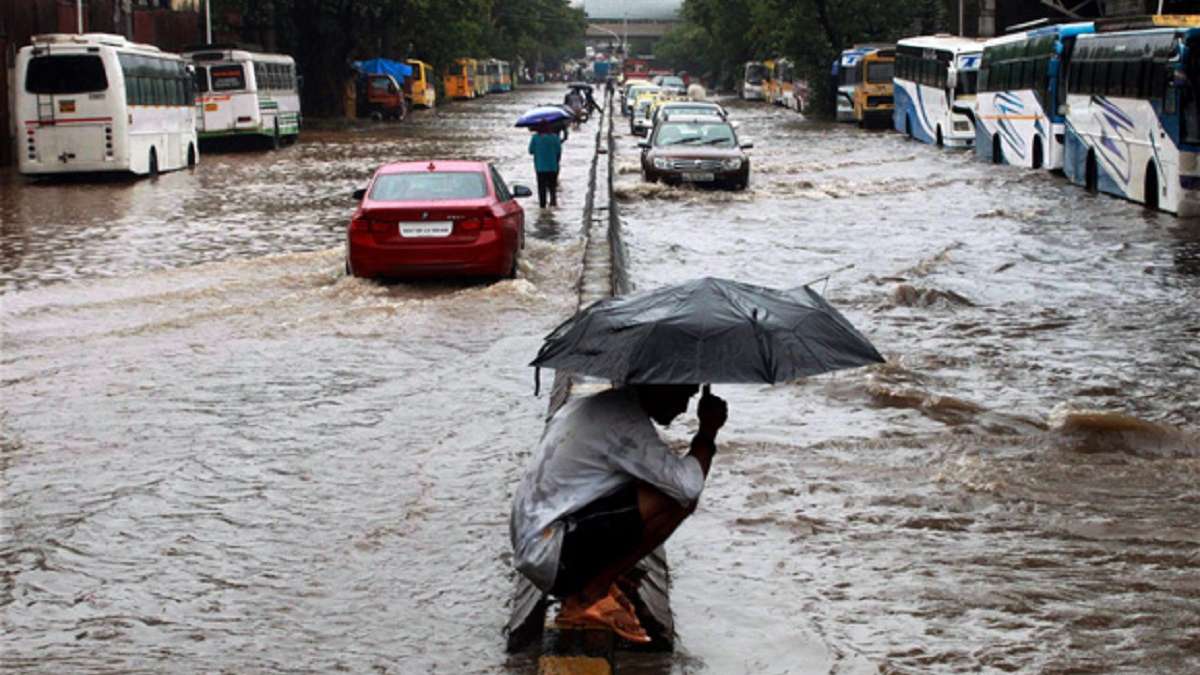
This latest advisory comes on the heels of widespread weather-related disruption across Mumbai and its metropolitan region, which faced sudden evening downpours and high-velocity winds on Wednesday. The stormy weather led to traffic paralysis, waterlogging, power outages, and general urban chaos — revealing systemic weaknesses in the state’s weather preparedness and civic infrastructure.
Mumbai witnessed heavy showers across key localities such as Borivali, Dahisar, Jogeshwari, Kurla, Vikhroli, and Ghatkopar. Low-lying areas reported significant water accumulation, with the Andheri subway temporarily shut down due to flooding. In Kandivali, water entered a bustling vegetable market, disrupting trade. Public transport, especially BEST buses, was delayed, leaving commuters stranded or stuck in long traffic queues, particularly along the LBS Marg and other arterial roads.
Navi Mumbai recorded at least three instances of tree falls, prompting quick intervention from emergency response teams. Meanwhile, the weather disturbance extended into Thane and its adjoining urban belts. Rainfall, which began mildly around 4 p.m., intensified post-sunset, affecting routine life in Kalyan, Dombivli, Bhiwandi, Ambernath, and Badlapur. Motorists on the Thane-Belapur and Sion-Panvel highways faced sluggish traffic and rising frustration, with visibility dipping and drains failing to clear the rainwater swiftly.The coastal district of Raigad, too, reported heavy rainfall across several villages, with Alibag and Murud talukas being among the most affected. Several parts experienced electricity disruptions due to weather-triggered faults in overhead supply lines — a recurring problem in Maharashtra’s semi-rural belts where power infrastructure remains vulnerable to climatic shocks.
This sudden meteorological shift — though not uncommon during late May — signals a broader pattern of increasing climate unpredictability. Pre-monsoon systems have become more erratic and locally intense, catching both civic administrations and residents off-guard. Climate scientists point to a combination of rising land surface temperatures, urban heat islands, and atmospheric instability as triggers for these violent outbursts.Experts have stressed the need for climate-adaptive infrastructure that can withstand such short-duration, high-intensity weather events. The lack of efficient stormwater drainage, weather-resilient mobility systems, and decentralised disaster response has magnified the impact on daily life — particularly for low-income communities and informal workers who have limited coping mechanisms.
In the face of growing climate risks, Maharashtra’s cities and towns must recalibrate their infrastructure planning and disaster readiness. A shift towards more eco-sensitive, equitable, and resilient urban development is imperative. As more rainstorms loom on the horizon, the current chaos serves as a wake-up call for urban policymakers to act swiftly and decisively.
Authorities have urged citizens in the affected districts to remain indoors during high wind or storm conditions, avoid waterlogged areas, and immediately report fallen trees or power disruptions to local disaster response teams.
Also Read : Early Monsoon in Kerala May Not Reach Mumbai
