


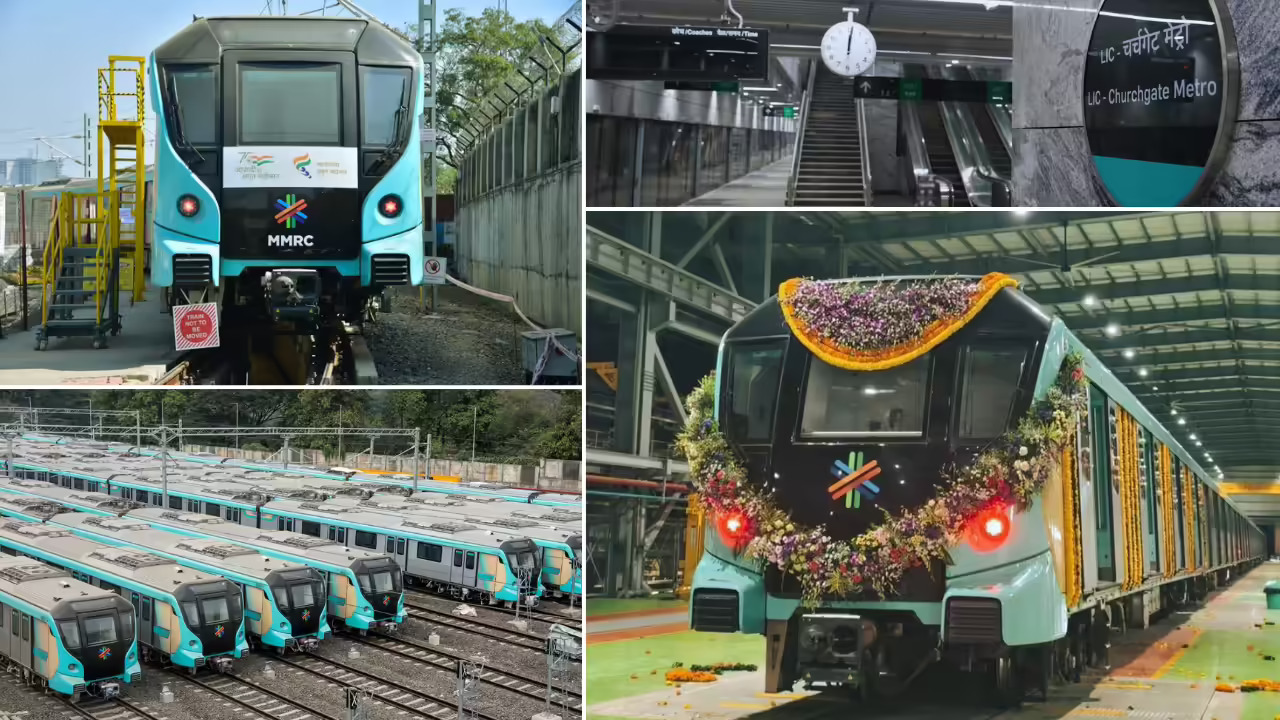
Mumbai’s public transport network is undergoing a data-driven rethink as the Brihanmumbai Electric Supply and Transport (BEST) undertaking initiates a study to assess shifting commuter patterns following the full operation of the Aqua Line Metro between Aarey and Cuffe Parade. The move comes amid concerns of declining ridership on shorter bus routes overlapping with the new underground corridor.
According to officials, the study aims to understand changing commuter flows, optimise routes, and strengthen feeder connectivity between Metro stations and key destinations. The transport authority expects the findings to guide its upcoming route rationalisation programme, ensuring resources are deployed where they are most needed. The Aqua Line, operational since early October, offers a faster, underground alternative across the north-south business corridor of Mumbai — from Aarey to Cuffe Parade. Since its inauguration, the Metro has attracted significant ridership, particularly among office-goers commuting between hubs such as Bandra Kurla Complex (BKC), Worli, and South Mumbai. This shift has led BEST to anticipate a drop in passenger numbers on routes serving similar corridors, such as those linking Chhatrapati Shivaji Maharaj Terminus (CSMT) with Mantralaya.
An official from BEST said the survey, launched on Monday, is part of an ongoing strategy to enhance operational efficiency and support multimodal integration. “We are mapping which routes have become redundant and identifying corridors where feeder buses are now crucial to support the Metro system,” the official explained. The exercise is also expected to inform route adjustments post-Diwali, once schools and colleges reopen and the city returns to full commuting rhythm. Officials noted that accurate insights into post-Metro commuter behaviour will help prevent duplication of services while improving connectivity in areas underserved by rapid transit.
Earlier this month, BEST rationalised 23 major routes and expanded its fleet of air-conditioned buses to meet rising passenger expectations for comfort and reliability. The undertaking also introduced new services, such as route A-101 connecting the World Trade Centre and CSMT, to enhance last-mile coverage in key business districts. Urban mobility experts have welcomed the initiative, highlighting the need for continuous data-backed planning in cities experiencing rapid transit expansion. “Metro systems and bus networks must work in synergy, not competition. Feeder planning ensures equitable, low-carbon mobility for all citizens,” said a transport analyst.
The study marks a step towards a more integrated and sustainable transport ecosystem for Mumbai — one that balances modern rapid transit with accessible last-mile options, reducing congestion and improving daily commute efficiency.
Also Read : Pune Hinjawadi Metro Expansion To Shivajinagar Set For Completion By March 2026
