


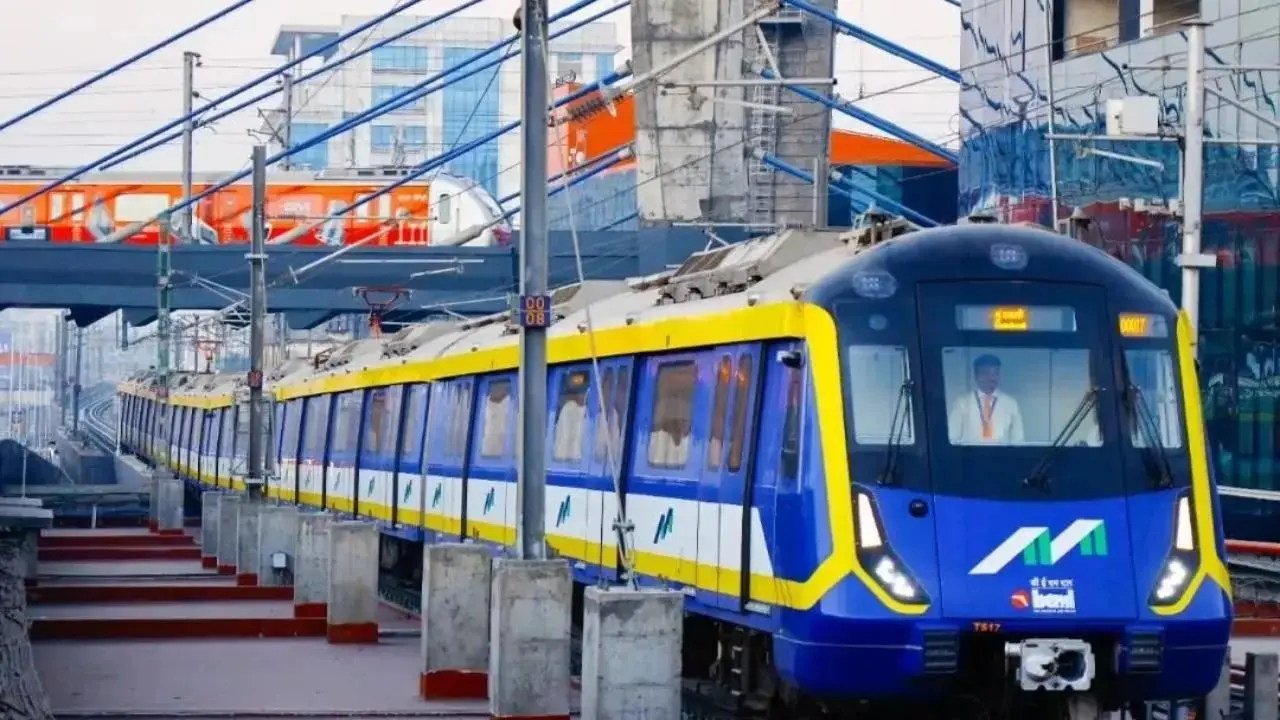
Mumbai’s ambitious Metro network expansion has encountered a slow start in terms of ridership. The two recently operational Metro lines in the western suburbs are carrying only about 40% of the passengers projected by the Mumbai Metropolitan Region Development Authority (MMRDA) since they became fully functional in January of last year.
Phase I of lines 2A and 7, covering the Aarey-Dahanukarwadi stretch, was inaugurated in April 2022, with the entire route from Gundavali-Dahisar-Andheri officially opened by Prime Minister Narendra Modi in January 2023. Despite the high expectations surrounding the launch, weekday ridership has fallen significantly short of initial forecasts. An activist pointed out that the combined ridership for these lines, originally estimated at 240 million passengers in the first year, has only reached around 100 million as of last week. This highlights a substantial gap between anticipated and actual figures.
The MMRDA had forecasted a first-year daily ridership of 270,000 for Metro 2A and 388,000 for Metro 7. However, the current weekday ridership is approximately 250,000 for the combined route, averaging 260 trips daily. The activist suggested that the initial estimates might have been overly optimistic, potentially inflated during the preparation of the detailed project report (DPR) to secure project approval. Additionally, the expected reduction in vehicular traffic has not materialised, as many commuters continue to use personal vehicles.
One primary reason for the lower-than-expected ridership is the truncated nature of the current Metro routes. The full potential of these lines is expected to be realised once they integrate with other under-construction lines. For instance, Metro 2A will eventually merge with Metro 2B, which will pass through Linking Road, Bandra Kurla Complex, and Chembur. Similarly, Line 7 is being extended to the Domestic Airport and will merge with Line 9, serving Mira-Bhayander. These extensions are expected to take at least 2 to 3 years to complete. Furthermore, the current routes do not serve major business hubs essential for attracting high footfall. Although peak hours see crowding, particularly from office-goers near the Western Express Highway (WEH) and New Link Road, the lack of connectivity to key destinations such as Bandra, Dadar, or South Mumbai has limited overall usage. The absence of integration with the suburban rail network has also contributed to lower ridership. Unlike other major cities with interconnected public transportation systems, Mumbai’s Metro lines require additional transfers between different transport modes.
Despite the operational Metro lines, vehicular traffic on the Western Express Highway has not significantly reduced. This is partly due to the lack of last-mile connectivity, limited bus services, and issues with rogue autorickshaw drivers, making seamless travel from Metro stations to final destinations challenging. Many commuters still prefer the convenience of personal vehicles over multiple transfers. Another commuter highlighted that the frequency of Metro trains does not match that of suburban trains, leading people to opt for local trains or autorickshaws. Despite these initial hurdles, there remains optimism about the long-term benefits of the Metro lines. Changes in travel patterns take time, and while current ridership may be below expectations, the availability of alternative transport modes like the Metro offers commuters viable options to reduce reliance on personal vehicles and overcrowded suburban trains.
