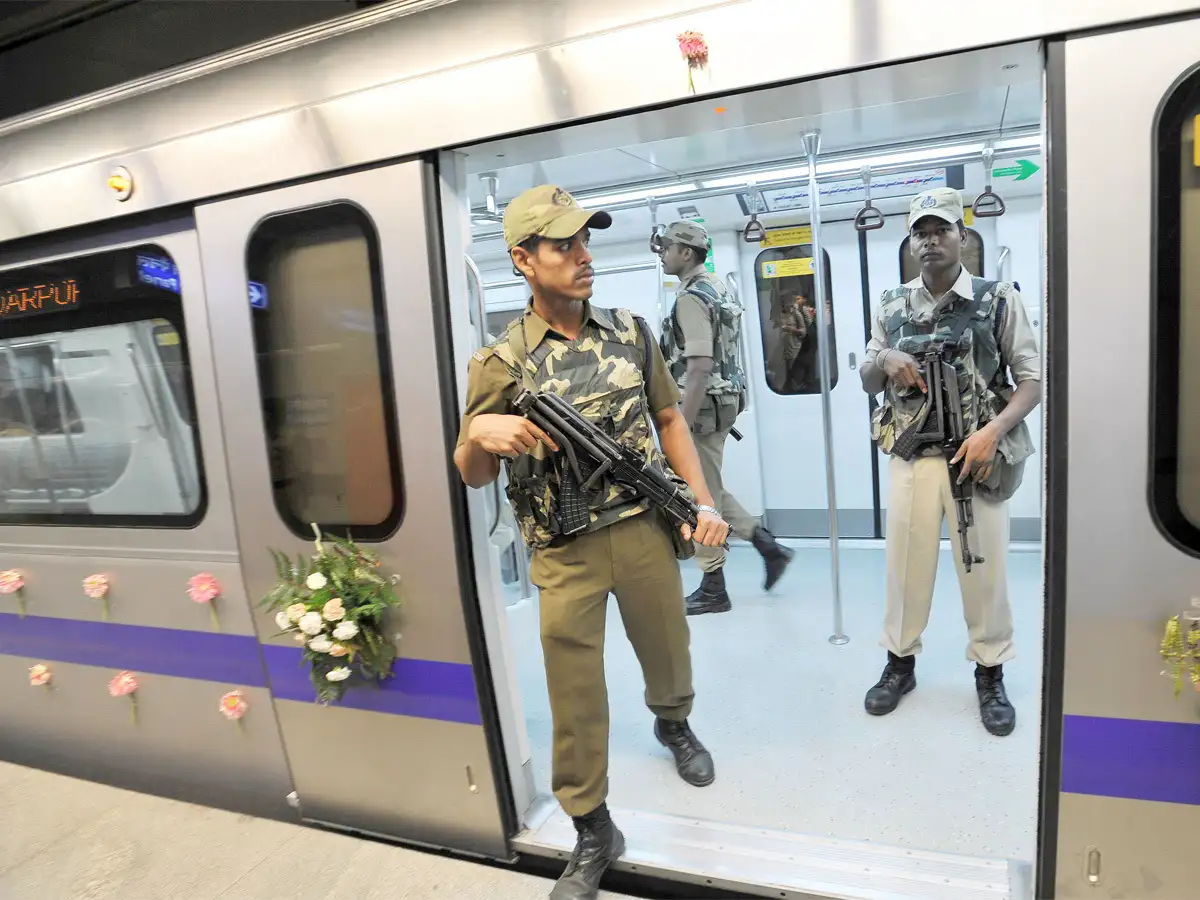
Public transportation across Delhi, including the Metro and bus services, will continue to operate without disruption during a city-wide mock security drill scheduled for Wednesday, officials confirmed.
The drill, known as Operation Abhyaas, is a periodic exercise aimed at enhancing disaster response and ensuring public safety in the city’s key transport hubs and public areas. The exercise will cover over 50 locations across the capital, including two major metro stations—Rohini Sector 18-19 on the Yellow Line and Dwarka Sector 10 on the Blue Line. Despite these locations being part of the drill, authorities have assured commuters that Delhi Metro services will run as per the usual schedule with no changes expected in operations.
A senior official from the Delhi Metro Rail Corporation (DMRC) mentioned that security drills are routine at metro stations and are well-coordinated to prevent any inconvenience to passengers. The official added that the drill’s focus is primarily on emergency preparedness, and any adjustments to metro schedules would be communicated to the public promptly, should the need arise. Similarly, the Delhi Transport Corporation (DTC) has confirmed that the ongoing bus services will not be affected by the security drill. Bus routes will remain operational, and commuters can expect the same service levels as on any regular day. The DTC official emphasised that such drills are integral to ensuring the safety of passengers, and all necessary measures are taken to prevent any disruption.
In addition to the metro and bus services, other modes of transport, including private cabs and auto-rickshaws, are also expected to operate normally throughout the drill. The reassurance from the authorities comes as a relief to daily commuters who may have been concerned about possible disruptions due to the drill. The drill’s scope also extends beyond just metro stations and bus routes. One of the key sites for the exercise is Terminal 3 of the Indira Gandhi International Airport, which will simulate emergency scenarios outside the arrivals terminal. However, passengers are not expected to be involved in the exercise, with only select airport personnel, including shopkeepers, taking part in the mock drill. Airport officials assured that this would not interfere with regular flight services, and air travel would continue as usual.
The importance of these security drills cannot be overstated. Delhi, being one of the most populous and urbanised cities in India, faces unique challenges in ensuring public safety across its vast and dynamic infrastructure. The exercise is designed to evaluate the readiness of various agencies to respond to potential security threats and emergencies, providing them with an opportunity to rehearse coordinated efforts in real-life scenarios. These mock security drills, conducted every few months, also test the effectiveness of existing safety protocols, evacuation procedures, and communication channels between different departments involved in disaster management. They are seen as vital in ensuring that first responders, airport personnel, metro staff, and law enforcement agencies can act swiftly and efficiently in times of crisis.
As the city continues to grow and evolve, such drills play a crucial role in maintaining public confidence and ensuring the continued safety of residents and visitors alike. The involvement of various public transport agencies, including DMRC and DTC, in these exercises also highlights their commitment to passenger safety and the importance of seamless coordination between them. Moreover, with Delhi striving towards becoming a more sustainable and eco-friendly city, these drills also offer an opportunity to assess the preparedness of the city’s transport infrastructure in handling crises without compromising its commitment to reducing carbon emissions. The unimpeded operation of the metro, buses, and other transport services is a testament to the resilience of Delhi’s public transport system, which is a key component of the city’s sustainable urban development.
It is crucial to note that these exercises are not just about immediate response but are part of a broader initiative to create a robust and adaptive public safety framework for the capital. Officials have stressed that while the drills are primarily security-focused, they also provide an opportunity for stakeholders to assess and refine the city’s overall disaster response capabilities, ensuring that all modes of public transport—especially those that are central to a sustainable urban transport system—remain a priority in these plans. In recent years, Delhi’s government has made significant strides towards improving the safety and efficiency of its public transport network. The city’s metro system, for instance, continues to expand rapidly, and the ongoing integration of electric buses into the fleet is helping reduce emissions and foster a greener transport network. As the city moves forward with its plans for sustainable development, these security drills will continue to play an essential role in ensuring that Delhi’s transport infrastructure remains prepared for any emergency, further solidifying its reputation as a forward-thinking, eco-conscious metropolis.
The city’s commitment to improving its public safety infrastructure is reflected in the active participation of its residents. Commuters have been urged to stay informed about these drills, as they help improve emergency preparedness for all, even though the immediate impact on daily travel will be minimal. The key takeaway is that while these exercises are essential for testing the city’s emergency response systems, they are also part of an ongoing effort to ensure that Delhi remains a safe, sustainable, and resilient city for all its inhabitants. As the drill proceeds, officials remain optimistic that the seamless operation of public transport will set a positive example for how large cities can balance safety preparedness with operational continuity. Public transport in Delhi, particularly the metro, remains a symbol of the city’s commitment to both sustainability and resilience, and these drills serve to reinforce that commitment in practical, real-world scenarios.
Through continued investments in infrastructure, public safety, and sustainable transport, Delhi is not only preparing for the future but also ensuring that its citizens continue to benefit from safe, accessible, and eco-friendly commuting options in a rapidly evolving urban landscape.
Also Read : Mock Disaster Drill on May 7 – Key Areas, Timings and What Residents in Delhi, Mumbai, Bengaluru Need to Know
Metro and Bus Services to Run as Usual During Delhi Security Drill