


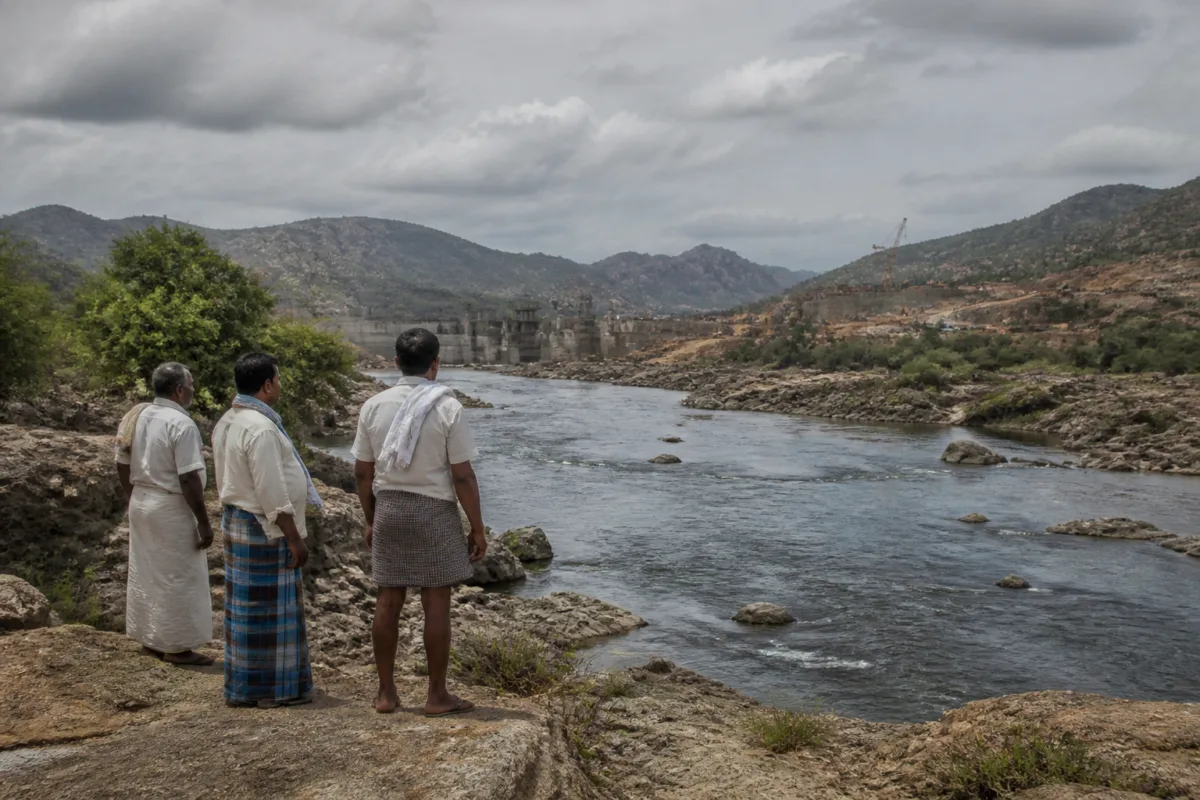
The Mekedatu dam issue is being presented as a dispute with Karnataka and the Union government, but a fresh political intervention in Tamil Nadu has drawn attention to a problem closer to home: the reported vacancy in a senior position responsible for handling inter-state water matters. V. T. Leaders founder K. Annamalai has questioned whether meeting the Union water resources minister and submitting a petition can resolve the Cauvery dispute when key positions within Tamil Nadu’s own water-administration structure remain unfilled.
According to a report published by Dinamalar, the resignation of M. Selvaraj, who had served as vice-chairman of the Cauvery Technical Cell and the state’s inter-state water division, was accepted on June 28, 2026. The government order to refill the position was issued only on October 9, roughly three and a half months later, the report said. More than a month after that order, the report stated that no information was available about the appointment of a replacement.
The report attributes the criticism to Annamalai, who described the position as important to protecting Tamil Nadu’s water resources and dealing with disputes involving neighbouring states. He questioned the administrative delay and argued that the state’s institutional machinery should be strengthened alongside representations to the Union government.
The distinction matters because inter-state river disputes are not managed through a single political meeting or petition. They require continuous technical assessment, legal preparation, monitoring of water releases, coordination between departments and timely communication with institutions responsible for river-water sharing. The reported vacancy does not by itself establish that any particular decision has been delayed or that the state has lost a legal or regulatory opportunity. It does, however, raise a question about how much institutional continuity is available when a senior coordinating post remains vacant during an active dispute.
The Mekedatu project is central to the political conflict described in the report. Karnataka’s proposed dam project has long been treated by Tamil Nadu as a threat to its interests in the Cauvery basin. The material supplied for this article does not provide the project’s proposed capacity, current approval status, construction timeline or the latest position of the Union government. It therefore cannot establish a new project milestone. What it does show is that the project remains politically active in Tamil Nadu and is being linked to the broader question of the state’s preparedness to protect its water claims.
That preparedness has an administrative dimension. A state dealing with an inter-state river dispute needs officials and technical bodies capable of consolidating hydrological information, reviewing seasonal requirements, tracking decisions and presenting a consistent institutional position. The report identifies the Cauvery Technical Cell and the inter-state water division as structures with an important role in these matters. It does not describe their full staffing, budget, reporting chain or current workload. Those details would be necessary to determine whether the reported vacancy has materially weakened operations.
The report also connects the dispute to the agricultural cycle in the Cauvery delta. It says farmers in delta districts are worried because water is not available for samba cultivation. Samba is a major paddy-growing season in the delta, but the supplied report does not provide the number of affected farmers, the area under cultivation, reservoir levels, release data or crop-loss estimates. The claim is therefore best understood as a reported concern attributed to the prevailing water situation, rather than as a quantified assessment of agricultural damage.
This connection between administrative capacity and farm-level impact is important. River-water governance is often discussed through court proceedings, government orders and statements by political leaders. Its consequences are experienced through decisions about sowing, irrigation access and the ability of farmers to plan a crop. When a senior post is vacant, the public question is not only who occupies the office, but whether information and decisions continue to move efficiently between technical officials, the state government, farmers and inter-state institutions.
The report says Tamil Nadu ministers Anand and Adhav are expected to meet the Union water resources minister and submit a petition regarding the Mekedatu project. The material does not provide the date of the proposed meeting, the text of the petition or the specific action being sought from the Union government. It also does not include a response from the Union ministry, Karnataka or the Tamil Nadu government to Annamalai’s criticism.
That missing information limits what can be concluded about the effectiveness of the proposed representation. A petition may place a state’s position on record, seek an administrative or regulatory response, or support a wider legal and political strategy. But its significance depends on the authority receiving it, the decision pending before that authority and the documentary and technical material attached to it. None of those details is included in the supplied report.
The reported timeline nevertheless offers a clear institutional sequence: the resignation was accepted on June 28; the order to refill the post was issued on October 9; and, according to the report, a replacement had not been publicly identified more than a month later. The sequence raises questions about the difference between authorising a post to be filled and actually completing the appointment. In governance terms, the second step is what restores accountability and decision-making capacity.
It is also necessary to distinguish a vacancy from administrative failure. The report uses the delay as evidence of weak administrative responsibility, but it does not provide the government’s explanation for the gap. A vacancy may involve selection procedures, eligibility decisions, inter-departmental approvals or other steps that are not visible in the article. Without those records, the reason for the delay cannot be established. The same limitation applies to the question of whether the vacant post has affected any specific Cauvery-related decision.
For Tamil Nadu, the larger policy challenge is coordination. Water disputes cross departmental and state boundaries, while their effects are distributed across agriculture, drinking water, irrigation, ecology and local economies. A state’s external strategy—its representations to the Union government and its engagement with neighbouring states—depends partly on the strength of its internal evidence and institutional coordination. Technical divisions and designated officers help convert political claims into records, measurements, legal submissions and implementation follow-up.
The available report does not provide enough information to assess the performance of the Cauvery Technical Cell, the inter-state water division or the state’s wider water administration. It does not say whether other officials have been handling the responsibilities of the vacant vice-chairman’s office, whether an acting arrangement exists or whether the government has set a deadline for the appointment. These are the next factual questions required to assess the scale of the reported governance gap.
The story also illustrates how water governance becomes politically visible when a new infrastructure proposal is connected to an existing river-sharing dispute. The Mekedatu issue is not presented in isolation. It is tied to the Cauvery delta’s farming season, Tamil Nadu’s water rights and the state’s ability to maintain senior administrative capacity. That combination gives the issue significance beyond a political exchange, even though the available evidence remains limited to the report and the statements it attributes.
What is established in the supplied material is that Annamalai questioned the delay in filling a senior water-related post and challenged the idea that a petition to the Union government alone could resolve the Mekedatu dispute. What remains unclear is whether the post has since been filled, how the state government has responded, what the proposed ministerial meeting will seek and whether the reported vacancy has affected any operational or legal action. Those records will determine whether the controversy reflects a procedural delay or a deeper weakness in Tamil Nadu’s inter-state water governance.

