


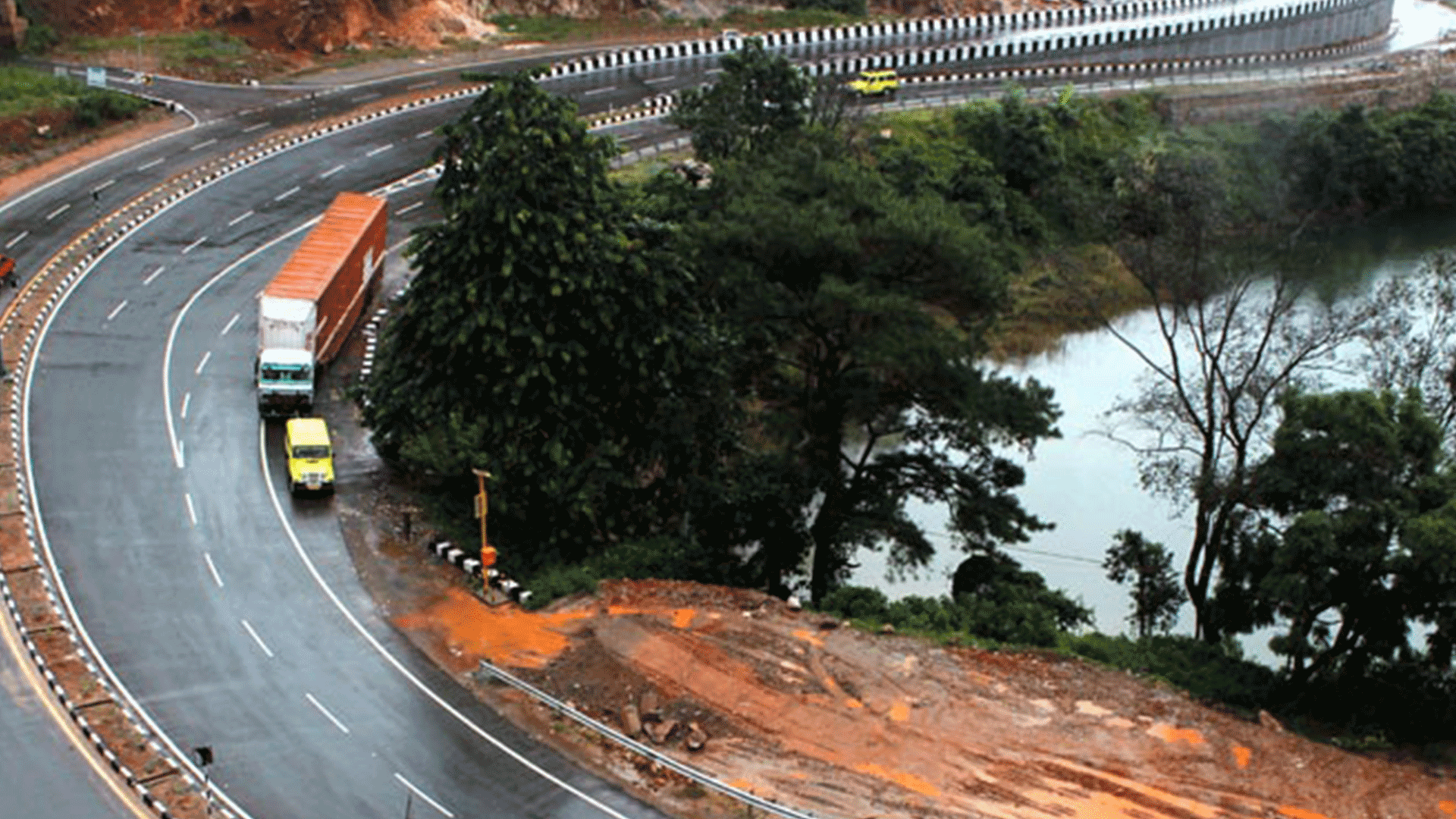
The Union Cabinet has cleared the decks for a 166.80-km greenfield high-speed corridor linking Mawlyngkhung in Meghalaya to Panchgram in Assam. With an estimated investment of ₹22,864 crore, this four-lane, access-controlled expressway is set to substantially reduce travel time between Shillong and Silchar from 8.5 hours to just 5, while alleviating traffic congestion on the existing National Highway 06.
Spanning 144.80 km across the challenging terrain of Meghalaya and another 22 km in Assam, this infrastructure leap underscores the Centre’s commitment to inclusive regional development. The project will be delivered under the Hybrid Annuity Model (HAM), ensuring a balanced risk-sharing mechanism between public and private stakeholders. The corridor aligns with the PM Gati Shakti National Master Plan, a pivotal framework that integrates infrastructure planning across ministries and states for seamless multimodal connectivity.
The new highway promises more than just reduced commute times. It is expected to catalyse economic momentum in sectors deeply tied to the region’s natural endowments, particularly Meghalaya’s thriving cement and coal industries. Enhanced road infrastructure will reduce logistical inefficiencies, lower carbon emissions from vehicular congestion, and ensure faster freight movement—an essential factor in making the Northeast more competitive in national supply chains. Environmentally, the corridor has been envisioned to operate with minimal ecological disruption. Greenfield development enables strategic planning from the ground up, allowing for optimal land use and the incorporation of sustainable construction practices. This is particularly critical in Meghalaya, a state known for its rich biodiversity and fragile ecosystems. The project’s success could set a precedent for balancing infrastructure development with environmental stewardship, aligning with India’s broader climate commitments.
On the socio-economic front, the expressway is likely to transform tourism in the region, opening up easier access to Meghalaya’s famed waterfalls, living root bridges, and misty hillscapes, while offering Silchar a new gateway for inbound travel. It will also link with major arterial roads such as NH-27 and NH-106, improving interstate mobility and fostering equitable development across Assam and Meghalaya. This integrated approach to planning strengthens the idea of a connected, inclusive India—where no region is left behind. By enhancing travel efficiency, easing freight bottlenecks, and enabling greener infrastructure choices, the Meghalaya-Assam greenfield corridor represents a shift towards sustainable urbanisation and inclusive growth. If executed as planned, it could become a model for other states seeking to modernise infrastructure while adhering to environmental safeguards.
As Northeast India continues to assert its role in the national economic narrative, this corridor reflects a timely and strategic investment. It is not merely a road but a lifeline designed to carry the aspirations, resources, and potential of a region long seen as peripheral, now placed firmly at the heart of India’s development roadmap.
Also Read :Sahupura turn shut temporarily to speed up Greenfield Expressway construction
Meghalaya Assam Greenfield Corridor to Boost Northeast Mobility and Economy
