


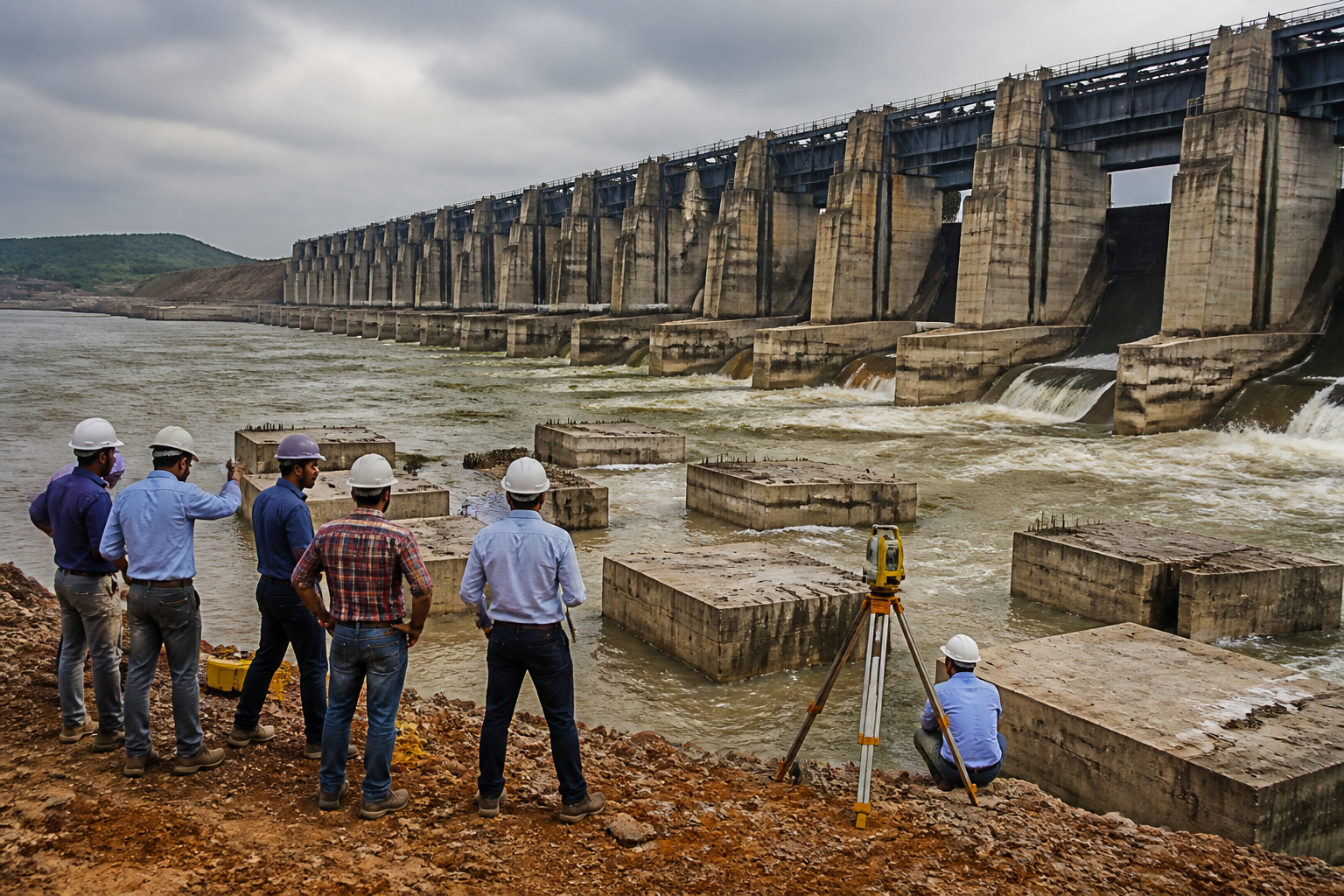
Telangana is considering an end-to-end diaphragm wall for the rehabilitation of the damaged Medigadda barrage, along with possible strengthening and extension of its stilling basins, but final repair designs have not yet been submitted, according to a Deccan Chronicle report. The report identifies irrigation minister N. Uttam Kumar Reddy as the source of the announcement, although one quoted passage attributes the statement to Revanth Reddy, creating an attribution issue that requires clarification.
The proposed diaphragm wall, or D-wall, would run from one end of the barrage to the other. The intervention is being considered after technical tests were conducted at Medigadda and the linked barrages at Annaram and Sundilla. The report says some piers at Medigadda were damaged in October 2023.
The possible repair programme also includes work on the stilling basins downstream of the barrage. These structures are designed to reduce the speed and energy of water released through a barrage. According to the report, the basins may have to be strengthened and extended to help control the velocity of floodwaters and improve energy dissipation.
The proposals remain preliminary. The report says the final rehabilitation designs are yet to be submitted, with IIT Bombay and engineering consultancy AFRY India engaged to study the test reports and prepare repair and rehabilitation designs. No final construction schedule, cost estimate or implementation timeline was provided in the supplied material.
The technical review follows structural failures at components of the Medigadda, Annaram and Sundilla barrages. The report links the proposed interventions to the findings emerging from extensive technical tests across the three structures. It does not provide the detailed findings, condition assessments or engineering specifications from those tests.
The report also carries a broader claim about Telangana’s use of Godavari water. It says the state utilised 340 tmc ft during 2025–26, which the minister described as the highest level since Telangana was formed. The figure was presented as a record despite the adverse impact of El Nino. The supplied report does not provide an independent water-accounting document or a breakdown showing how the utilisation figure was calculated.
Uttam Kumar Reddy also criticised decisions taken by the previous Bharat Rashtra Samithi government. He said Telangana could have impounded Pranahita river water and utilised nearly 165 tmc ft for northern Telangana if the original Pranahita Chevella project had been built at Tummidihatti as initially envisaged. According to the minister’s account in the report, the project was later shifted to Medigadda and the barrages subsequently experienced serious structural failures.
These political and project-history claims are attributed to the minister in the supplied report. The report does not include a response from the previous government, an independent assessment of the project alternatives, or documentary evidence supporting the comparison between the Tummidihatti and Medigadda configurations.
The central engineering question is whether the damaged barrage can be rehabilitated through targeted structural repairs or whether a more extensive intervention, including a continuous diaphragm wall and redesigned energy-dissipation structures, will be required. The supplied material does not establish which option will be adopted. That decision is expected to follow the review of the technical test reports and the submission of final designs.
Before publication, the identity of the official who made the quoted remarks should be confirmed, along with the final technical findings, the scope of the proposed D-wall, the condition of the stilling basins and the next formal approval or tender milestone.
