


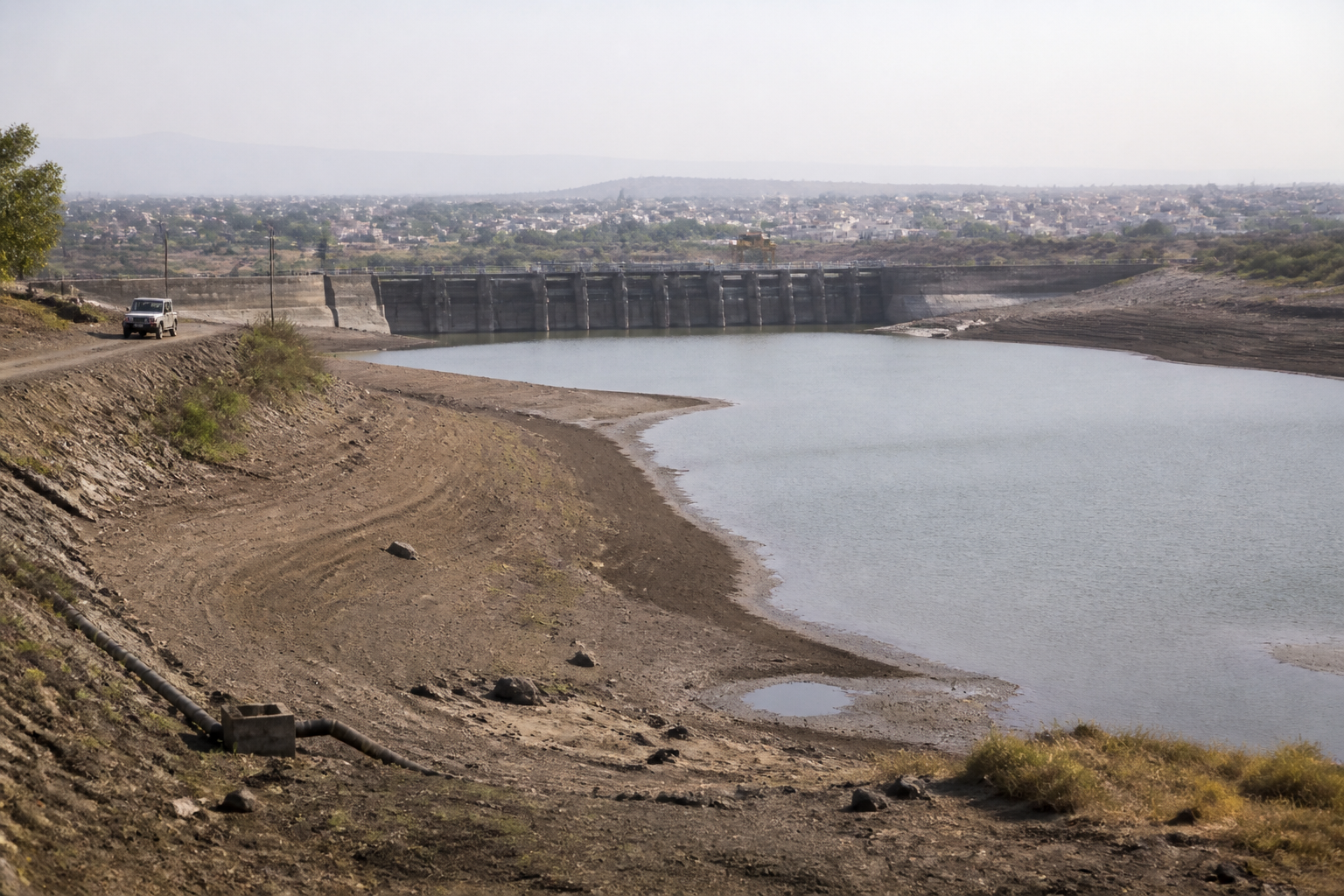
Maharashtra will impose a minimum 10% water cut across all municipal corporations, municipal councils and gram panchayats from October 16, Water Resources Minister Girish Mahajan said, citing reduced rainfall, limited reservoir storage and the risk of continuing water stress linked to El Niño conditions.
The state’s water resources department has prepared a management plan running until August 31, 2027. The plan sets out how water from each dam and reservoir will be allocated, with drinking water placed ahead of other uses. The announcement comes as Maharashtra enters the post-monsoon period with concerns over storage levels and drought conditions in several parts of the state.
According to the report, drought has been declared in 265 talukas where a “Trigger-1” situation was identified under rules based on the 2016 kharif season. Mahajan said the department had issued instructions to all relevant agencies to use water carefully and implement stricter measures in view of the possibility that El Niño conditions could continue into the following year.
The allocation plan requires authorities to protect drinking-water supplies until August 31, 2027, while accounting for evaporation, silt accumulation and unauthorised withdrawals. Each dam will also maintain an additional 10% emergency buffer stock to address future uncertainty. Water from dead storage may be used only if necessary and after technical assessment.
Urban local bodies have been directed to introduce the minimum 10% cut from October 16 and conduct special campaigns to control leakage and wastage. Sewage treatment plants must operate at full capacity so that treated wastewater can be used for gardens, construction activities and washing instead of fresh water. The order places responsibility on municipal corporations, councils and gram panchayats to reduce losses as well as manage demand.
The plan also establishes a priority order for irrigation. Water will be released for farming only after the needs of drinking water, livestock and fodder have been met. Rabi-season foodgrain and fodder crops will receive priority, followed by other rabi crops. Water for perennial crops will be approved only if supplies remain available, while authorities will promote water-saving irrigation methods.
Industries have been instructed to reuse or recycle at least 30% of their used water. The measure is intended to reduce demand for fresh water from reservoirs and other sources, although the report does not specify separate implementation timelines or monitoring arrangements for individual industrial units.
Joint teams comprising revenue, police and water resources officials will patrol dams, rivers and canals to stop unauthorised extraction. Officials will be empowered to take action against violators and seize illegal pumps and other equipment.
Mahajan said the water resources, revenue, agriculture, industry and urban development departments were coordinating their response. Guardian ministers and canal advisory committees will regularly review the water situation, while the state government has appealed to residents and agencies to use water carefully. The immediate operational milestone is the implementation of the minimum 10% cut across local bodies from October 16.
