


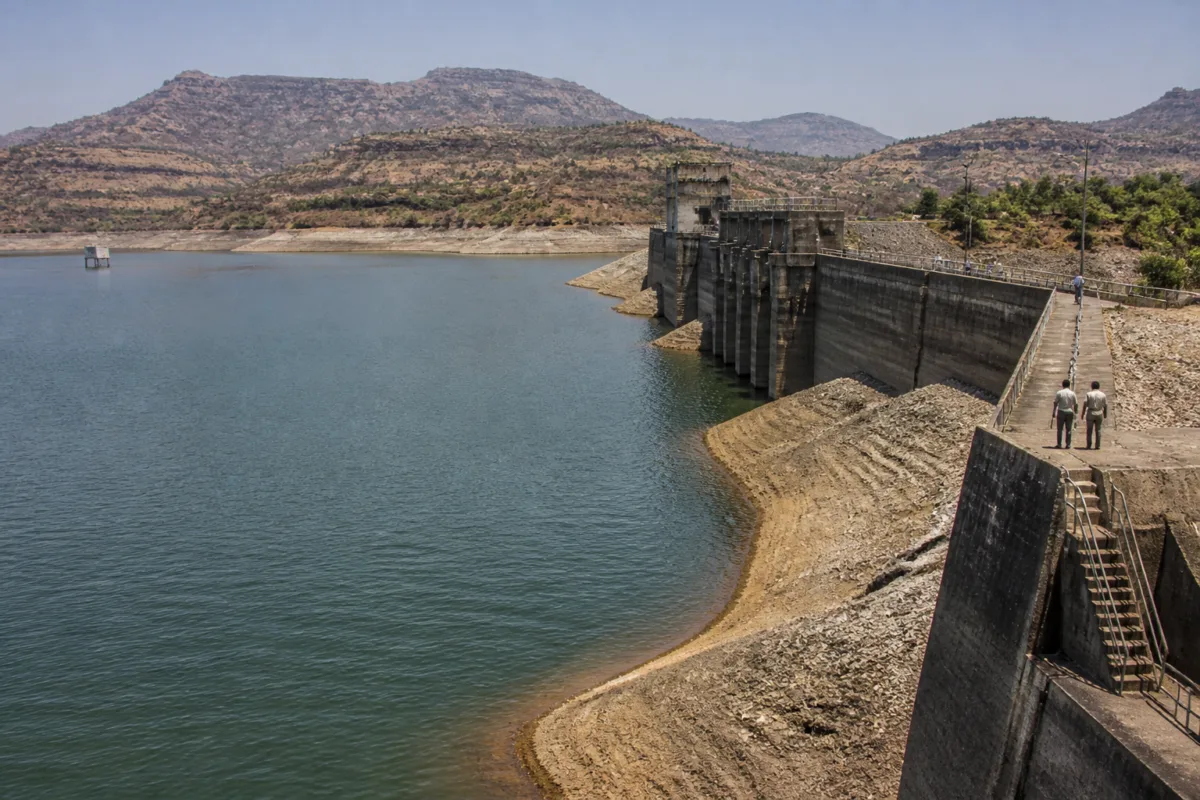
Maharashtra has asked the Central Water and Power Research Station (CWPRS) to study scientific measures for reducing evaporation from dams and helping preserve available water until the next monsoon, according to a report by Sakal-Pune.
The request comes against the backdrop of drought conditions and the challenge of managing existing dam stocks through the summer. The state government is seeking measures that can limit evaporation losses while also supporting year-round planning of available water.
The issue is expected to be discussed at an online meeting scheduled for November 19 under the chairmanship of Union Jal Shakti Minister C. R. Patil. The meeting will follow the inauguration of the national conference on Integrated River, Reservoir and Dam Systems (IRRDS-2026), being organised by CWPRS on November 19 and 20.
Maharashtra Chief Minister Devendra Fadnavis, the state water resources minister, the chief secretary, the principal secretary of the Water Resources Department and senior officials are expected to participate through videoconferencing. Divisional commissioners, district collectors and municipal commissioners are also expected to attend.
The proposed study reflects the difficulty of applying a single evaporation-control measure across the state’s dams. According to the report, evaporation depends on factors including the surface area of the reservoir, temperature, wind speed, humidity and sunlight. The geography, storage capacity and local climate of each dam will therefore need to be considered before site-specific measures are selected.
The Water Resources Department has referred to existing studies on the subject. CWPRS is expected to examine those references, assess options for reducing evaporation and consider how available water can be planned across the year. The work is currently at a preliminary stage.
CWPRS director Dr M. Selva Balan was quoted as saying that scientific conclusions would require adequate time, while efforts would also be made to complete the study quickly. The report does not specify which evaporation-control technologies will be tested, the dams that will be prioritised, the study’s completion date or the amount of water that could potentially be conserved.
The participation of municipal commissioners places the issue within a broader urban water-management context. Any measures adopted after the study would need to be evaluated alongside reservoir-specific conditions and the competing requirement to manage available stocks until the next monsoon. For now, the government’s request marks the beginning of a technical assessment rather than the announcement of a confirmed intervention.

