


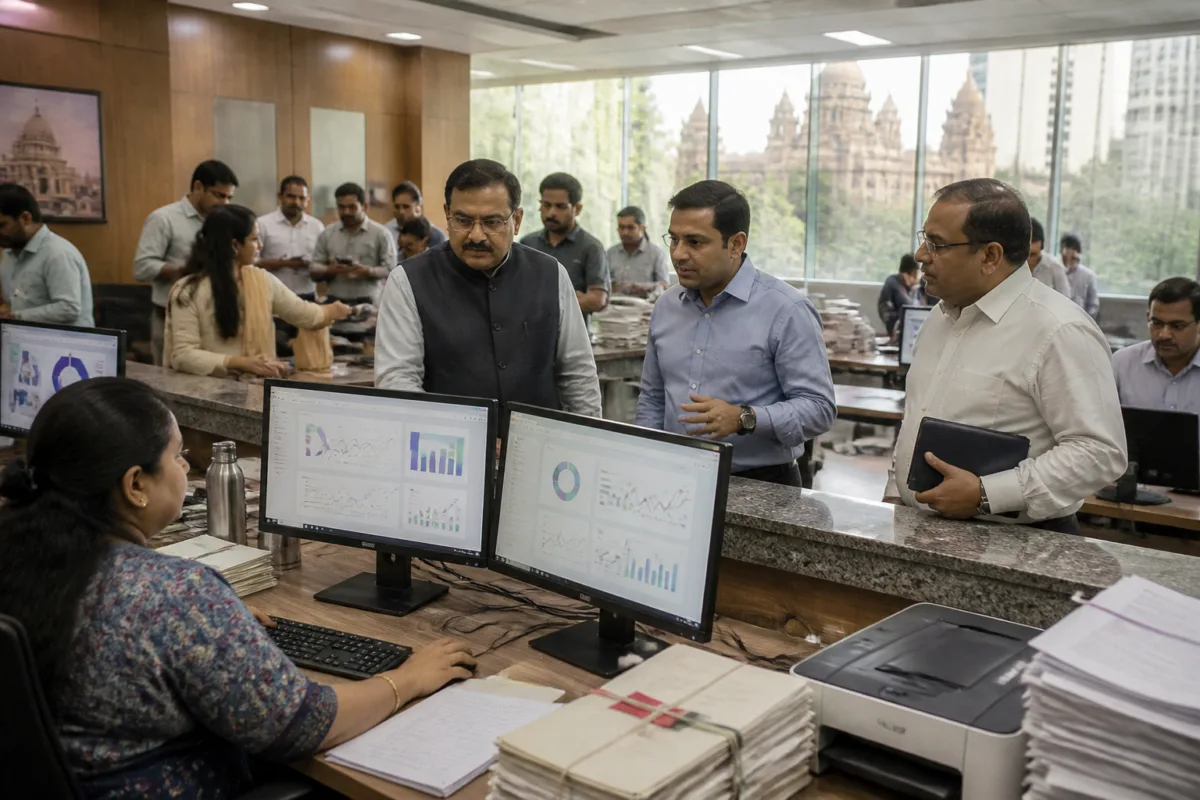
Maharashtra Chief Minister Devendra Fadnavis has directed all departments and district administrations to accelerate administrative process re-engineering so that citizens receive a more digital, transparent and paperless experience by the coming Republic Day.
The direction was issued at a review of the state government’s administrative process re-engineering initiative. According to Loksatta, 174 digital systems were launched as part of the programme, including RTS 2.0, MahaDBT 2.0, MAITRI 2.0, MahaUplabdhi, the State-Centre Government Correspondence Management System, the Government Accommodation Allotment Management System and the Maharashtra Aadhaar Dashboard.
Fadnavis said the initiative is intended to improve transparency, efficiency and accountability in the delivery of government schemes and services. He described “zero bureaucracy” as the goal, with efforts focused on simplifying procedures, removing unnecessary stages and reducing human intervention.
The chief minister also directed the administration to prioritise pending approvals and technical work, with necessary technical tasks to be completed by December 31. More important services are planned to be introduced by December 24, the report said.
The proposed digital changes include removing unnecessary affidavits, reducing the number of documents repeatedly requested from citizens and moving towards paperless governance. Fadnavis instructed the administration to strengthen service centres, maintain regular monitoring and give special attention to grievance redressal.
District collectors and district-level agencies have been asked to play an active role in implementation. Deputy Chief Minister Sunetra Pawar, ministers Pankaja Munde and Ashish Shelar, Chief Secretary Rajesh Agrawal and senior officials from various departments were reported to be present at the review.
The report did not specify the individual services covered by all 174 systems, their rollout status across districts or the arrangements for residents who cannot access digital platforms. These details will be important for assessing how the programme affects service delivery on the ground.

