


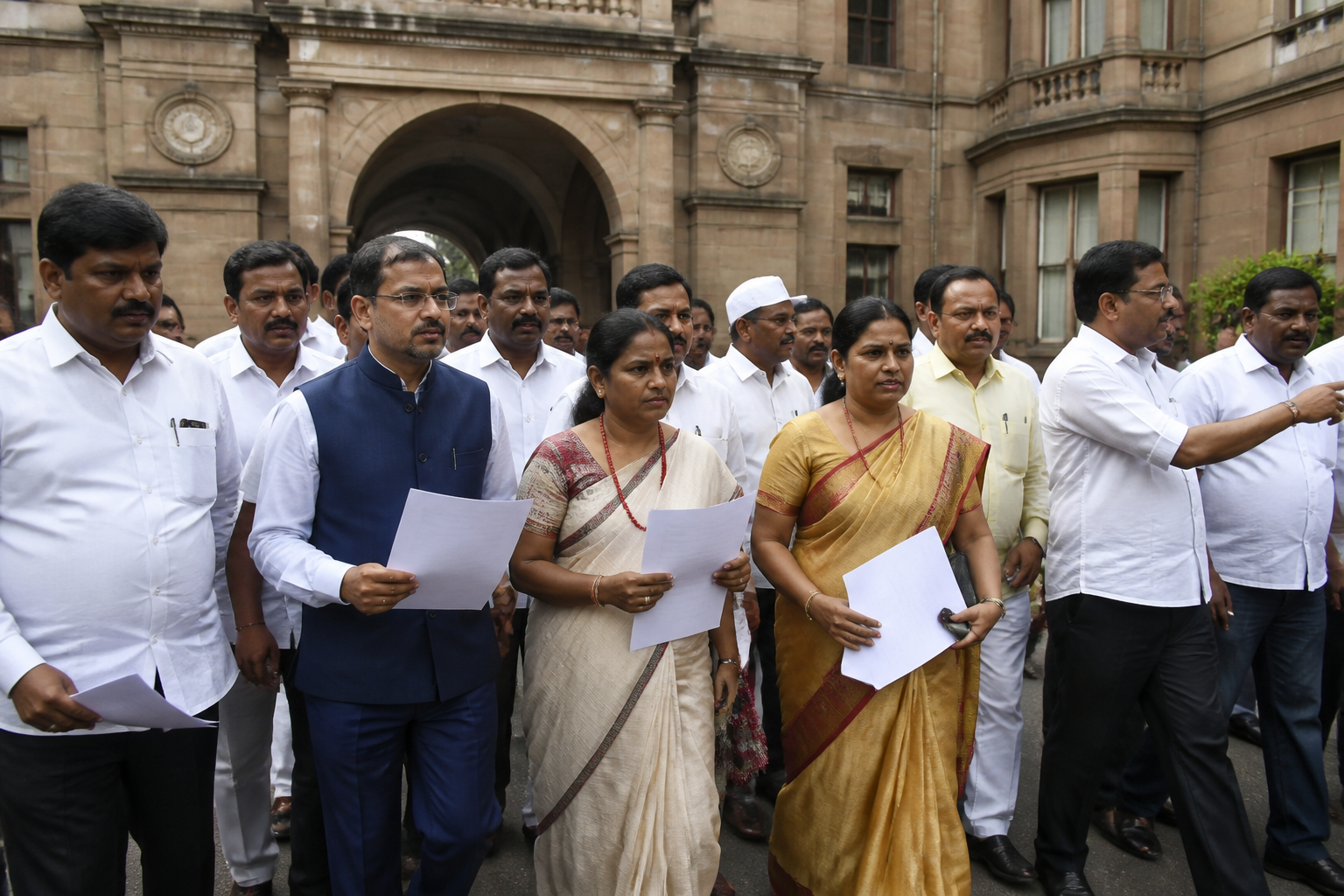
Maharashtra’s elected municipal presidents went to the state secretariat in Mumbai on Wednesday to protest the reduction of their statutory, financial, executive and administrative powers, according to a report by Loksatta. The Maharashtra Nagaradhyaksha Hakk Samiti warned that it would launch an agitation if the powers were not restored.
The municipal presidents also expressed their displeasure to Chief Minister Devendra Fadnavis. The representatives said that their powers had been curtailed through an order and that the change was affecting decision-making and the implementation of development works at the municipal level.
Maharashtra’s municipalities and nagar panchayats operate under the Maharashtra Municipal Councils, Nagar Panchayats and Industrial Townships Act, 1965, as well as the Maharashtra Municipal Accounts Code, 2023. The report said amendments made through legislation in 2019 and 2024 had reduced several powers previously available to municipal presidents.
The Nagaradhyaksha Hakk Samiti said elected municipal presidents needed statutory, financial, executive, administrative and signing powers to ensure effective and faster functioning of local self-government institutions. It argued that the powers of directly elected presidents should have increased rather than been reduced after the system of electing municipal presidents directly by citizens began in 2015.
In a memorandum submitted to the chief minister, the committee sought restoration of the powers that had been reduced. Its demands include restoring the signing, financial, executive and administrative powers available to directly elected municipal presidents in 2015.
The committee also demanded that development works within municipal boundaries be implemented through the municipal administration instead of being assigned to the Maharashtra Jeevan Pradhikaran, the Public Works Department or other agencies. It sought authority for directly elected municipal presidents to spend up to 50 per cent of funds directly.
Another demand concerns the role of district planning committees. The committee said proposals for development works submitted by municipal presidents should be approved by the district planning committee and that funds should be transferred directly to the municipality. It opposed reductions in allocations or the diversion of funds to other agencies or elected representatives.
The committee further demanded that municipal presidents be included as ex-officio members of district planning committee meetings. The report did not provide details of a government decision on the memorandum or specify a date for any further meeting. The committee’s warning of an agitation remains contingent on whether the requested powers are restored.
