


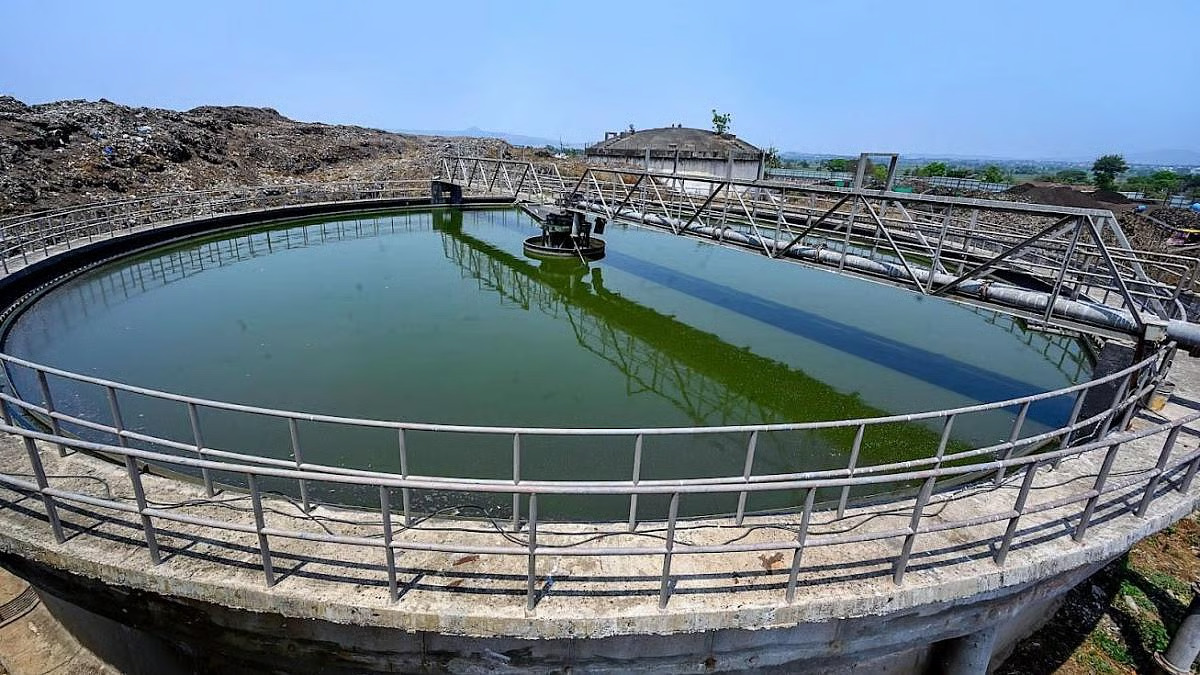
Maharashtra government has announced a new policy to promote the reuse and recycling of treated wastewater across cities. The initiative, titled Safe Reuse and Management of Treated Wastewater, 2025, aims to reduce the state’s dependence on freshwater sources by mandating its use for non-potable purposes such as gardening, construction, and industrial processes.
The policy, applicable to all Municipal Corporations and Class A Municipal Councils, seeks to integrate treated wastewater into daily civic and industrial operations. By encouraging large-scale reuse, the government intends to alleviate growing pressure on freshwater reserves while promoting resource efficiency and circular water economy practices in urban regions. According to officials, the policy outlines a tiered development model for wastewater treatment plants. These may be implemented through public-private partnerships (PPP), the Hybrid Annuity Model, or direct investment by municipal bodies and the state government. Treated wastewater that meets quality standards will be prioritised for supply to thermal power stations, manufacturing industries, and industrial estates.
The policy also envisions supplying treated wastewater for irrigation, firefighting, and other civic functions. For instance, wastewater treated at the secondary level will be used for non-drinking purposes like road cleaning and landscaping, while tertiary-treated water will be considered fit for potable use. “This framework promotes resource recovery and long-term water security for Maharashtra’s growing cities,” said a senior official from the Urban Development Department. The scale of opportunity is significant. Mumbai alone generates over 2,600 million litres of sewage daily — much of which remains underutilised. The State Water Policy, 2019, had earlier set a target to reuse at least 30% of treated water within five years. The new policy builds on this goal, setting a clear regulatory and operational roadmap for cities and industries to transition to sustainable water use.
To enable implementation, the Maharashtra Industrial Development Corporation (MIDC) has been tasked with engaging industrial units to adopt wastewater reuse systems. Data centres, which are among the state’s fastest-growing utility consumers, will also be encouraged to switch to treated wastewater for cooling operations. Civic bodies have been instructed to coordinate with the Water Resources Department to determine appropriate pricing mechanisms, ensuring affordability and economic viability. Experts note that the move signals a major policy shift towards water circularity — positioning Maharashtra as a model for sustainable urban development. If successfully implemented, it could substantially reduce freshwater demand, improve resilience against water scarcity, and set a precedent for other states to follow.
Also Read: Mumbai Begins Survey To Analyse Travel Patterns Post Aqua Line Metro Expansion
