


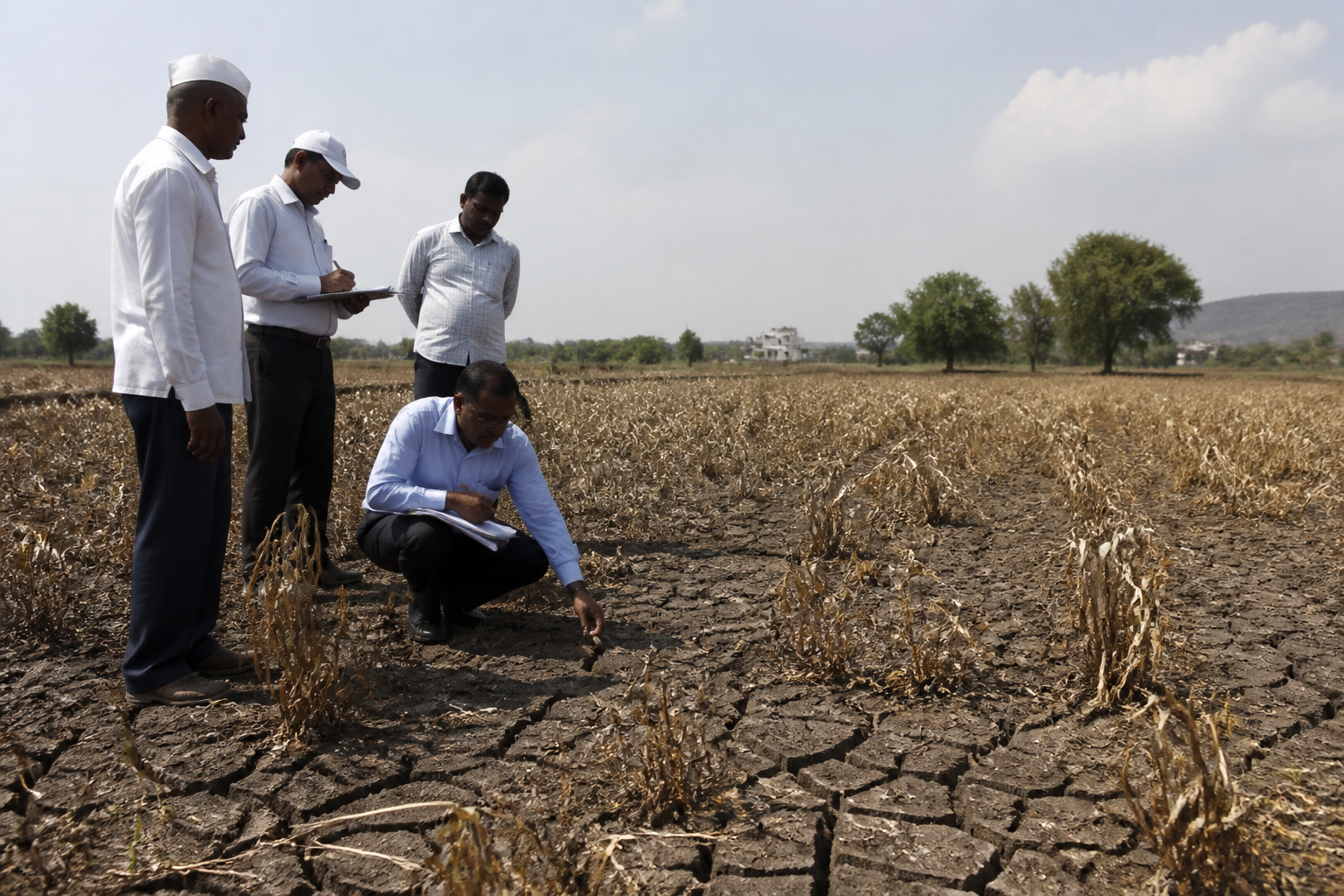
An 11-member central team will visit drought-hit areas of Maharashtra from October 8 to 11 to assess crop damage and drought conditions, after the state declared drought in 74% of its talukas and sought Rs 17,400 crore in assistance from the Centre.
The visit will provide the basis for the Centre’s assessment of the damage in affected districts. The team has been divided into three groups to cover regions across western Maharashtra, Marathwada and Vidarbha.
The first group will visit Ahilyanagar, Solapur and Pune districts. The second will inspect Chhatrapati Sambhajinagar, Jalna and Beed in Marathwada. The third group will travel to Nagpur and Yavatmal districts and adjacent areas in Vidarbha.
The state government declared drought on September 26, earlier than the usual timeline. Drought is typically declared at the end of October after crop-loss assessments, known as panchanamas, have been completed. The earlier declaration means the central inspection will take place while the assessment and documentation process is still being carried out.
The central team’s field visit is intended to establish an objective assessment of the damage in the drought-affected areas. Such an assessment is an important administrative step in determining the scale and basis of assistance sought by the state government.
The districts included in the inspection span some of Maharashtra’s principal drought-affected regions. Marathwada’s inclusion covers Chhatrapati Sambhajinagar, Jalna and Beed, while the Vidarbha group will examine conditions in Nagpur, Yavatmal and nearby areas. Ahilyanagar, Solapur and Pune are included in the western Maharashtra group.
The state has asked for financial assistance of Rs 17,400 crore from the Centre. The amount will be considered in the context of the damage assessment conducted during the visit, although the supplied report does not specify the timing or process for a final decision on the request.
The timing of the inspection also places attention on how quickly crop losses are recorded and verified. Since the state’s drought declaration came before the period when panchanamas are usually completed, the field assessment will examine conditions across districts at an earlier stage than the normal declaration cycle.
The visit highlights the administrative chain involved in drought response: the state identifies and declares affected areas, crop damage is documented locally, and a central team conducts a field assessment before assistance is considered. The immediate next step is the four-day inspection by the three groups from October 8 to 11.
