


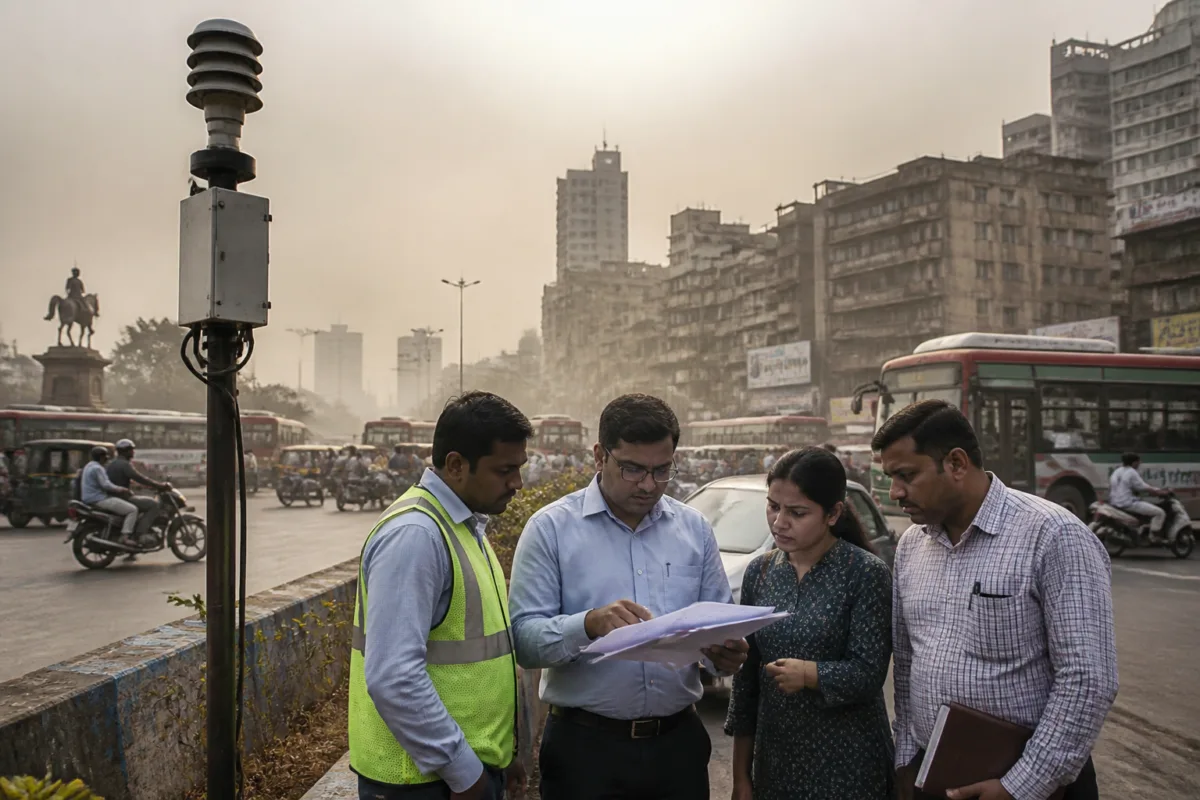
Maharashtra will conduct a city-wise review of clean-air funds and reallocate unspent amounts across cities, state environment and climate change minister Pankaja Munde said at a review meeting on Tuesday. The move comes as the state assesses whether spending under national air-pollution programmes is producing measurable reductions in pollution levels.
Around 25 cities and five cantonment boards in Maharashtra are covered under the National Clean Air Programme and funding from the 15th Finance Commission. Plans for 19 cities have been approved. These cities were selected after violating the National Ambient Air Quality Standards for five consecutive years.
Officials have sought explanations from city administrations over the funds that remain unspent. The review is intended to establish how much money each city has received, how much it has used and whether the spending has contributed to improved air quality.
Around Rs 2,926 crore has so far been disbursed under the programmes, of which 60% has been spent, according to information presented at the meeting. The state has not indicated in the supplied report how the remaining funds will be distributed or which cities could receive reallocated amounts.
The review also recorded progress in air-quality outcomes. Fifteen of the 19 cities with approved plans have reported a reduction in PM-10 levels. PM-10 refers to particulate matter with a diameter of up to 10 micrometres, a pollutant associated with dust, construction activity, road traffic and other urban sources. The report does not provide city-wise pollution readings or identify the specific measures responsible for the reductions.
Munde said the use of funds should not be assessed only through purchases made by city administrations. According to her, implementation must also be checked against actual reductions in pollution. This places the focus on the results of municipal interventions rather than simply on procurement or expenditure.
The state’s decision raises an administrative question for the cities covered by the programme: whether unspent allocations reflect delays in project execution, limited municipal capacity or the need for different pollution-control measures. The supplied report does not provide explanations from individual city administrations or details of any proposed reallocation.
The next step is the city-wise review of fund utilisation and pollution outcomes. Authorities are expected to examine explanations from city administrations before deciding how unspent amounts will be reassigned across Maharashtra’s participating cities.

