


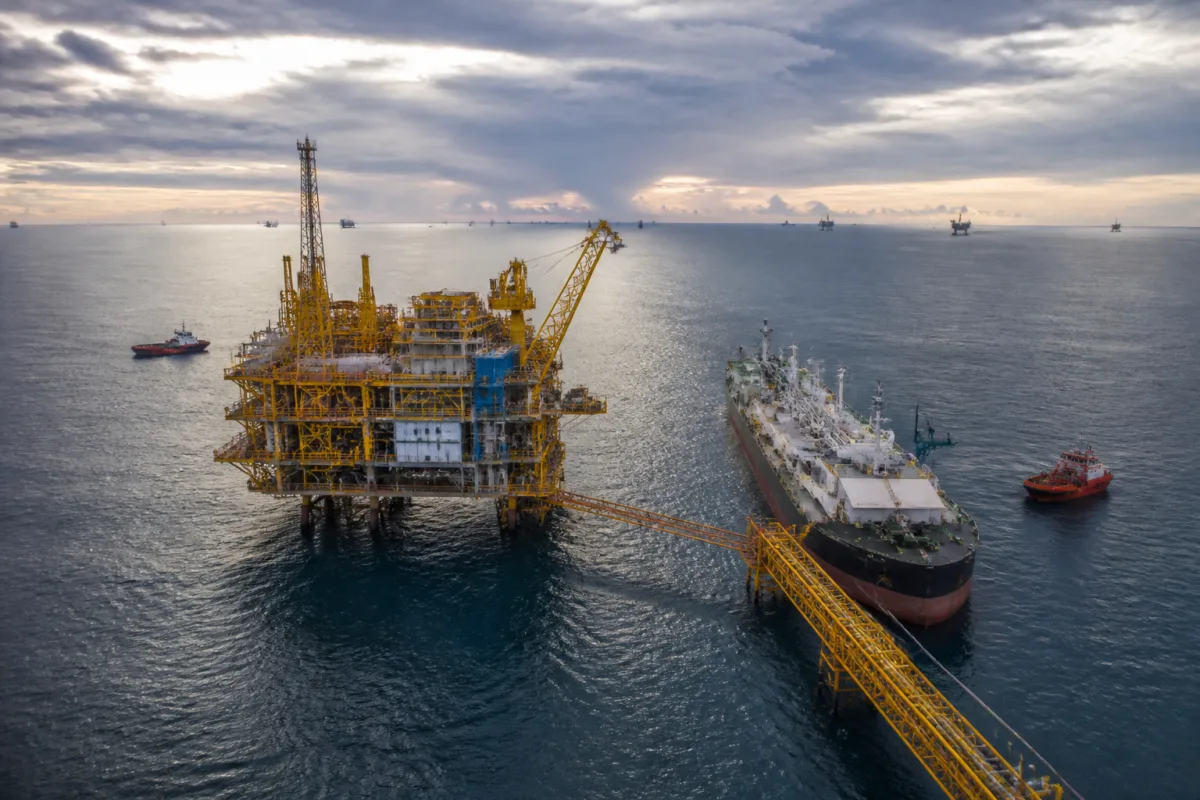
A proposed $1-billion common offshore infrastructure facility in the Mahanadi basin could change how India develops smaller deepwater and ultra-deepwater gas discoveries, but the plan remains at a preliminary discussion stage and has not been publicly confirmed by the Ministry of Petroleum and Natural Gas, ONGC, BP or Reliance Industries.
The proposal, reported by the Economic Times citing two unnamed industry executives, would allow ONGC, BP and RIL to share infrastructure for producing and evacuating natural gas and condensate from offshore fields. Technical consultants are expected to be appointed shortly, according to the report. The ministry, ONGC, BP and RIL did not respond to queries seeking confirmation.
The reported initiative addresses a specific infrastructure problem in offshore energy development: the high cost of building separate facilities for individual discoveries. Deepwater and ultra-deepwater fields require complex production, processing, storage and evacuation systems. For smaller or marginal discoveries, the cost of developing standalone infrastructure can make otherwise usable resources commercially difficult to pursue.
Under the proposed shared-infrastructure model, multiple operators could use a common offshore facility rather than each investing in separate systems. The arrangement is intended to reduce development costs, improve operational efficiency and support the commercial viability of discoveries that may be too small to justify independent infrastructure.
The facility would primarily handle natural gas, with some condensate also expected to be evacuated. The report does not establish the location of individual fields that would connect to the proposed hub, the volume of gas that could be handled, the number of operators that might use it or the commercial terms under which capacity would be allocated.
A key design decision is also pending. The facility could be developed as a floating production, storage and offloading unit, commonly known as an FPSO, or as a fixed offshore installation. An FPSO-based system could potentially be prefabricated and moved to the required location, while a fixed facility would take longer to construct, according to the report.
The choice between the two options would determine the project’s construction requirements, deployment timetable and operating model. At this stage, however, there is no confirmed decision on the technology, ownership structure, financing arrangement or procurement route. The Economic Times report said infrastructure of this scale would take at least three to four years to develop.
The proposed hub is significant because offshore production is not only a drilling exercise. Once a discovery is made, operators need an integrated chain of infrastructure to bring hydrocarbons to market. That chain can include subsea equipment, production systems, storage, processing and evacuation arrangements. Where expected output is limited, the capital cost of this chain can become a decisive factor in whether development proceeds.
A common facility would shift part of that burden from individual projects to a shared system. Two or more developers could jointly create the infrastructure, after which other producers could use it on a tolling basis. In such an arrangement, producers would pay for access or processing capacity rather than building every component independently. The reported model is based on shared infrastructure arrangements operating in regions including the North Sea.
For India, the proposal also reflects an effort to improve the use of existing oil and gas infrastructure and encourage collaboration among operators. The report said the Oil Ministry has been exploring ways to improve infrastructure utilisation and increase domestic production. The Mahanadi basin proposal extends that approach to deepwater and ultra-deepwater developments, where capital requirements are particularly high.
The institutional structure remains central to whether the plan can move beyond discussion. The Ministry of Petroleum and Natural Gas has reportedly mooted the proposal, while ONGC, BP and RIL are the companies identified as potential participants. Their respective rights, obligations and financial contributions have not been disclosed. It is also not clear whether the government would own the facility, coordinate its development, or merely establish a framework for private and public operators to collaborate.
Similarly, the report does not specify how access would be prioritised if several fields sought to use the same facility, how tariffs would be calculated, who would bear cost overruns, or how unused capacity would be treated. These details would be important for smaller discoveries because the commercial advantage of shared infrastructure would depend on predictable and affordable access.
The proposed arrangement could also affect the sequencing of offshore projects. Individual developers would need greater certainty that a common facility would be available when their fields were ready for production. The facility, in turn, would need sufficient committed demand to justify its construction. This creates a coordination requirement between exploration results, field-development plans, engineering design and infrastructure financing.
The reported three-to-four-year development period indicates that the proposal, even if approved, would not provide an immediate solution for offshore discoveries. Technical consultants are expected to examine the concept, but no consultant appointment, project schedule or final investment decision was confirmed in the supplied report. The facility’s eventual capacity and commissioning date therefore remain unsettled.
The economic case also depends on the quality and timing of the discoveries that would use the hub. A shared facility can reduce duplication when multiple fields are located within a workable offshore area and can be brought into production on compatible timelines. The source material does not provide field-by-field production estimates or a confirmed map of potential users, so the scale of the prospective benefit cannot yet be established.
What is clear from the reported proposal is the infrastructure challenge it seeks to address. Smaller deepwater and ultra-deepwater discoveries can face a disproportionate cost burden because the fixed systems required to produce and evacuate hydrocarbons do not necessarily shrink in line with the size of a discovery. A common hub attempts to spread those fixed costs across several users and improve the likelihood that marginal resources can be developed.
What remains unclear is whether the proposal has advanced beyond an initial policy discussion. The central account comes from two unnamed industry executives, and the relevant companies and ministry did not respond to the Economic Times’ queries. Confirmation of the proposal, the appointment of technical consultants, the preferred facility type and the intended participants will be necessary before the plan can be treated as an established government-backed project.
The next identifiable milestone is the expected appointment of technical consultants. Their assessment could determine whether a shared offshore facility is technically feasible, which configuration is suitable and how the infrastructure could be financed and operated. Until those steps are confirmed, the Mahanadi gas hub remains a reported preliminary concept rather than an approved project.

