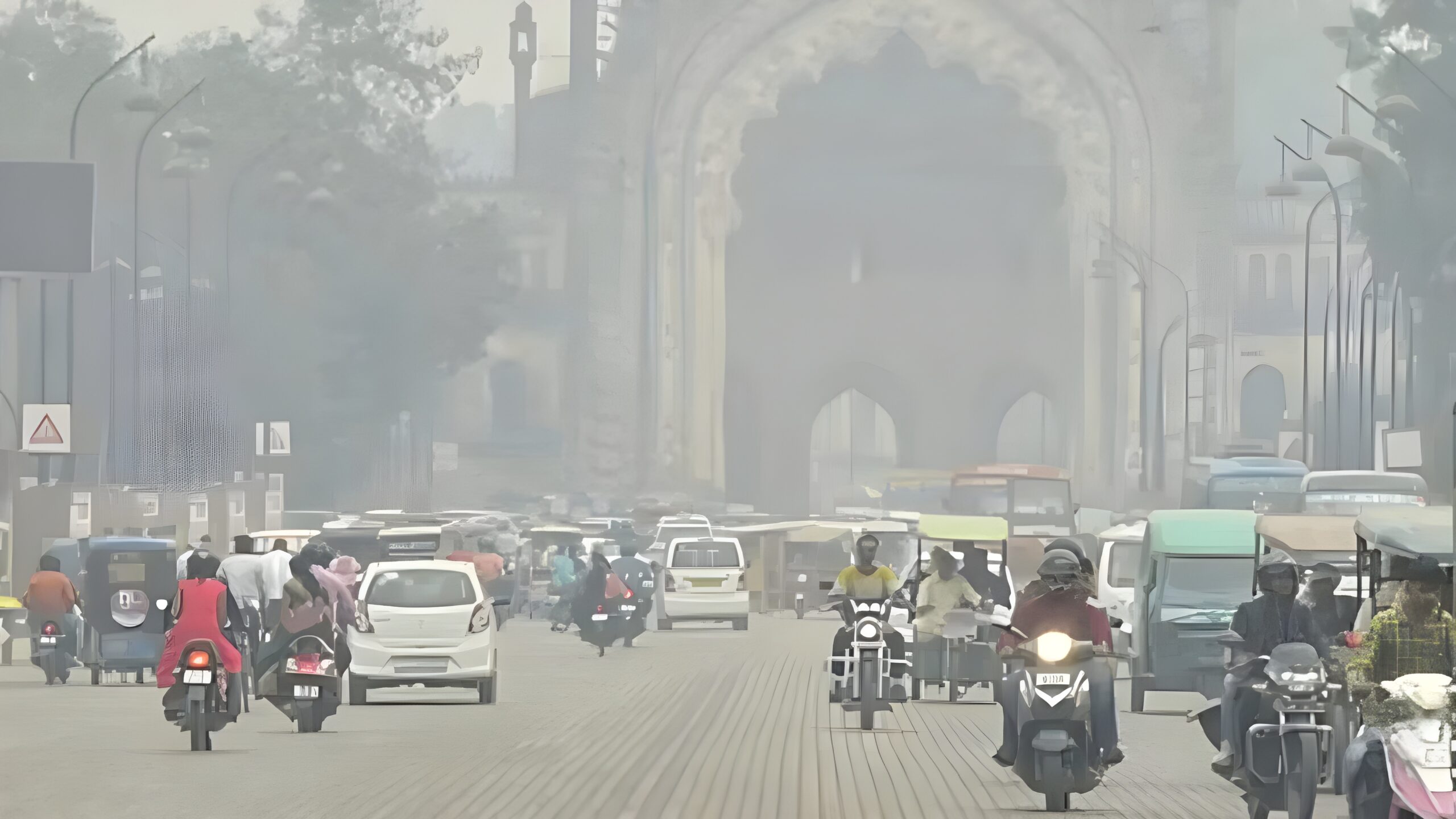
Lucknow is witnessing a dual environmental stress as deteriorating air quality coincides with a noticeable rise in nighttime temperatures, signalling a shift in urban climate patterns with implications for public health and city infrastructure. The trend reflects a growing interplay between pollution levels and localised weather conditions, particularly during the pre-summer transition period.
Recent observations indicate that the city’s Air Quality Index (AQI) has worsened, with pollution levels frequently entering moderate to poor categories. Episodes of elevated particulate matter—especially PM2.5 and PM10—have been linked to construction activity, vehicular emissions and stagnant atmospheric conditions. In some instances, AQI levels have exceeded 240, categorised as unhealthy for sensitive groups, contributing to a rise in respiratory issues among residents. At the same time, meteorological data shows a parallel increase in nighttime temperatures. Minimum temperatures have risen significantly above seasonal averages, in some cases by as much as 8°C, driven by cloud cover, smog layers and weak wind circulation that trap heat near the surface. These conditions prevent the natural cooling process after sunset, resulting in warmer nights and reduced thermal comfort. The emerging pattern highlights the role of atmospheric trapping mechanisms. Anti-cyclonic conditions and low wind speeds limit vertical air movement, allowing pollutants and heat to accumulate closer to the ground. This not only worsens air quality but also intensifies what urban planners describe as the “night-time heat island effect”—a phenomenon where cities retain heat due to built surfaces and reduced vegetation.
The Lucknow AQI trend is particularly concerning from a public health standpoint. Poor air quality combined with higher night temperatures can exacerbate respiratory and cardiovascular conditions, especially among vulnerable groups such as the elderly and children. Hospitals in the city have already reported an increase in patients with breathing-related ailments during periods of elevated pollution. Beyond immediate health risks, the development carries broader urban implications. Rising night temperatures increase energy demand for cooling, placing additional strain on power infrastructure. Simultaneously, poor air quality can disrupt outdoor economic activity and reduce overall urban productivity. Climate analysts suggest that such overlapping stressors are becoming more frequent in north Indian cities due to changing weather patterns and rapid urbanisation. Reduced winter rainfall, declining green cover and increased surface concretisation are contributing to both pollution retention and heat accumulation. Long-term climate assessments indicate that Lucknow’s climate vulnerability is already high, with worsening trends observed over recent years.
Urban planners emphasise that addressing this requires integrated interventions. Measures such as stricter emission controls, dust management at construction sites, urban greening and improved ventilation corridors can help mitigate both pollution and heat retention. Additionally, early warning systems and public advisories are critical to managing short-term risks. While weather conditions may fluctuate in the coming weeks, the convergence of rising temperatures and declining air quality highlights a structural challenge. For Lucknow, the focus is increasingly shifting from reactive measures to long-term resilience planning—ensuring that urban systems can adapt to intensifying environmental pressures while safeguarding public health and liveability.