


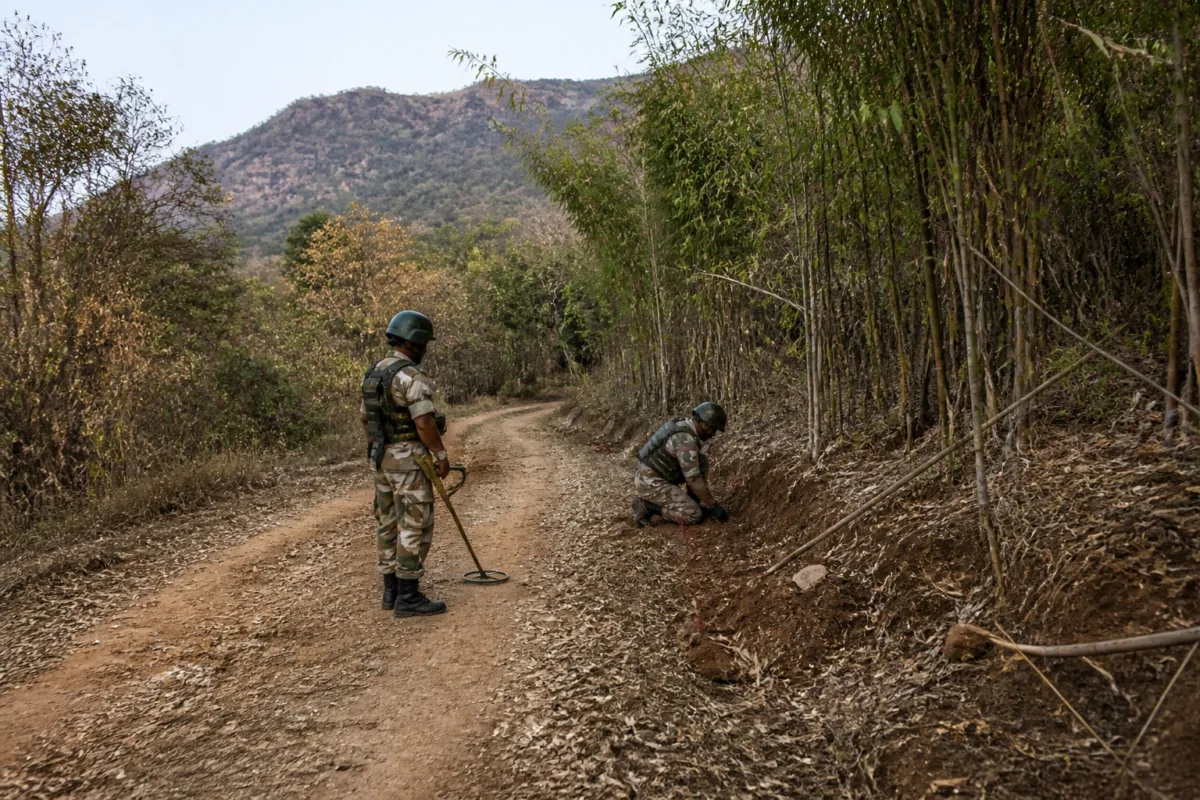
Plans to develop Karreguttalu Hills as a tourist destination have been delayed after security personnel uncovered explosives and suspected Maoist dumps in the forested region along the Telangana-Chhattisgarh border.
The Deccan Chronicle reported that nine dumps had been unearthed in the region. Security and Central Reserve Police Force personnel are continuing searches for landmines, improvised explosive devices, explosives and weapons, while the locations of suspected pressure mines remain unknown.
Telangana Director General of Police C.V. Anand said tourists would not be allowed into the area until all mines had been identified and removed. The statement was made at a rehabilitation package distribution programme for surrendered Maoists in Hyderabad, according to the report.
A separate recovery on November 6 involved 711 barrel grenade launcher shells found near the Karreguttalu hills in Bijapur district of Chhattisgarh. The operation was conducted jointly by the Bijapur police, the CRPF’s 196th Battalion and the CoBRA 204th Battalion.
The security concerns have consequences beyond the proposed tourism project. Residents of forest villages have faced restrictions on movement, while tribal communities that depend on forest produce continue to rely on the hills for their livelihoods. Bamboo from Karreguttalu remains a major source of income for people from the region.
Residents of Pamunuru, Jelli, Doli, Tadapala, Chalamala and Muknur villages were earlier shifted to the plains by police on the grounds that they were providing shelter to Maoists. They were subsequently rehabilitated and resettled in villages in the Wazeedu and Venkatapuram mandals. The report said their traditional economic links with the hills remain important despite the resettlement.
Two tribal residents have been killed in landmine explosions after entering the hills to collect bamboo since Operation Kagar, the report said. The incidents underline the difficulty of restoring access to forest resources before clearance operations are complete.
Karreguttalu Hills cover nearly 800 square kilometres along the Telangana-Chhattisgarh border. The area was previously a Maoist stronghold and had remained without road connectivity for decades. Road construction has now been taken up to improve access, alongside plans announced by the Telangana police to restore normalcy, provide infrastructure and develop the region as a tourism destination.
Those plans remain dependent on the outcome of security operations. Base camps at Murumuru on the Telangana side and Pamunuru in the hills continue to operate, while personnel search for additional weapon dumps and explosive devices.
The immediate development challenge is therefore not only the construction of roads or visitor facilities. Authorities must first establish whether the area can be safely accessed by residents, workers and tourists, and how traditional forest-based livelihoods can be supported while clearance and resettlement measures continue. Until the suspected mines are located and removed, tourism development and wider infrastructure access in Karreguttalu are likely to remain restricted.

