


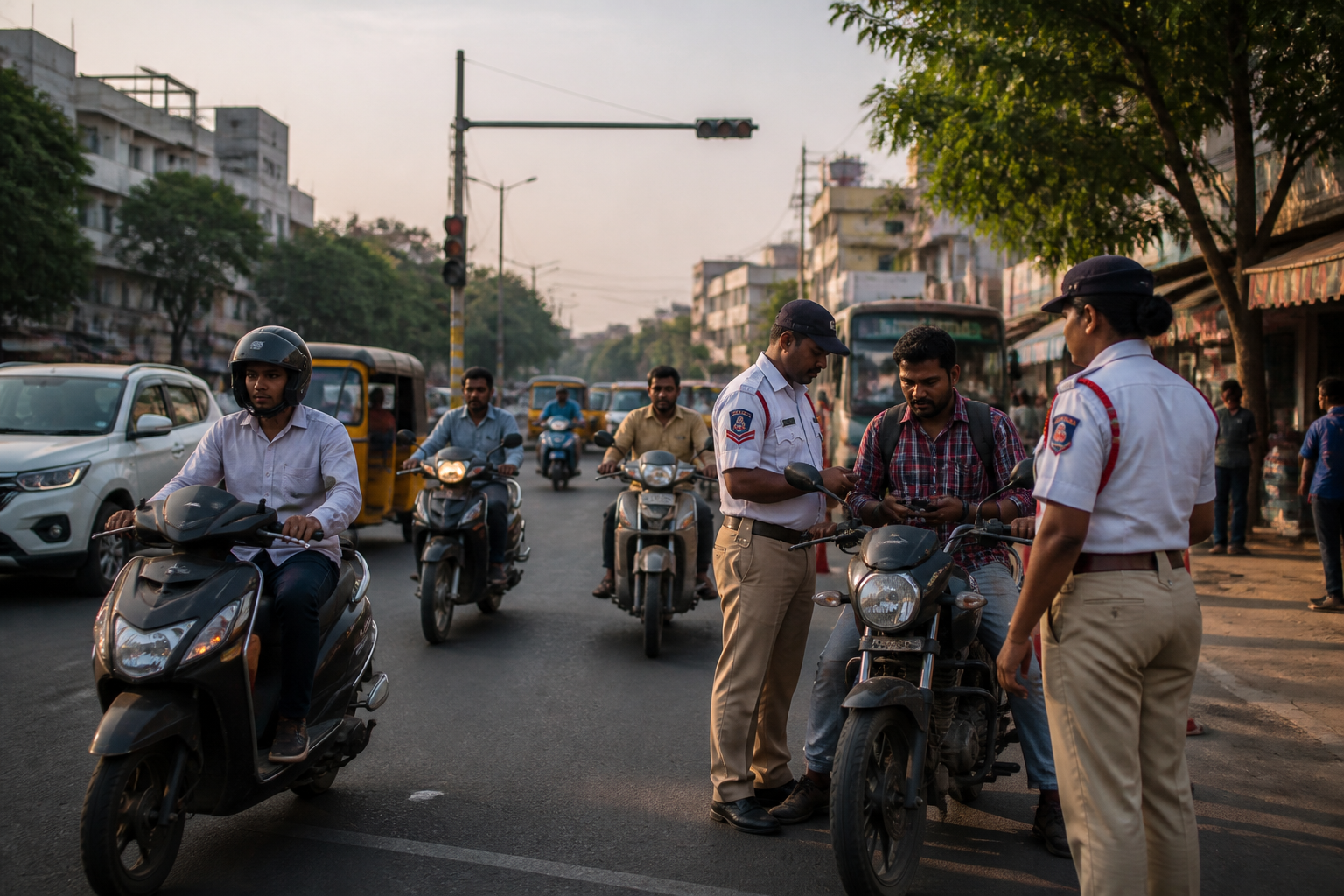
Kurnool traffic violations crossed 31,000 cases in nine months, with police recording 31,361 offences despite regular enforcement drives, counselling sessions and awareness programmes, according to Kurnool Range DIG Koya Praveen.
Drunken driving accounted for 6,720 cases during the period, making it one of the largest categories recorded by the police. Open drinking was linked to 11,802 cases, while 6,584 cases involved over-speeding. The figures were released as police warned motorists that stricter action would follow against those who violate traffic rules.
Driving without a helmet was recorded in 4,232 cases. Police said helmet compliance remained a concern despite repeated appeals to motorists and the continuing risk of road accidents. Another 1,477 cases involved people talking on mobile phones while driving, while 463 cases were registered for triple riding.
The police also registered 83 cases involving minors driving vehicles. According to the report, some of those found driving were school-going children riding scooters and other vehicles. The cases place the issue of traffic enforcement alongside concerns about parental supervision and the exposure of young riders to road risks.
DIG Koya Praveen said the police had been conducting counselling and awareness programmes regularly to improve compliance. “We have been conducting counselling and awareness programmes every day in one form or another. However, motorists must realise that traffic rules are meant for their own safety. We will take stringent action against violations hereafter and will not spare anyone,” he said.
The case figures show that enforcement activity in Kurnool is spread across both high-risk driving behaviour and routine road-rule violations. Drunken driving and over-speeding together accounted for 13,304 cases, while helmet violations and mobile-phone use while driving added another 5,709 cases. The police did not provide a breakdown of penalties, vehicle seizures, convictions or accident outcomes associated with the cases in the supplied report.
The DIG also said special attention would be given to vehicles fitted with modified silencers. Police will monitor vehicles whose silencers have been removed or altered to produce excessive noise and take action against motorists found violating the rules, he said.
The police’s next step is to intensify enforcement against drunken driving, helmet violations, minor driving, dangerous riding practices and modified silencers, alongside continued counselling and awareness programmes. Further action will be taken under the traffic rules against identified violators, according to the DIG’s statement.
