


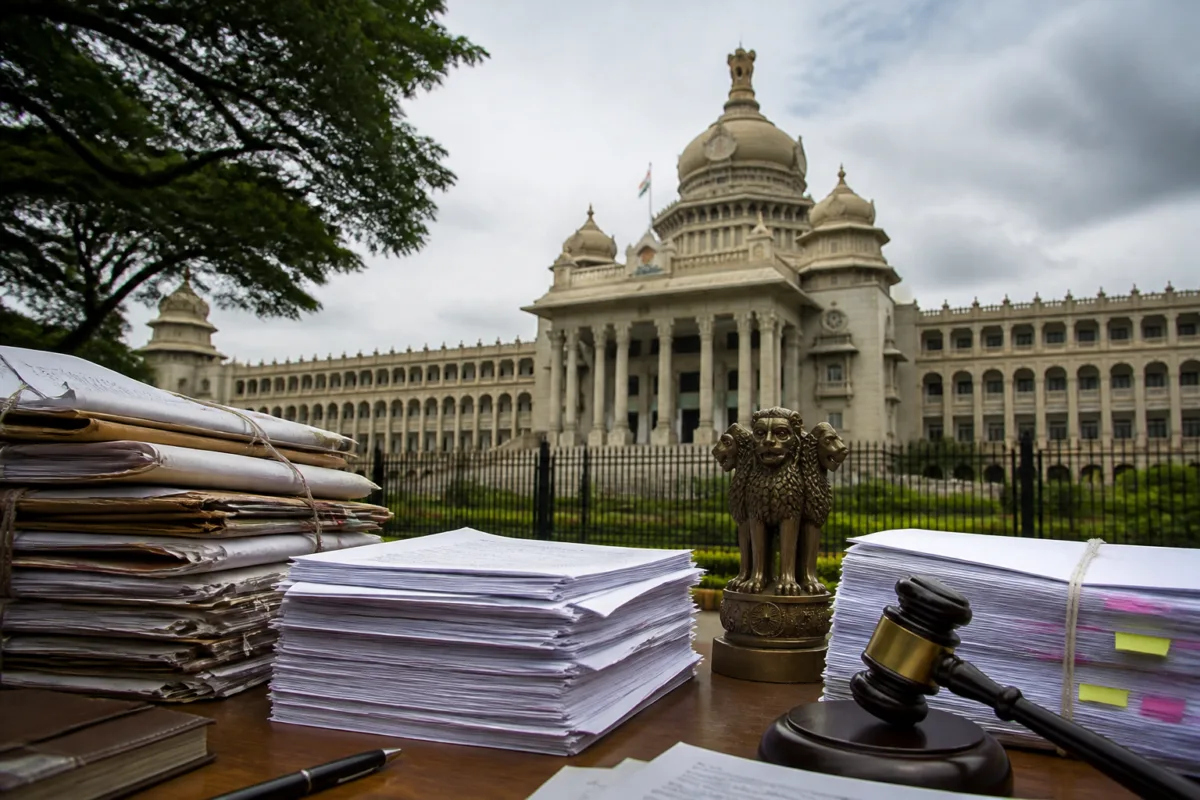
Karnataka’s KPSC 2011 recruitment dispute has moved from a question of protecting 362 selected candidates to a larger test of how governments can respond when a recruitment process is later found to be compromised. The state’s Parliamentary Affairs and Legislation Department has advised that the government cannot use its own powers to continue the appointments after the Supreme Court declared the 2022 validating law unconstitutional.
The department’s four-page opinion, issued after the Department of Personnel and Administrative Reforms sought advice on the possibility of challenging the Supreme Court judgment, accepts that the 2022 law cannot be defended either constitutionally or on humanitarian grounds. It recommends that the state follow the remedy already set out by the Supreme Court: conduct a fresh recruitment process for vacant Group A and Group B posts, with a one-time relaxation in the age limit under existing rules.
That advice places the dispute within a narrow legal framework. The government may attempt to seek a review of the judgment within the prescribed 30-day period, or approach the court for clarification on implementation. But it cannot, according to the department, create a separate legal route only for candidates from the 2011 recruitment or continue them in service by relying on a law that the court has declared unconstitutional.
The central issue is therefore not only whether the 362 candidates were personally involved in wrongdoing. It is whether a recruitment process found to have been affected by corruption and nepotism can be retrospectively protected through legislation, even when individual candidates argue that they should not suffer for alleged misconduct by officials or intermediaries.
The report states that the Criminal Investigation Department’s chargesheet in the 2011 case named the KPSC chairperson, members, staff and intermediaries, but did not name any of the candidates. The statement of objects and reasons accompanying the 2022 legislation had argued that penalising candidates for the misconduct of officials would be unjust. That humanitarian argument, however, did not persuade the Supreme Court, which referred to earlier cases and held that corruption and favouritism had affected the recruitment process.
This distinction between individual culpability and institutional validity is important. A candidate may not be named in a criminal case, but a recruitment process can still be invalidated if the selection mechanism itself is found to have been compromised. The department’s opinion indicates that the state cannot treat the absence of criminal allegations against individual candidates as sufficient reason to preserve appointments arising from a tainted selection list.
The legal department has also rejected the possibility of holding a separate examination limited to the 2011 candidates. It has advised that any fresh selection must be conducted through an open competitive process and cannot be restricted to those who were part of the earlier recruitment. The only concession it considers legally available is a one-time relaxation of the age limit for vacant Group A and Group B posts.
That proposed remedy attempts to address the practical consequences of delay without reviving the cancelled selection list. Candidates who qualified in 2011 may now face an age-related disadvantage if required to compete again. Allowing a one-time age relaxation could preserve their opportunity to participate, but it would not guarantee appointment. The new process would remain open and competitive rather than functioning as a protected re-examination for the original group.
The dispute also demonstrates how the legal status of a recruitment process can affect the continuity of public administration. The department has stated that the Supreme Court did not direct that the selected candidates should remain in their posts until a fresh recruitment process is completed. Since their appointments rested on the 2022 law, which has been declared unconstitutional, the state cannot independently use its executive authority to continue them.
Any temporary or interim arrangement, according to the opinion, would have to come through the court. The state or affected candidates may approach the Supreme Court if they wish to seek such relief. This limits the government’s ability to solve the administrative problem through an executive order and keeps the implementation of the judgment within judicial control.
The department’s comparison between the 2022 law and a 2013 law concerning the recruitment of 550 assistant engineers further explains why it views the two legislative interventions differently. The 2013 law related to the regularisation of engineers who had served for a long period on a contract basis. The department considered that legislation to have been framed for an administrative requirement and noted that there was no taint in the selection process before the appointments.
The 2022 law, by contrast, was enacted to validate a selection list that had already been cancelled. The department’s opinion says the earlier selection was affected by corruption and nepotism and had been set aside by both the Karnataka High Court and the Supreme Court. In its reasoning, the legal character of the legislation depends not merely on whether it was intended to address hardship, but on what it attempted to preserve.
This is the institutional lesson from the dispute: legislation cannot automatically cure a recruitment process that has failed the standards of equal and fair public competition. A government may respond to hardship, but its response must remain within the limits set by the Constitution and the court’s findings. The legal department has therefore described the fresh recruitment route, with limited age relaxation, as the only legally available way to retain a humanitarian element.
The case also exposes the administrative cost of delayed resolution. The recruitment was conducted in 2011, the validating legislation was enacted in 2022, and the Supreme Court subsequently invalidated that law. Each stage extended uncertainty for candidates, departments and future applicants. The longer such disputes continue, the more difficult it becomes to separate the rights arising from the original selection from the administrative need to fill vacant posts through a legally sound process.
The supplied report does not establish the number of candidates currently in service, the number of vacant Group A and Group B posts, or the timetable for a fresh recruitment exercise. It also does not state whether the Karnataka government has filed a review petition. Those details will determine how quickly the court’s remedy can be implemented and how directly it will affect the candidates involved.
The immediate legal deadlines are clearer. If the state decides to seek a review, the department has advised that it should be filed within 30 days before the same bench that delivered the judgment. The report identifies that bench as comprising Justices J.B. Pardiwala and Vinod Chandran. If a review petition is dismissed, the department says the remaining remedy would be a curative petition, which is considered only in exceptionally rare cases.
For Karnataka’s public recruitment system, the outcome will be measured not only by what happens to the 362 candidates but also by whether the next process is transparent, open and capable of surviving legal scrutiny. The Supreme Court’s ruling has closed the route of retrospective validation through the 2022 law. The state’s remaining choices are therefore confined to judicial remedies, court-approved interim relief and a fresh competitive recruitment process with the limited age relaxation proposed by its legal department.

