


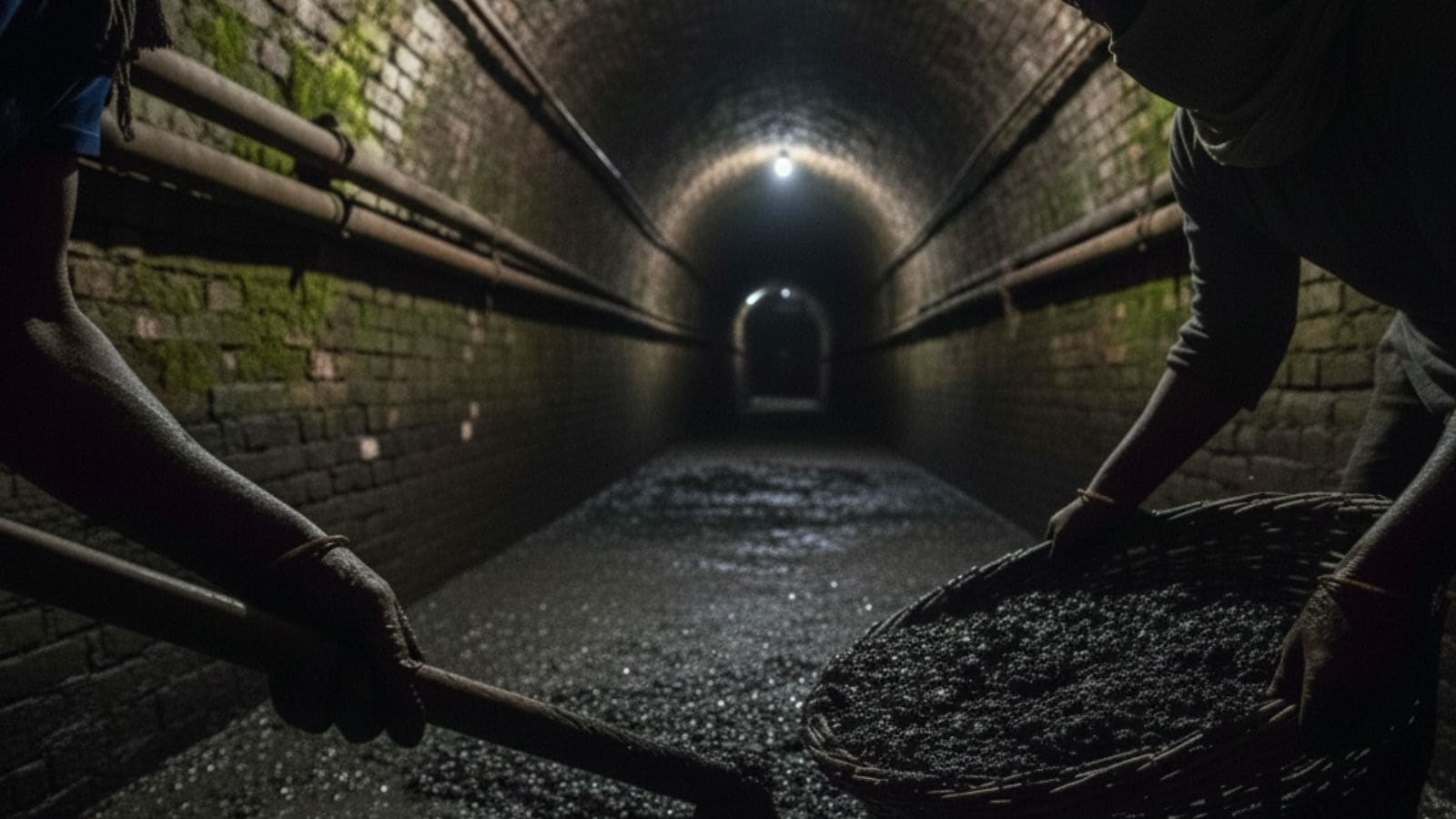
A prolonged rescue operation in Kolkata to retrieve a cow trapped inside a sewer line along a major arterial road has drawn attention to the condition and accessibility of the city’s underground infrastructure.
The incident, which required specialised equipment and coordinated efforts, underscores the risks posed by poorly secured or inadequately maintained drainage systems in dense urban areas.Emergency teams were deployed for several hours to safely extract the animal, using mechanical support to navigate the confined space of the sewer network. While the rescue was ultimately successful, the episode highlights a recurring urban concern—open or structurally weak drainage points that can pose hazards not only to animals but also to pedestrians and vehicles.The event reflects broader issues surrounding urban infrastructure management in Kolkata, particularly in high-traffic corridors where ageing systems intersect with rapid urban growth. Inadequate covering of sewer openings, combined with wear and tear, can create vulnerabilities that often go unnoticed until accidents occur. Such incidents point to the need for regular audits and preventive maintenance rather than reactive interventions.From a civic planning perspective, the episode brings into focus the importance of designing inclusive and safe urban spaces. Open drains and unsecured sewer lines disproportionately affect not just stray animals but also children, the elderly, and informal workers who navigate these areas daily.Ensuring proper sealing, clear marking, and timely repairs is essential for reducing risk in public spaces.
Urban resilience experts argue that drainage systems must be viewed not only as functional infrastructure for stormwater management but also as elements of public safety. With increasing instances of extreme rainfall linked to climate variability, cities like Kolkata are already under pressure to upgrade their drainage capacity. However, structural integrity and accessibility must be addressed alongside capacity enhancements.The incident also highlights coordination challenges between municipal departments responsible for maintenance, emergency response, and urban services. Efficient communication and rapid mobilisation are critical in such situations, but long-term solutions lie in systemic improvements to infrastructure monitoring and upkeep.Economically, such disruptions—even when involving animal rescues—can affect traffic flow and local activity in busy corridors, leading to indirect costs. More importantly, they erode public confidence in civic systems when preventable hazards persist.As Kolkata continues to expand and modernise, ensuring that basic infrastructure meets safety standards will be crucial.Strengthening inspection regimes, adopting durable materials, and integrating smart monitoring systems could help reduce such occurrences.
The rescue may have ended without loss, but it serves as a reminder that everyday urban systems require continuous attention. Building safer, more resilient cities will depend on how effectively authorities address these underlying gaps in infrastructure and maintenance.
Also Read:Kolkata Hilsa Fishing Tech Raises Sustainability Concerns
