


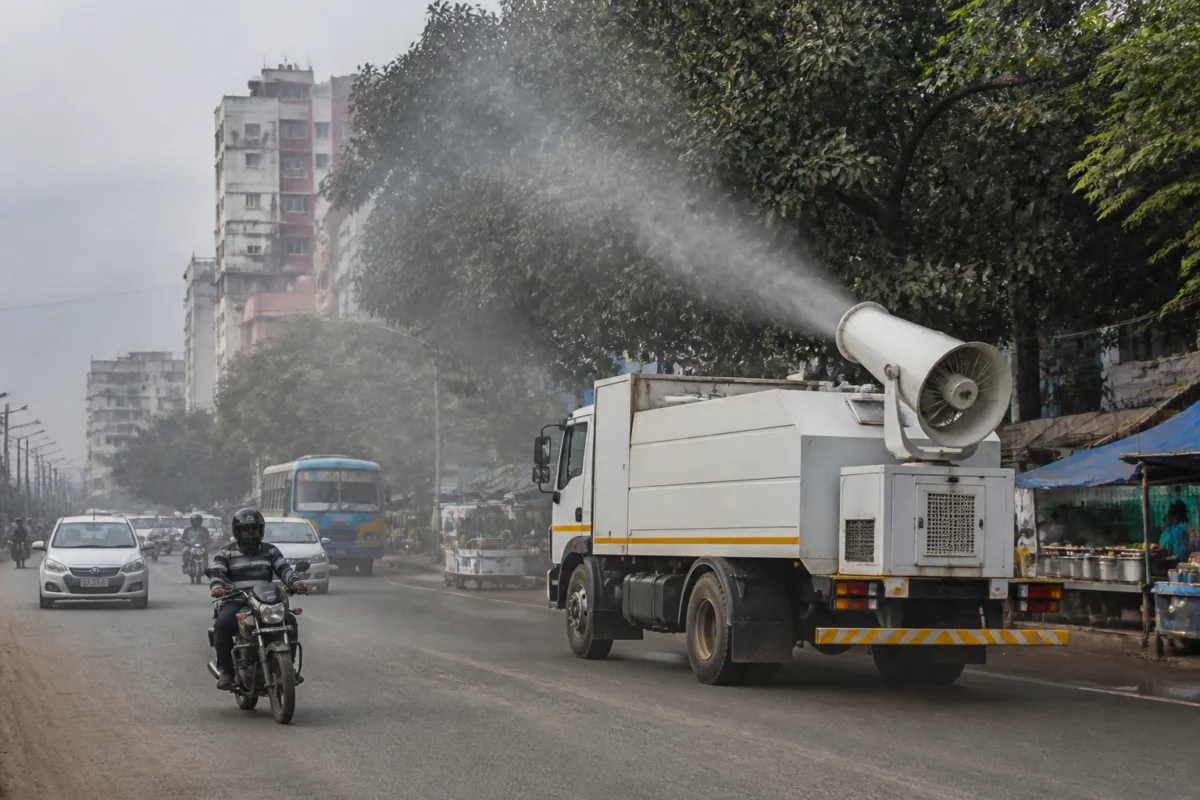
Kolkata’s plan to mix rose water into municipal mist-spraying operations during special occasions and festivals has triggered criticism from an environmentalist, who said the city needs measures that reduce pollution at its sources rather than improve the smell of the air temporarily.
Bengal municipal affairs and urban development minister Agnimitra Paul said in a Facebook post that the Kolkata Municipal Corporation has been regularly spraying water mist at locations across the city, particularly in areas where the Air Quality Index is relatively high. The activity is being carried out under the state government’s direction to control air pollution and reduce dust particles in the air, she said.
Paul said rose water would be mixed with the water used for mist spraying on special occasions and during festivals, including Kali Puja. According to her post, the measure would help control dust particles while spreading the fragrance of rose water in the surrounding environment. She said the stated goal was to build a cleaner, fresher and more fragrant Kolkata, and that the authorities would continue efforts to make the city more habitable.
The minister also highlighted the difference between air-quality conditions she observed during a recent visit to London and those in Kolkata. She said the AQI in several London areas was below 10, with some locations close to 1, while Kolkata’s AQI rarely falls below 200 for most of the year. Paul described the situation as a concern for residents’ health and said authorities were making continuous efforts within their means to improve air quality.
Environmentalists questioned whether adding rose water to mist-spraying operations would have any meaningful impact on pollution levels. Somendra Mohan Ghosh said the fragrance could make the air smell pleasant temporarily but would not address the underlying sources of pollution. He said Kolkata’s air needed cleaning at the source rather than what he described as a cosmetic intervention.
Ghosh identified ageing diesel and petrol vehicles as contributors to PM2.5, PM10 and black carbon emissions. He also urged the authorities to stop the use of coal-fired cooking stoves at roadside eateries and food stalls, and proposed a transition to LPG or electric cooking systems supported by financial and logistical assistance for small vendors.
He further suggested deploying 100 water cannons across the city to wash roads, flyovers and dust-prone corridors. According to Ghosh, this could help settle suspended dust particles and remove accumulated dust from tree leaves.
The statements place Kolkata’s mist-spraying programme alongside a wider debate over whether short-term dust suppression can address the city’s broader pollution burden. The minister’s post described the municipal operation and rose-water proposal, while the environmentalist’s response called for vehicle-emission controls, cleaner cooking systems and expanded road-washing measures. No additional air-quality assessment of the rose-water proposal was provided in the supplied statements.

